





Heineken to shift production from Singapore to Vietnam and Malaysia
Dutch brewer Heineken will shift its brewing production from Singapore to Vietnam and Malaysia as part of its strategy to build a more agile regional supply approach.

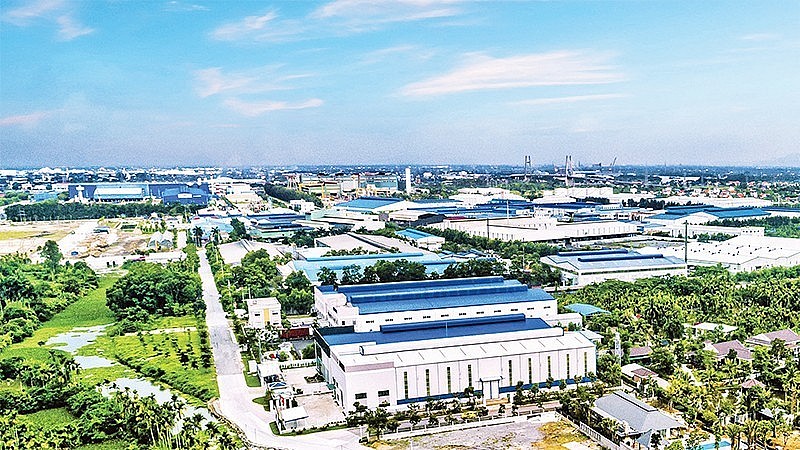 |
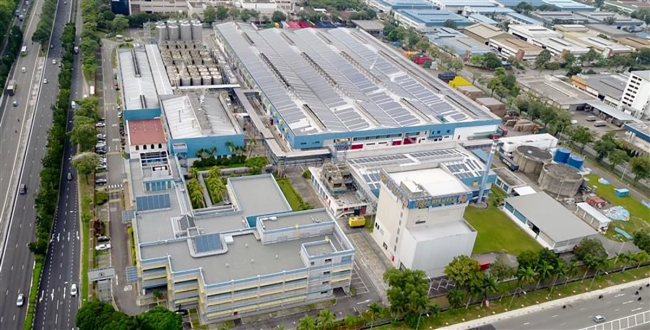
| Nam Cau Kien Industrial Park in Hai Phong. |
Green and sustainable development requires industrial parks to take measures to encourage the enterprises that they host to switch to clean, environmentally friendly and resource-efficient manufacturing.
But industrial parks across the country are still struggling with how to reach a balance between economic benefits and the environment due to numerous obstacles.
Industrial parks are playing an important role in diversifying investment in infrastructure development, manufacturing, and business, and are attractive destinations for both domestic and foreign investors.
Green, clean and ecological industrial parks are an inevitable trend around the globe. The development of sustainable industrial parks commences from industrial ecology and the transition from the linear economic model to the circular economy, in which the waste and byproducts of an enterprise become the inputs for another one’s production process.
These are urgent and mandatory requirements for the manufacturing sector to develop sustainably, helping to realise Vietnam’s goal of net zero emissions by 2050. To meet these requirements, the government and enterprises need to join hands since financial resources and regulations are the current bottlenecks to the transition.
Tran Thi To Loan, Deputy Director of Sao Do Investment Group, owner of Hai Phong-based Nam Dinh Vu Industrial Park, said cost is the biggest hurdle to the transition from conventional industrial parks to sustainable ones. She noted that the two models are fundamentally different in terms of approach, goal, and environmental and social impacts; one only focuses on maximising profits and economic growth with a low spending on the environment, while the other is designed and managed with the combined goals of economic development, environmental protection, and social responsibility.
A green, ecological and sustainable industrial park requires synchronous investment from the start with a huge cost. But most industrial parks in Vietnam are developed in a rolling process, so they are not truly environmentally friendly and resource-saving.
Legal bottlenecks and unclear regulations also make it difficult for changing the model of industrial parks in Vietnam. Loan stated that if regulations are not specified, it is difficult to encourage enterprises to change.
Associate Professor Nguyen Quang Tuyen from the Hanoi Law University shared the same view that the current legal network lacks specific regulations on developing sustainable industrial parks. In addition, there are too many laws governing the operation of industrial parks, which also discourages many enterprises.
Vice Chairman of the Vietnam Chamber of Commerce and Industry (VCCI) Nguyen Quang Vinh said building sustainable industrial parks will bring many substantial benefits, not only economic, but also environmental and social.
Specifically, it will reduce the environmental impact, save energy and resources, increase innovation and cooperation, enhance reputation and brand image, create a better working environment in industrial parks, and offer many benefits to the community.
However, enterprises’ awareness about this matter remains weak, with up to 50% of surveyed enterprises in industrial parks having responded that they have not heard about the idea of sustainable and ecological industrial parks. Therefore, the government should soon introduce measures to address obstacles and facilitate industrial parks in their transition.
For enterprises, investing in sustainable development requires huge financial resources but it should not be the reason for them to stay outside the trend. With about 418 established industrial parks, 298 of which have been put into operation covering a total of 92,200 hectares, Vietnam is assessed to have much room for developing green, ecological, and sustainable industrial parks.
The transition to the green and ecological industrial park model also helps attract a new wave of investment, especially high-quality foreign direct investment. Therefore, first of all, investors of industrial parks need to get updated on the government’s orientation to understand the benefits of changing the model in order to proactively build a roadmap for green and ecological industrial parks.
Enterprises in industrial parks need to focus on changing their production methods to maximise resources and make their production cleaner, apply technology solutions that use less carbon and chemicals, and use renewable and environmentally friendly energy to reduce operating costs and enhance competitiveness.
Afterwards, enterprises need to step up mobilising resources from international organisations, trade associations, climate finance funds, energy transition partners as well as commercial banks and green finance organisations to develop green industrial parks. They should also work together to share production infrastructure and reuse production materials, or work with third-party enterprises outside industrial parks in realising industrial symbiosis connections.
Associate Professor Nguyen Dinh Tho from the Institute of Strategy and Policy on Natural Resources and Environment shared that it is necessary to plug the legal loopholes and remove the bottlenecks to the industrial park transition process, in which specific institutions should be introduced as the basis for enterprises to implement and operate. More importantly, the government needs to supplement preferential policies on land, finance, corporate income tax, land rents, and credit access in the process of changing the production model from “brown” to “green”./.