





Heineken to shift production from Singapore to Vietnam and Malaysia
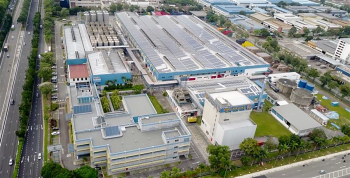
Dutch brewer Heineken will shift its brewing production from Singapore to Vietnam and Malaysia as part of its strategy to build a more agile regional supply approach.


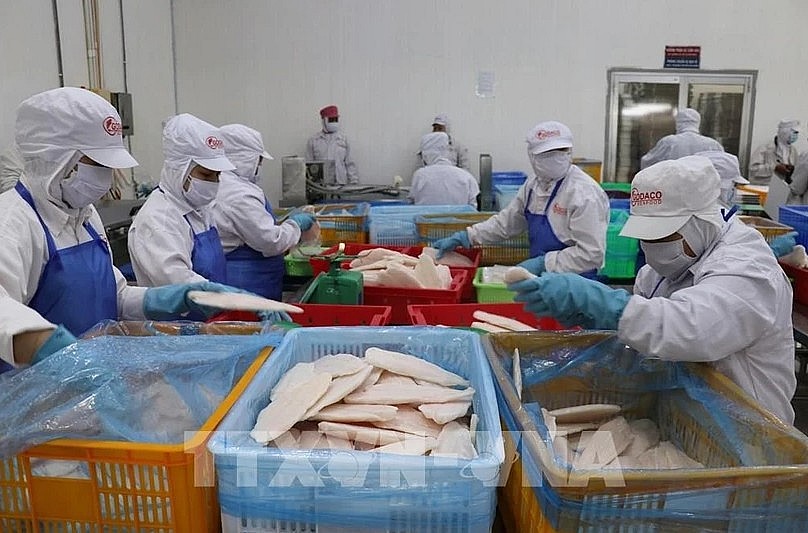 |
| Workers at GODACO factory in My Tho Industrial Park process tra fish for export. |
Facing rising global trade barriers and market fluctuations, Vietnam’s fishery industry is intensifying efforts to diversify its export markets and products to sustain growth and reduce risks.
According to the Vietnam Association of Seafood Exporters and Producers (VASEP), aquatic product exports reached 3.3 billion USD in the first four months of 2025, a 21% increase compared to the same period last year. Shrimp led the growth with a 30% surge, followed by tra fish (pangasius), which rose by 9%.
China became the largest importer of Vietnamese aquatic products with a 56% increase, followed by Japan (22%) and the US (7%). Despite a mild recovery after a slow first quarter, exports to the US remain under pressure due to tariffs and technical trade barriers.
Phan Hoang Duy, Deputy General Director of Can Tho Seafood Import Export JSC (CASEAMEX), said the US accounts for more than half of the company’s pangasius exports. However, rising costs linked to US tariffs are prompting the company to pivot toward other markets in Europe and Asia, while cutting production costs and reviving old clients.
To support broader market access, VASEP Deputy Secretary General Le Hang highlighted the importance of leveraging free trade agreements such as the European Union-Vietnam Free Trade Agreement (EVFTA), Comprehensive and Progressive Agreement for Trans-Pacific Partnership (CPTPP), and Regional Comprehensive Economic Partnership Agreement (RCEP) to expand exports to the EU, Japan, and the Republic of Korea. She also called on businesses to explore new markets like the Middle East and South America to reduce overdependence on traditional buyers.
Vietnamese aquatic products, especially shrimp, has a competitive advantage in the EU due to zero tariffs, compared to 12–20% imposed on Chinese products. While there have been no major breakthroughs, exports to the EU continued to grow steadily in key product categories like white-leg shrimp, black tiger shrimp, tuna, pangasius, and clams.
In May, VASEP led 28 Vietnamese companies to the 31st Seafood Expo Global in Spain, reinforcing its strategy to diversify markets and reduce reliance on high-barrier destinations.
Emerging strategic markets
Singapore has become Vietnam’s fourth-largest aquatic product importer, surpassing Malaysia, Indonesia, and Norway. Demand is strong for chilled, frozen, and filleted fish products. Vietnam’s Trade Office in Singapore is working closely with VASEP to support businesses in marketing, participating in trade fairs, and compliance with quality standards.
In South America, Brazil is emerging as a strategic market. Vietnamese pangasius now holds 38% of Brazil’s market share, with 26 exporters active, including Hung Ca, Cadovimex, Nam Viet, and Hoang Long. In Q1 2025, aquatic product exports to Brazil rose by over 70% year-on-year.
Brazil recently lifted its ban on Vietnamese tilapia, opening new opportunities for product diversification. The country is also considering easing regulations on additives like phosphates, potentially boosting Vietnam’s processed aquatic product exports.
Beyond markets, Vietnam is also diversifying its products. Tilapia is being prioritised to complement the industry’s focus on shrimp and pangasius. According to Tran Dinh Luan, Director of the Directorate of Fisheries, tilapia farming will help balance the sector’s export portfolio.
Deputy Minister of Agriculture and Environment Phung Duc Tien stressed that market diversification is not just a short-term solution but a long-term strategy. He urged businesses to comply with international standards, including Halal requirements, and to invest in quality control, cost efficiency, processing capacity, and trade promotion./.