

Heineken to shift production from Singapore to Vietnam and Malaysia
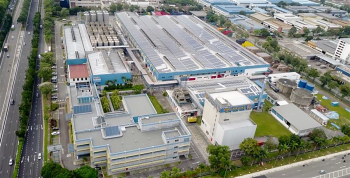
Dutch brewer Heineken will shift its brewing production from Singapore to Vietnam and Malaysia as part of its strategy to build a more agile regional supply approach.


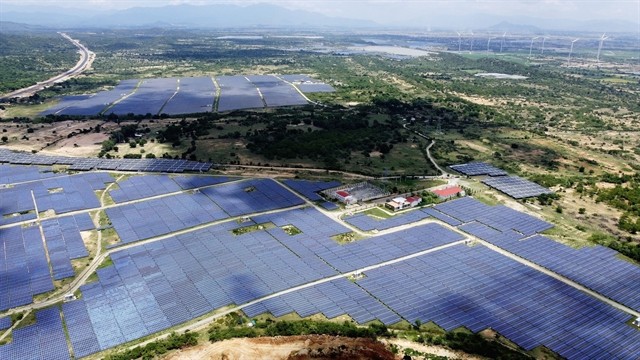 |
| A solar power farm in Ninh Thuan province. Incentive policies and appropriate financial mechanisms should be raised to attract investments from both private and international sectors into renewable energy developments in Vietnam to accelerate energy transition towards a green economy. (Photo: VNA) |
The conference was hosted by the VNU University of Economics and Business (UEB) on in Hanoi on June 20.
Researchers project a baseline GDP growth of 5.85% this year and inflation at 4.5%, with the possibility of a devaluation of the Vietnamese đồng of around 5-6%, if public spending meets all its targets and foreign direct investment does not see any unusual developments in the second half of the year.
If economic polices are adjusted, such as reducing interest rates and exports remain robust and there is increased public investment spending, the GDP growth is expected to hit 6.01%.
“The Vietnamese economy is operating at a level below its potential in both scenarios,” Nguyen Quoc Viet, Deputy Director of the UEB’s Vietnam Institute for Economics and Policy Research (VEPR) said.
He added that over the short term, the focus should continue to be on fiscal policy to stimulus demand, especially speeding up the disbursement of public investment in the remaining months.
The policy of the two% reduction of value added tax should be extended to the end of the year and possibly even to June 2025, together with bigger reduction to promote consumption.
In addition, it is necessary to develop more credit packages to encourage investments in sustainable production and business, accelerate digital transformation, promote science and technology application, he added.
Nguyen Anh Thu, VNU-UEB’s Vice Rector said that in the long term, Vietnam must improve its national digital transformation strategy and accelerate factors which create real added value for the digital economy such as in the software industries and in e-commerce and innovation.
The social housing development model should also be improved, Thu said, adding that establishing State-owned enterprises in charge of developing social housing projects should be put into consideration.
It is necessary to develop feasible policies to encourage investment, especially private investment to promote growth and support enterprises overcome difficulties.
Thu added Vietnam also needs to raise policies to improve labour productivity and competitiveness of industries and the national economy.
Vietnam’s net zero ambition and the pressure from stringent standards of developed markets is requiring a faster energy transition towards a green economy in Vietnam, posing not only challenges but also opportunities for it to strengthen economic restructuring, enhance competitiveness and promote investment and trade cooperation, researchers said.
Researchers pointed out that Vietnam is exploiting, almost to the limits, domestic fossil resources and has to import more coal and gas, making the country a net-energy importer.
The electricity infrastructure development and integration of renewable energy into the national grid remain major challenges.
Investing in renewable energy to reduce the dependence of fossil fuels becomes vital, researchers said, quoting the Vietnam Energy Association warning about energy uncertainty over coming years, when demand is forecast to increase by around 8.5% annually.
Incentive policies and appropriate financial mechanisms should be raised to attract investments from both private and international sectors into renewable energy development in Vietnam. Smart grid development is an important factor to ensure the efficiency of renewable energy management and stability of energy supply.
Vietnam also needs to invest in energy storage technology and improving transmission capacity as well as developing new energies such as hydro and e-fuels, while energy savings need to be promoted nationwide.
Researchers cited findings of the World Economic Forum that Vietnam is not yet completely ready for energy transition due to barriers such as the absence of technical standards, limitations in capital raising, uncertainty in tax incentives and electricity pricing mechanisms.
Thus, the Vietnamese Government needs to increase communication to improve the community’s awareness about efficient use of energy.
Support policies in terms of credit and taxes should be raised to encourage investments in renewable energy together with the development of a consistent and clear legal framework for the generation, distribution and use of renewable energy sources.
Enterprises should cooperate to share renewable energy infrastructures, such as developing common solar power stations in industrial zones to lower costs.
Researchers also urged the development of a competitive electricity retail market to be sped up with an appropriate roadmap.
It is necessary to reform electricity pricing mechanisms towards a market-based to ensure transparency.
A proper roadmap must be developed to gradually enable different groups of customers to participate in the competitive electricity retail markets./.