




Heineken to shift production from Singapore to Vietnam and Malaysia
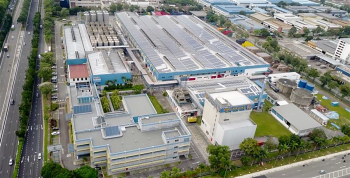
Dutch brewer Heineken will shift its brewing production from Singapore to Vietnam and Malaysia as part of its strategy to build a more agile regional supply approach.

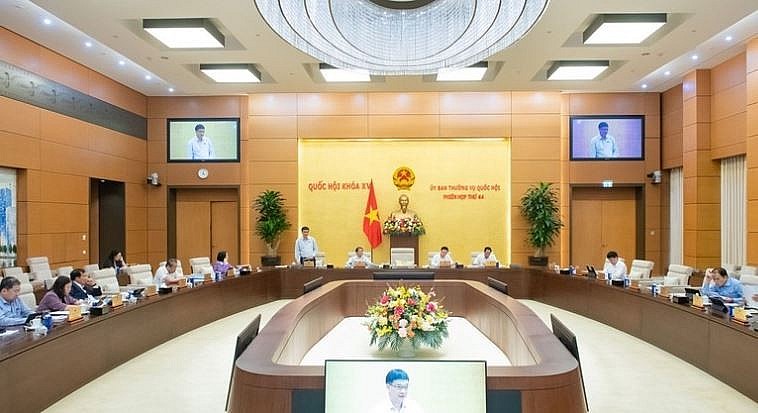 |
| Minister of Finance Nguyen Van Thang presents the report. (Photo: DUY LINH) |
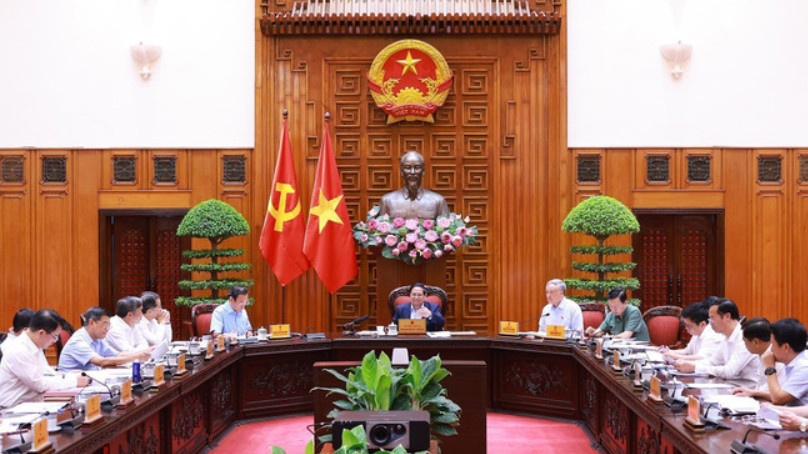
Recently, during its 44th session, chaired by Vice Chairman of the National Assembly Vu Hong Thanh, the National Assembly Standing Committee provided feedback on the draft Resolution on the establishment of an International Financial Centre in Vietnam.
Minister of Finance Nguyen Van Thang stated that the drafting of the National Assembly’s Resolution on the IFC in Vietnam, with specific and exceptional mechanisms and policies, aims to improve the legal framework for the development of an IFC. The centre is to be located in Ho Chi Minh City and Da Nang, with the ambition of becoming a leading international financial hub operating according to advanced global standards and connecting to major financial markets and centres around the world. This will enhance Vietnam’s position in the global financial network.
At the same time, the IFC is intended to promote sustainable finance, encourage the development of green financial products, and contribute to sustainable socio-economic development. It will also facilitate the linkage of domestic and international exchanges, attract capital and financial technology to Vietnam, and draw in and develop a high-quality workforce and domestic and international experts in finance and support services to work at the IFC.
The draft Resolution of the National Assembly is expected to comprise six chapters and 36 articles, regulating several necessary administrative procedures to implement the special mechanisms and policies for the operation and development of the IFC. These procedures are designed to be streamlined and facilitate participation by organisations and individuals in developing the IFC.
Additionally, in line with the policy of further decentralisation between central and local government bodies, the draft Resolution proposes that the Government may issue decrees to address issues that differ from existing laws, resolutions of the National Assembly, ordinances, or resolutions of the National Assembly Standing Committee; the operating and supervisory agencies may issue legal normative documents; and the operating agency may decide to use local budget development investment capital to support housing construction for workers at the IFC.
In his review of the Government's proposal, Chairman of the Economic and Financial Affairs Committee Phan Van Mai noted that the draft Resolution’s documentation is essentially ready for submission to the National Assembly at its 9th session. However, the Committee’s Standing Committee recommended a more specific evaluation of the benefits, challenges, risk levels, and risk management capabilities; a clearer explanation of the IFC’s impacts; and an identification of applicable international experiences for Vietnam.
The Committee’s Standing Committee observed that operating an IFC is a new endeavour for Vietnam. Therefore, the Resolution should only regulate general principles and well-established, stable content. The Government and the Prime Minister should issue more detailed guidelines as appropriate to ensure flexibility and timeliness, and delegate to the two cities responsibilities corresponding to their functions, duties, and authority, ensuring proactivity, flexibility, and innovation following the law.
Regarding the scope and legal principles, Clause 4 of Article 6 in the draft Resolution provides: “During the implementation of this Resolution, the Government may issue decrees to address issues that differ from laws, resolutions of the National Assembly, ordinances of the National Assembly Standing Committee, and must report to the National Assembly at the nearest session.” To ensure the Party’s leadership role in legislative development and clarity in implementation, the Committee’s Standing Committee suggested that the drafting agency report to the Politburo for guidance on allowing the Government to issue decrees that differ from existing laws, resolutions, and ordinances.
In case the Politburo allows the Government to issue regulations different from laws and ordinances, and regulate new issues under the authority of the National Assembly and the National Assembly Standing Committee, the regulations will be kept as in the draft Resolution, and at the same time, it is necessary to add regulations on responsibilities in issuing regulations different from current laws, ensuring the principle that authority goes hand in hand with responsibility.
Regarding the authority to establish the IFC and the plan to have one centre located in two cities, Chairman Phan Van Mai noted that the draft Resolution does not clearly define the authority responsible for deciding on the establishment of the IFC. Article 8 merely states: “The Government shall issue a Decree on the establishment of the IFC.”
Therefore, the Committee’s Standing Committee recommended a clearer provision: the National Assembly should decide on the general policy and issue a Resolution approving the policy of establishing an IFC in Vietnam, in line with Politburo Conclusion 47-TB/TW. The Prime Minister would then issue a Decision to establish the IFC in Ho Chi Minh City and Da Nang.
As for the plan to establish one IFC across two cities, the Committee’s Standing Committee requested the drafting agency to provide clearer justification and rationale for this new model, which differs from Politburo Conclusion No. 47. The model’s structure, the relationship and level of independence between the two locations, and the state management agency responsible for these two branches must be clarified. Based on the unique characteristics of each city (Ho Chi Minh City and Da Nang), the Resolution could stipulate common policies, while sub-law documents should specify tailored provisions to leverage each city’s strengths. In implementation, effective management and control mechanisms must be established to ensure fair competition./.