


Heineken to shift production from Singapore to Vietnam and Malaysia
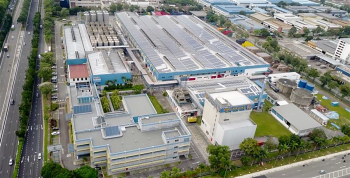
Dutch brewer Heineken will shift its brewing production from Singapore to Vietnam and Malaysia as part of its strategy to build a more agile regional supply approach.


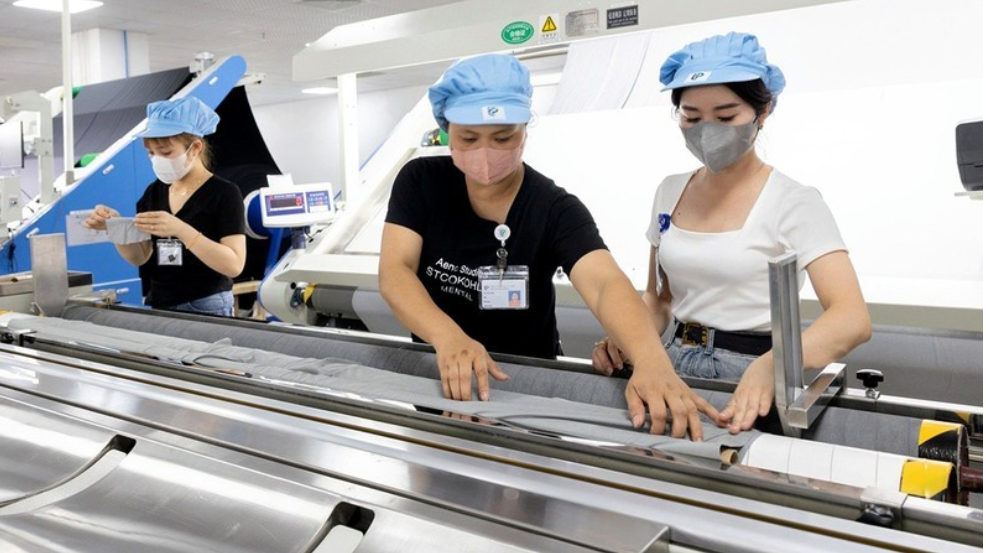 |
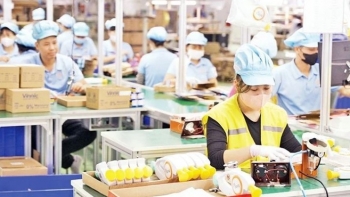
| Textile workers at a factory in Nam Dinh Province. |
This is considered the right direction as foreign investors are relocating their factories to Vietnam, with FDI inflows to Vietnam in 2023 and the first four months of 2024 witnessing strong growth, despite a global slowdown.
In recent years, Thai Binh Province has emerged as a bright spot in attracting FDI. With 3 billion USD worth of FDI in 2023, Thai Binh created a miracle, by making the top five FDI recipients in Vietnam. This is an important foundation for the province to rise up. Providing space for industrial development is also a necessary factor for Thai Binh to proactively welcome the FDI wave.
As a pioneering industrial park in attracting investment, over the past two years, the Lien Ha Thai Industrial Park has seen 14 projects granted investment permits, mainly foreign-invested projects from the US, China, the Republic of Korea, Taiwan (China) and Singapore, with total registered capital at nearly 1.3 billion USD.
In 2023, the industrial park attracted six FDI projects. According to its owner Green i-Park, three projects have been put into operation, namely Lotes Vietnam, Ohsung Vina and JinYang Electronics Vina, whose investments were 167 million USD, 40 million USD and 21 million USD, respectively.
In neighbouring Nam Dinh Province, there are currently 170 active FDI projects with registered capital totalling 4.1 billion USD. Nam Dinh Vice Chairman Tran Anh Dung said in 2023 the province persuaded Quanta Computer Inc., one of the world’s leading computer manufacturers from Taiwan (China), to invest in a project to produce computers and peripheral devices worth 120 million USD.
It was followed by a 42 million USD project by Taiwan’s JiaWei to manufacture plastic and melamine products, an 84.5 million USD project by Singapore’s Xingyu Safety Technology and a 100 million USD project by Singapore’s Sunrise Material to produce high-tech polymer wrap films.
According to Chang Hong Yang, General Director of the Phu Gia Bio-tech Company from Taiwan (China), the company recently proposed a high-tech agriculture and ecotourism project in Nam Dinh. The company chose Nam Dinh because the province has a good agricultural foundation and appropriate soil and ecological conditions for high-tech agricultural production. The company aims to make the project a model of high-tech agriculture in northern Vietnam.
Behind Ha Nam Province’s significant progress in socio-economic development, is its success in attracting many FDI projects. Director of the Ha Nam Department of Planning and Investment, Pham Hong Thanh, said the province currently has 395 FDI projects and 805 domestic projects, with registered capital at 6 billion USD and 171,830 billion VND respectively. The expanded Dong Van I Industrial Park is assessed to have a favourable location and synchronous infrastructure.
Recently the industrial park attracted a food production project worth 2 trillion VND by Pepsico Vietnam. Nguyen Viet Ha, the company’s general director, said it decided to invest in this industrial park because of the local government’s support in project implementation, especially the rapid finalisation of licensing procedures so that the factory can be put into operation soon, creating revenue and jobs for the locality.
According to experts, southern Red River Delta provinces lack three things: land, superior mechanisms and high-quality manpower for industry. The region is also faced with five major limitations, namely the limitation in transport infrastructure linkage, production chain linkage, sectoral linkage clusters in development corridors, and the linkage between domestic and FDI enterprises; the limitation in ensuring water and energy security; the limitation on the size, management capacity and competitiveness of enterprises; the limitation in the application of science and technology; and the limitation in land management, environmental protection and climate change response.
Ha Nam Vice Chairman Tran Xuan Duong, said to enhance FDI attraction, provincial leaders have directed agencies, local authorities and industrial park developers to step up investment promotion.
The province also organised business trips to countries calling for investment, accelerating the construction progress of industrial park infrastructure, as well as paying attention to human resources training, considering it an important factor in meeting foreign investors’ development needs.
In Nam Dinh Province, to avoid the shortage of cleared land, the management board of industrial parks has advised the province to plan new industrial parks in the overall provincial plan. Once approved by the Prime Minister, Nam Dinh Province will have an additional 300 hectares to attract investment, in the Trung Thanh and Hong Tien Industrial Parks.
For Thai Binh Province, its Chairman Nguyen Khac Than, said the province is shifting its focus from quantity to quality in attracting FDI, giving priority to projects using advanced technology, environmentally friendly technology, clean energy and renewable energy to boost sustainable economic growth.
The province has determined administrative reform, enhanced competitiveness and an improved business climate as breakthroughs for development during the 2020-2025 period. To further enhance investment promotion effectiveness, Thai Binh suggested that the central government should soon address obstacles in such areas as housing development, economic zone and industrial park development, public-private partnership, finance and tax.
It can be seen that each province is going their own way to create a comparative advantage in attracting FDI. There are many factors influencing investment attraction, such as infrastructure, manpower, the quality of public services and investment policy. Among these factors, investment policy and manpower are the most important factors in investors’ decisions. Once these two issues are improved, provinces in the southern Red River Delta region will have more opportunities to welcome foreign investment and realise the aspiration to rise up in socio-economic development./.