



Ho Chi Minh City brings vibrant images to Asia’s busiest intersections
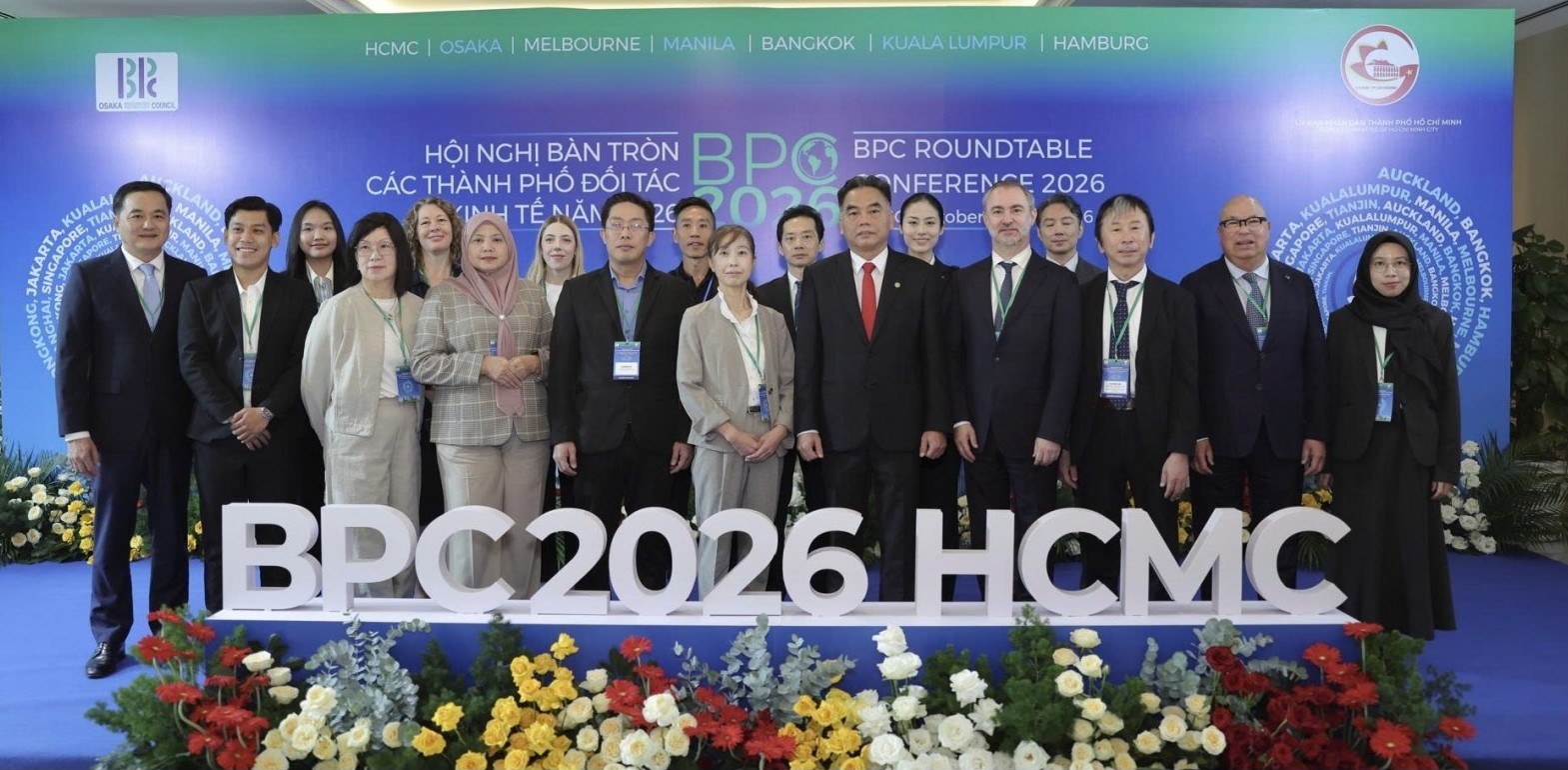
(TBTCO) - Ho Chi Minh City is implementing an international promotional campaign across four major cities to reach wider audiences and visitors.

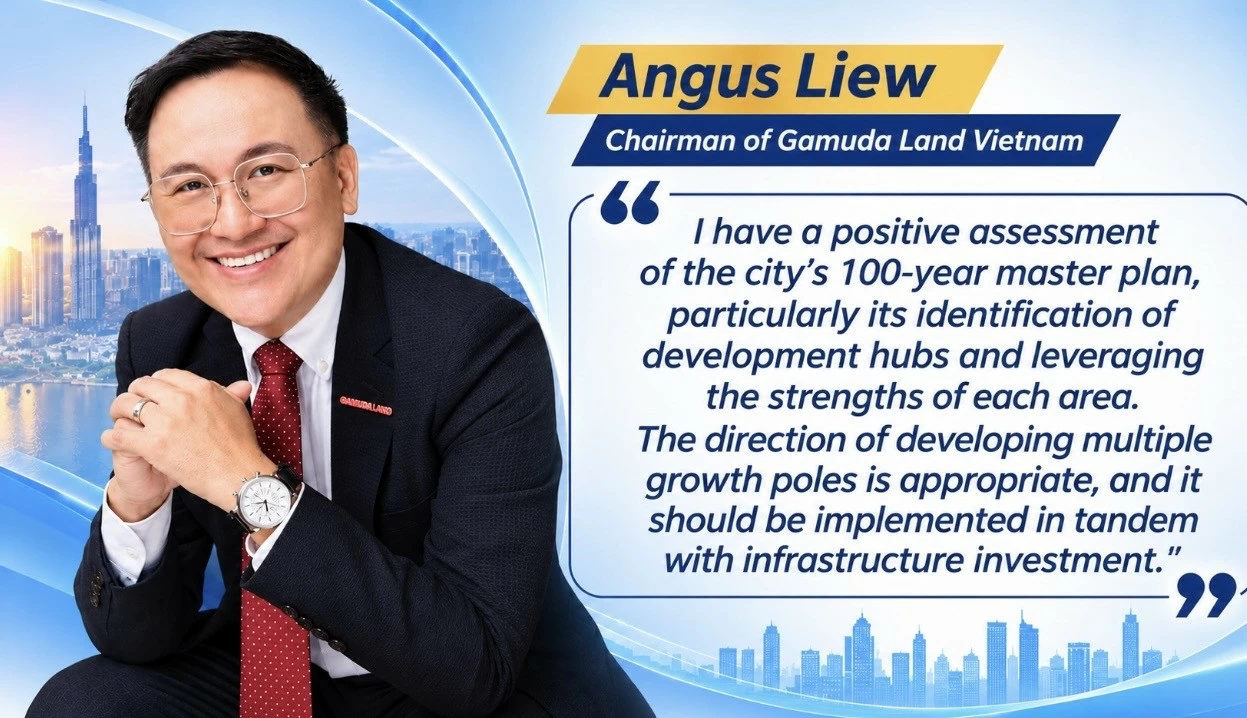
"The development of multiple growth poles is appropriate given the expanded urban space following the merger. However, for these new growth poles to deliver their full potential, planning must go hand in hand with synchronised connectivity infrastructure, particularly strategic transport links,” he said at a Southeast Asia Fortune 500 event held in Ho Chi Minh City earlier in early November.
 |
| Angus Liew Chairman of Gamuda Land Vietnam |
Another issue highlighted by Liew was the flexibility of the master plan. With a 100-year vision, while technology, the economy, and urban development needs constantly evolving, the legal and planning frameworks must be adaptable enough to respond to future changes.
From this perspective, Gamuda Land is looking to expand its investment activities in Vietnam over the next 5-10 years, moving beyond project development in the city centre to explore opportunities in other areas, including Binh Duong and Thu Duc.
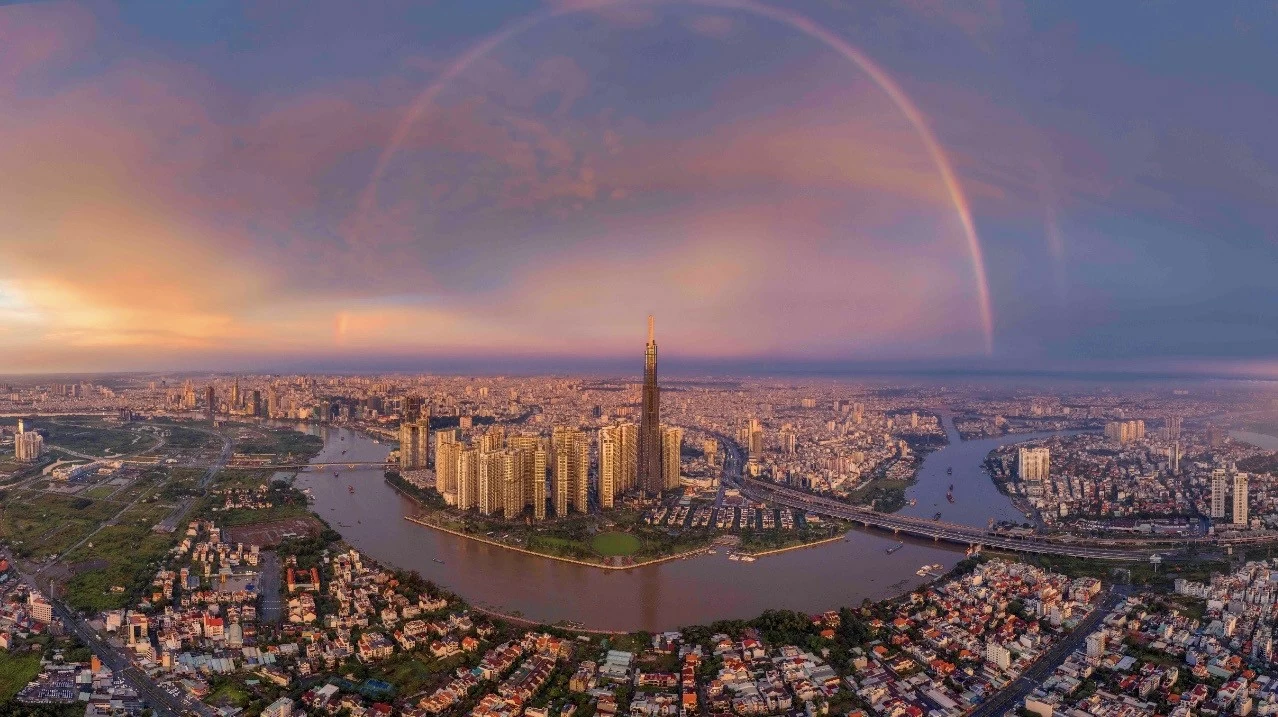 |
| Ho Chi Minh City continues to pursue a higher position in the regional and global urban network. |
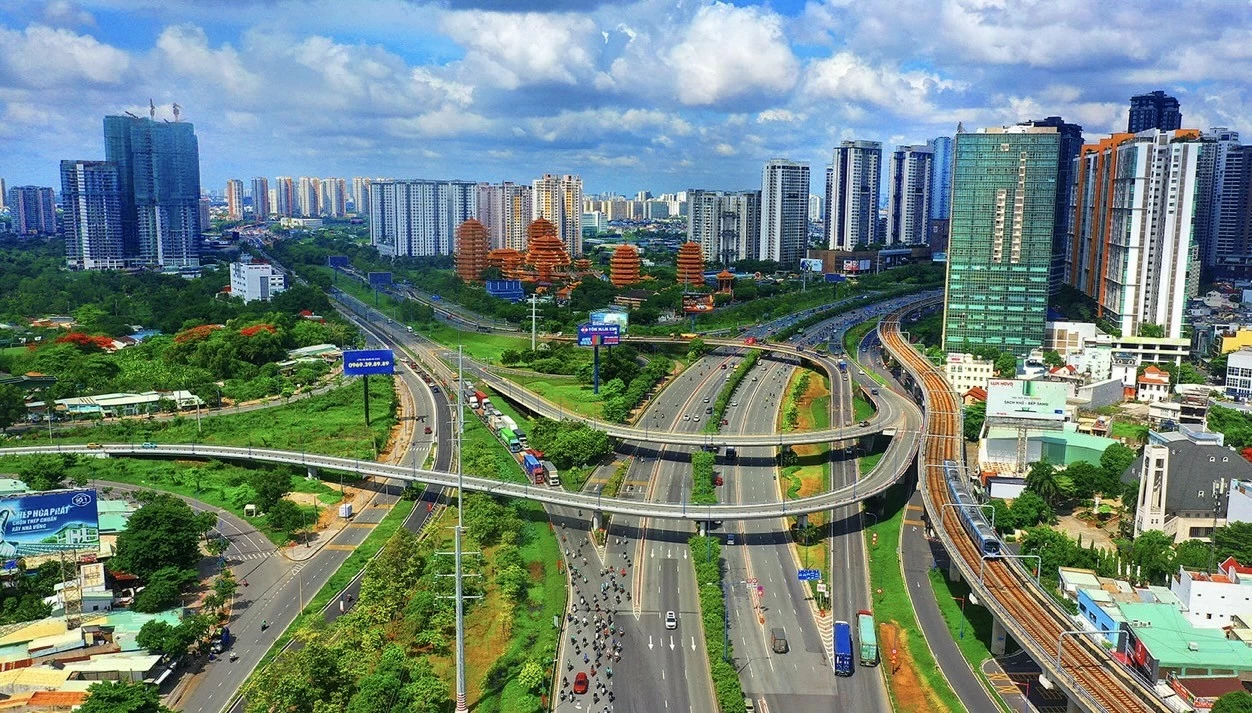
The company is particularly interested in Ring Roads 3 and 4, which, according to Liew, are key drivers in shaping urban development patterns and creating real estate investment opportunities.
Drawing on the experience of major cities such as Shanghai and Beijing, Liew noted that ring road networks could help create development zones with different property price levels. Areas closer to Ring Road 3 could command higher prices, while locations near Ring Road 4 could offer more affordable property options.
The company's assessment and investment plans offer an insight into how real estate developers are reassessing Ho Chi Minh City's potential following the merger. The expanded development space, coupled with strategic infrastructure projects, creates opportunities for new growth poles to emerge, rather than economic activity remaining concentrated in the existing urban core.
This is also one of the key changes that Ho Chi Minh City aims to achieve through its long-term planning.
The city's master plan for the 2025–2050 period, with a 100-year vision, approved at the end of October, sets out an ambition to rank among the world's top 100 cities by 2030, recognised as a liveable city with a world-class innovation ecosystem and a high-income economy.
Notably, the development structure envisages the formation of five growth poles: the central core as an international financial services hub; innovation in the east; industry, high technology, and logistics in the north; seaports, free trade, and energy industries in the south; and urban development, education, and healthcare in the west.
To connect these areas, Ho Chi Minh City plans to develop several strategic connectivity systems including a multimodal industrial, manufacturing, and logistics network, multi-layered urban infrastructure, and a green-blue connectivity network.
A north-south connectivity system is identified as a strategic transport axis linking the continental economy with the maritime economy. It will run from the northern and northwestern gateways through industrial, urban, and innovation hubs, connecting with the city centre, eastern areas, Long Thanh, Phu My, and the Cai Mep–Thi Vai port complex.
Completing the connectivity network will not only create further opportunities for urban development but also help reduce logistics costs and improve business efficiency.
Nevertheless, infrastructure development is only part of the challenge of reorganising urban space. To translate long-term ambitions into tangible development opportunities, an immediate priority is to restructure the city's urban landscape following the merger.
According to Dr. Ngo Viet Nam Son, chairman of NgoViet Architects & Planners, with its area having expanded approximately threefold and its population increasing by around 1.5 times, Ho Chi Minh City should be approached as a megacity sub-region, closely integrated with Dong Nai and other localities across the region.
To achieve this, Son proposed establishing a regional coordination mechanism with sufficient legal authority, financial resources, and implementation capacity to deliver inter-regional cooperation projects.
“One notable direction is the development of a strategic multimodal infrastructure corridor connecting Ho Chi Minh City, Binh Duong, and Ba Ria–Vung Tau, linked to the development of the marine economy, industry, and logistics,” Son said at the same event.
He added that this corridor would encompass not only roads, expressways, metro lines, railways, and waterways, but also play a role in shaping the spatial structure and long-term growth corridors of the region.
Within this structure, Ho Chi Minh City would continue to develop under a polycentric urban model, while strengthening direct connections between transit-oriented development urban areas in the central districts and urban centres in Binh Duong and Ba Ria–Vung Tau.
While a polycentric urban model will reshape the city's spatial structure, the ability to connect these development poles will determine how effectively Ho Chi Minh City can capitalise on its advantages following the merger.
In its expanded development space, Ho Chi Minh City now brings together advantages previously distributed across three localities including a financial and services hub, a modern industrial base, and a deep-water seaport system. The challenge is to ensure that these strengths do not operate in isolation but instead complement one another to generate greater added value.
 |
| Nguyen Loc Ha Standing Vice Chairman of the Ho Chi Minh City People's Committee |
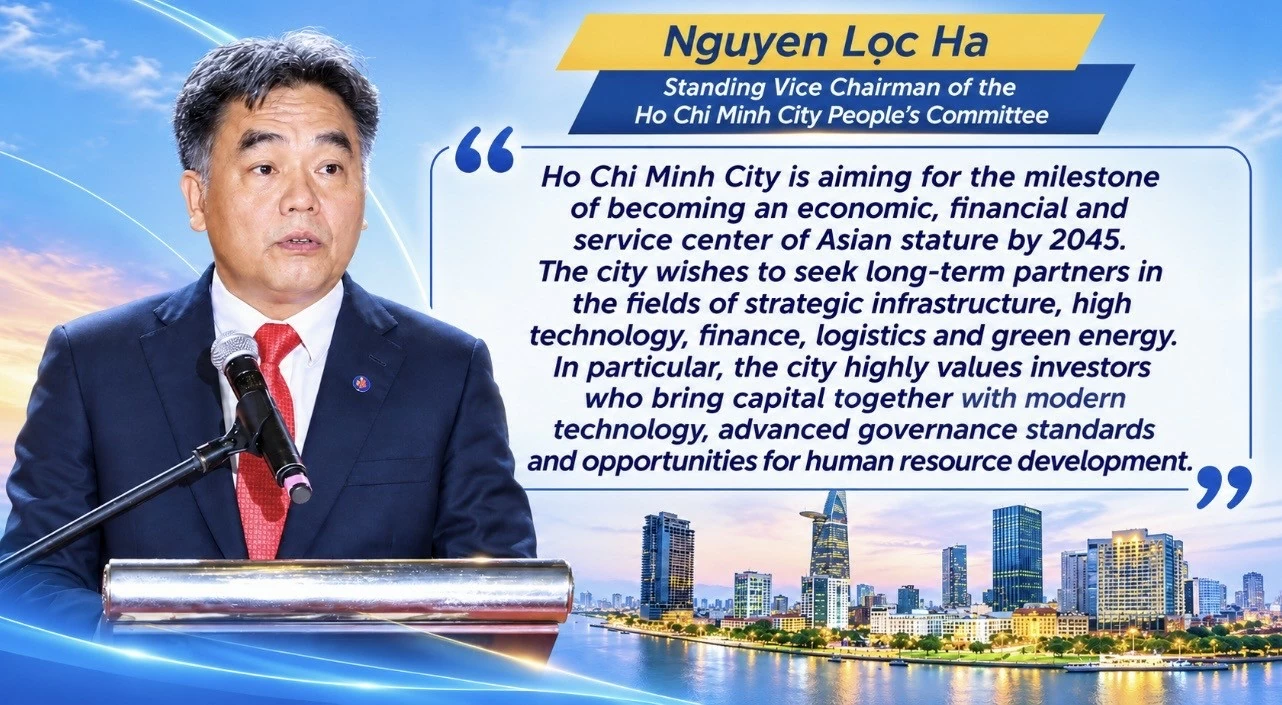
Nguyen Loc Ha, standing vice chairman of Ho Chi Minh City People's Committee, highlighted this issue in a message delivered to the Fortune 500 event.
According to Ha, the city's position is built on four fundamental competitive advantages. The first lies in its central position and strong spillover effects as the country's leading economic hub, bringing together a large consumer market, a dynamic and innovative business community, and one of Vietnam's most developed financial and commercial services systems. These strengths enable investors to gain easier access to Vietnam's market of more than 100 million people, while also providing a gateway to ASEAN and major global economies.
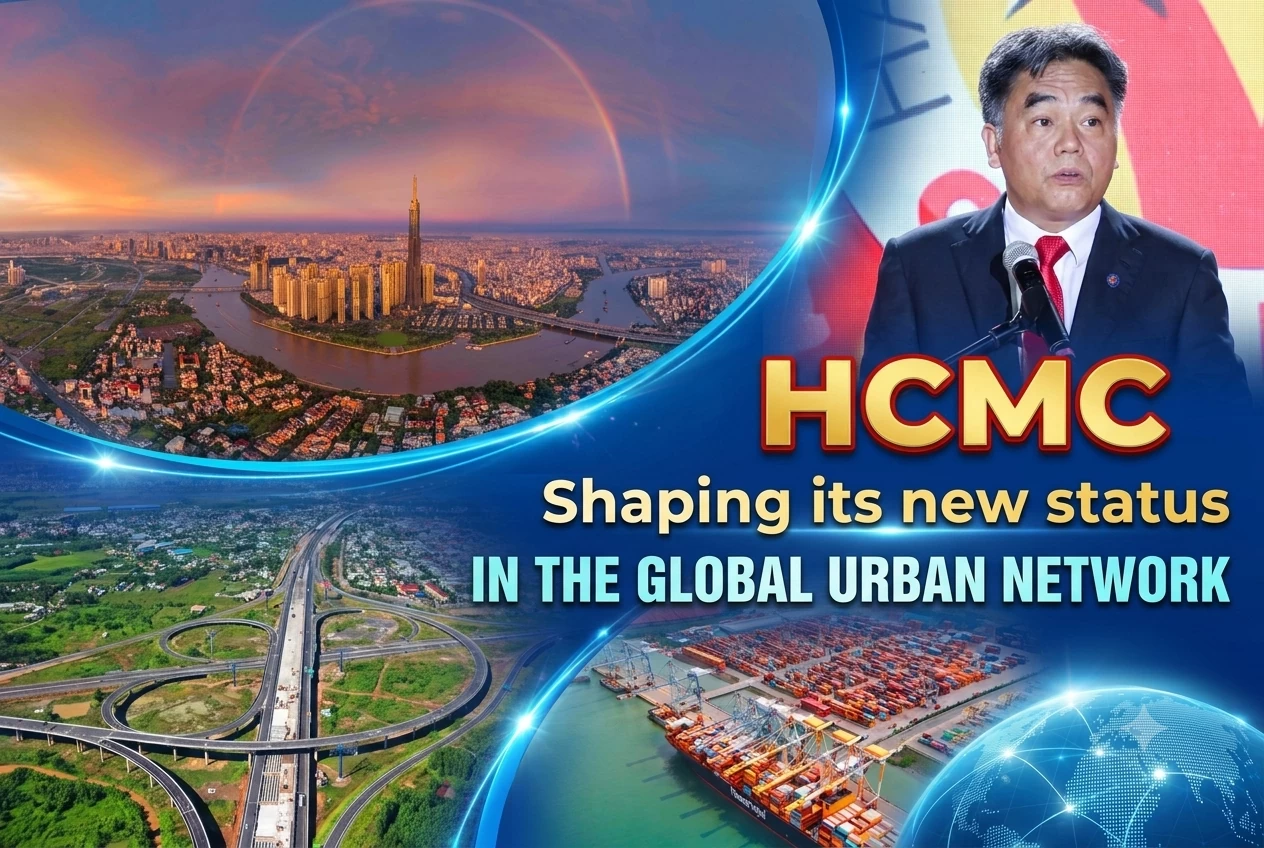 |
| Ho Chi Minh City seeks to redefine position in urban network |
The second advantage stems from the new development space created by the expansion of the city's administrative boundaries.
“For the first time, Ho Chi Minh City brings together, within a single integrated area, a financial, services, innovation hub, a modern industrial base, and an international gateway deep-water seaport system. This opens up comprehensive opportunities across research, manufacturing, trade, logistics, and regional production chain linkages,” Ha said.
The third advantage is a breakthrough institutional framework. The Urban Development Law, which officially took effect in October, establishes a legal framework with a range of preferential mechanisms for Ho Chi Minh City and other special-category cities.
“It marks a shift away from time-limited pilot mechanisms towards a stable, long-term institutional foundation, giving local authorities greater autonomy to create a clear, consistent, and predictable legal environment,” he said.
The fourth advantage lies in a supportive local administration and a favourable investment environment, underpinned by a strong commitment to improving service quality, enhancing information transparency, and strengthening inter-agency coordination.
Under its 100-year vision, Ho Chi Minh City aims to develop a comprehensive, integrated, and highly interconnected innovation-driven economic ecosystem, linking every stage from research, testing, and prototyping to manufacturing, commercialisation, and global markets.
To build this ecosystem, the city plans to strengthen links among research and training institutions, businesses, manufacturing facilities, and internationally accredited support service providers. The aim is to generate new growth drivers based on productivity, science and technology, innovation, and high added value.
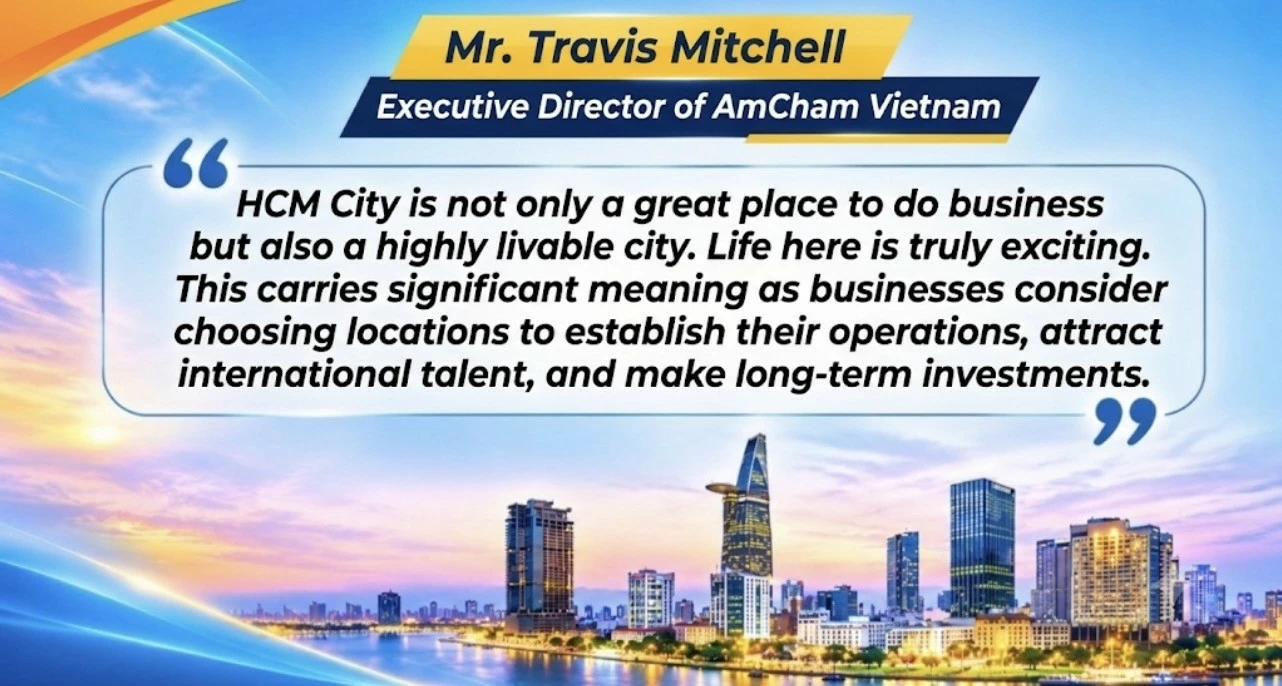
Travis Mitchell, executive director of the American Chamber of Commerce in Vietnam, said Ho Chi Minh City had long been one of the most attractive destinations in Southeast Asia for US companies.
 |
| Ho Chi Minh City strives to offer a globally competitive quality of life. |
According to Mitchell, the city offers a dynamic business environment, a capable workforce, international connectivity, and an entrepreneurial spirit.
“I believe Ho Chi Minh City is not only a great place to do business, but also a wonderful city to live in. Life here is genuinely exciting. This matters enormously when businesses consider where to establish their operations, attract international talent, and make long-term investments,” he said.
For the US business community, Mitchell sees significant opportunities for cooperation with Ho Chi Minh City in semiconductors, high technology, energy, healthcare, and life sciences.
In the technology sector, businesses increasingly recognise the country's potential to become an innovation hub. However, achieving this ambition will require close collaboration among businesses, universities, and the government in developing the workforce, particularly for high-tech industries.
“In healthcare and life sciences, I am impressed by and optimistic about, Ho Chi Minh City's ambition to become a leading healthcare hub in the region. US healthcare companies have made significant investments in Vietnam, bringing advanced medicines, medical devices, modern diagnostic technologies, clinical research activities, and international expertise to the country,” he said.
According to Pham Quang Nhat, director of the Ho Chi Minh City Investment and Trade Promotion Centre, investment flows are shifting from extensive to intensive growth, with an increasing focus on high technology, digital infrastructure, and large-scale projects.
To respond to this trend, the city is rolling out a three-tier investment incentive framework including national-level policies for priority sectors, special mechanisms for strategic investors, and policies available in special institutional zones, such as the International Financial Centre.
These developments are also aligned with the economic restructuring strategy set out in the master plan.
“Ho Chi Minh City aims to attract foreign investment selectively, with an emphasis on technology transfer and stronger links with the domestic economy. It also seeks to promote the role of the private sector, improve resource utilisation, and diversify capital mobilisation instruments for key projects,” Nhat said.
Alongside economic development, the master plan sets out the goal of building a city with a high quality of life, climate resilience, and the ability to attract international talent. In its long-term vision, Ho Chi Minh City aspires to become a global, smart, and modern city with comprehensive development, strong competitiveness, and a quality of life among the highest in Asia.
Ho Chi Minh City's Strategic Vision
By 2030: Ho Chi Minh City will be a special-class, civilised, modern, dynamic, and innovative city; a centre for the economy, finance, culture, society, science, technology, innovation, logistics, and international integration; and a leading force in the country's industrialisation and modernisation, with a prominent position in Southeast Asia. By 2045: Ho Chi Minh City will become an Asian centre for the economy, international finance, culture, society, science, technology, and innovation. It will pursue green growth, sustainable development, and climate resilience, while establishing itself as an attractive global destination with a distinctive cultural and social life, a high quality of life, and deep international integration, ranking among the world's top 100 cities. By 2075 and beyond: Ho Chi Minh City will become a global, smart, and modern city with comprehensive development on a par with the world's developed cities. It will serve as a centre for the economy, finance, science, technology, innovation, and international exchange, with strong appeal for talent, businesses, and development resources. |