According to Ishita Dhamani, partner of Supply Chain Consulting Services for EY Advisory in Singapore, seizing this opportunity requires businesses to look beyond their manufacturing capabilities and work towards building a comprehensive ecosystem. Carbon emissions reduction and product traceability are increasingly influencing modern consumers' purchasing decisions.
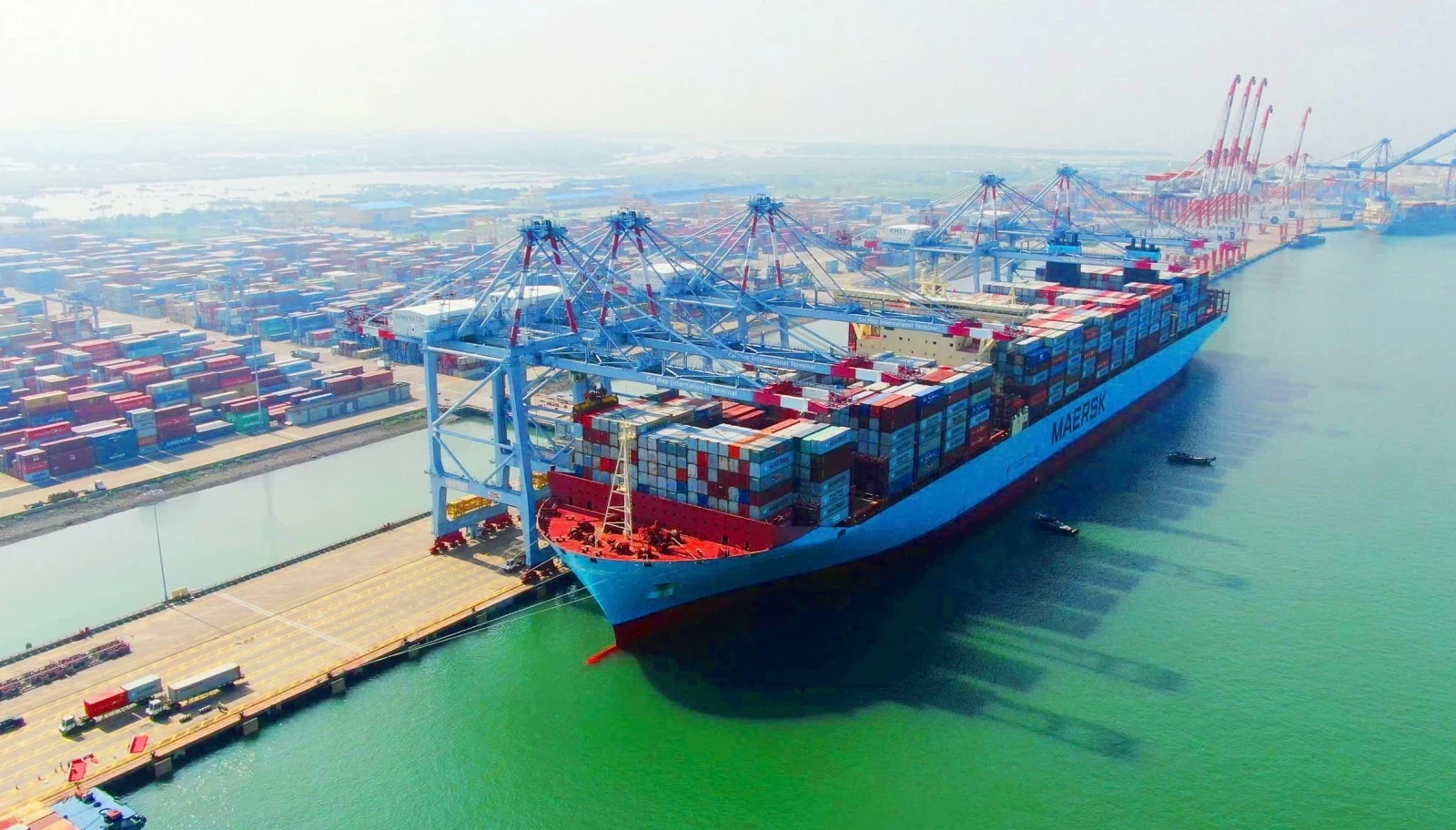 |
| Cai Mep seaport. Photo: Le Toan |
“The power of this transformation lies in seamlessly connecting data across functions such as logistics, energy and manufacturing, helping to optimise costs while enhancing reliability”, Dhamani said at the Autumn Economic Forum held in Ho Chi Minh City in late October.
She noted that adopting advanced digital solutions and developing smart logistics infrastructure would help Vietnam strengthen its position in global supply chains, moving beyond the traditional advantage of Vietnamese-made goods towards a model of connected and sustainable production. Achieving this requires close collaboration between the Government and the private sector.
Dhamani emphasised that sustainability and supply chain resilience are closely interconnected, underpinned by data and digital technologies.
“Integrating smart infrastructure, reducing emissions and improving logistics efficiency can not only lower transportation costs but also strengthen businesses' competitive advantage. Building a comprehensive industrial ecosystem and promoting public-private partnerships are therefore essential for Vietnam to move towards more specialised, higher value-added manufacturing”, she said.
Change in approach
Lawrence Cheung, general director of DHL Global Forwarding Vietnam, said CO₂ emissions should be recognised as an important performance indicator alongside the value and volume of goods and production output.
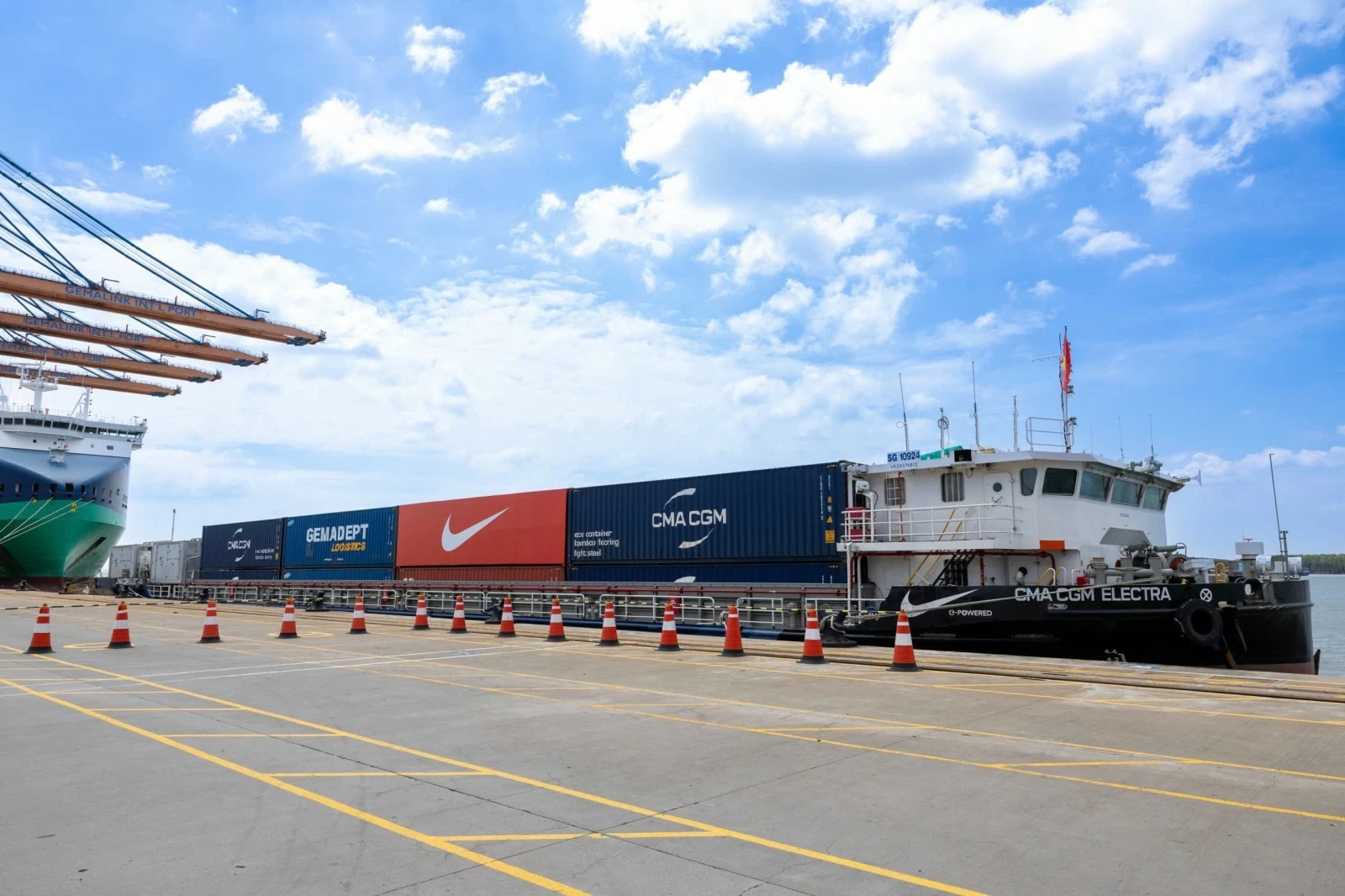 |
| Electricity ferry operates in Cai Mep Seaport. Photo: Le Toan |
According to Cheung, many businesses, particularly small and medium-sized enterprises, face resource constraints, with their immediate priorities remaining the production of quality goods, finding customers and expanding exports.
Therefore, emissions measurement and reduction should be approached in a way that enables businesses to recognise the benefits, access the necessary information and improve operational efficiency without incurring additional costs.
“In addition to Scope 1 emissions generated directly by a company's own operations, Scope 3 emissions across the entire supply chain also need greater attention. Businesses should be supported in gaining a better understanding of these emissions, while improving their ability to monitor and ensure data transparency”, Cheung said.
Cheung stressed that reducing CO₂ emissions is a shared responsibility among all stakeholders in the logistics chain, from manufacturers to port operators. Even small improvements, such as reducing the time vehicles spend idling at ports or minimising waste, can contribute to greener operations.
“We need a common platform to monitor and ensure transparency in CO₂ emissions data. This would provide a starting point for identifying opportunities for improvement and determining priority areas for the next phase”, he said.
Sharing the same view on the importance of information transparency, Truong Tan Loc, marketing director of Saigon Newport Corporation and chairman of Tan Cang-Cai Mep International Terminal, said that data connectivity and information-sharing remained major barriers to the development of green logistics worldwide.
“The challenge today is not simply to transport goods faster, but also to ensure that information is transmitted promptly, accurately, and consistently. Productivity, competitiveness and sustainability are no longer separate objectives; they need to be pursued in an integrated manner through standardised processes, procedures, and data systems”, Loc said.
Supply chain efficiency should not be measured solely in terms of cost and transportation speed. Loc said three additional factors should be taken into account: traceability and transparency, sustainability, and supply chain resilience.
Practical improvements
Drawing on port operations, Cao Hong Phong, deputy general director of Gemadept Terminal Link Cai Mep Terminal, said green logistics was not simply about becoming greener or smarter, but also about being more transparent, reliable and efficient.
The terminal is connecting importers, exporters and transport operators through digital platforms. SmartPort enables customers to conduct transactions online, while Rivergate connects waterway transport operators, allowing them to register barges and cargo entirely online.
“Green logistics does not necessarily have to start with major investments such as electric barges, solar power systems at warehouses or electric vehicles within ports. It can begin with connectivity and information-sharing among stakeholders”, Phong said.
According to him, providing cargo information early and in a timely manner enables cargo owners, ports and transport operators to coordinate the allocation of containers, vehicles and schedules more effectively.
“When cargo is ready as transport vehicles arrive, trucks do not have to keep their engines running while waiting, thereby reducing emissions. Conversely, if a vessel arrives at the port before the cargo is ready, prolonged waiting times mean that the vessel continues running its generators and emitting pollutants”, he said.
Digital connectivity and timely information-sharing therefore enable stakeholders across the logistics chain to coordinate more effectively, ensuring that goods are transported at the right time and to the right place, while minimising waiting times and reducing emissions.
Phong said businesses should begin their transition by improving simple aspects of their day-to-day operations, starting with ensuring that information is provided accurately, transparently and promptly.
“Such improvements can deliver practical results, helping Vietnam gradually meet international green standards and move towards the development of green ports, green logistics and green connectivity”, he added.
Projects unveiled at Autumn Economic Forum Can Gio International Transshipment Port - Total investment: VND128.8 trillion ($5 billion) - Investors: Terminal Investment Limited Holding SA, Vietnam Maritime Corporation, and Saigon Port JSC Gemadept Terminal Link Cai Mep Terminal - Total investment: VND16.8 trillion ($647 million) - Investor: Gemadept - Terminal Link Cai Mep |
| Hoang Nguyen Dinh: Vice Chairman, Ho Chi Minh City People's Committee 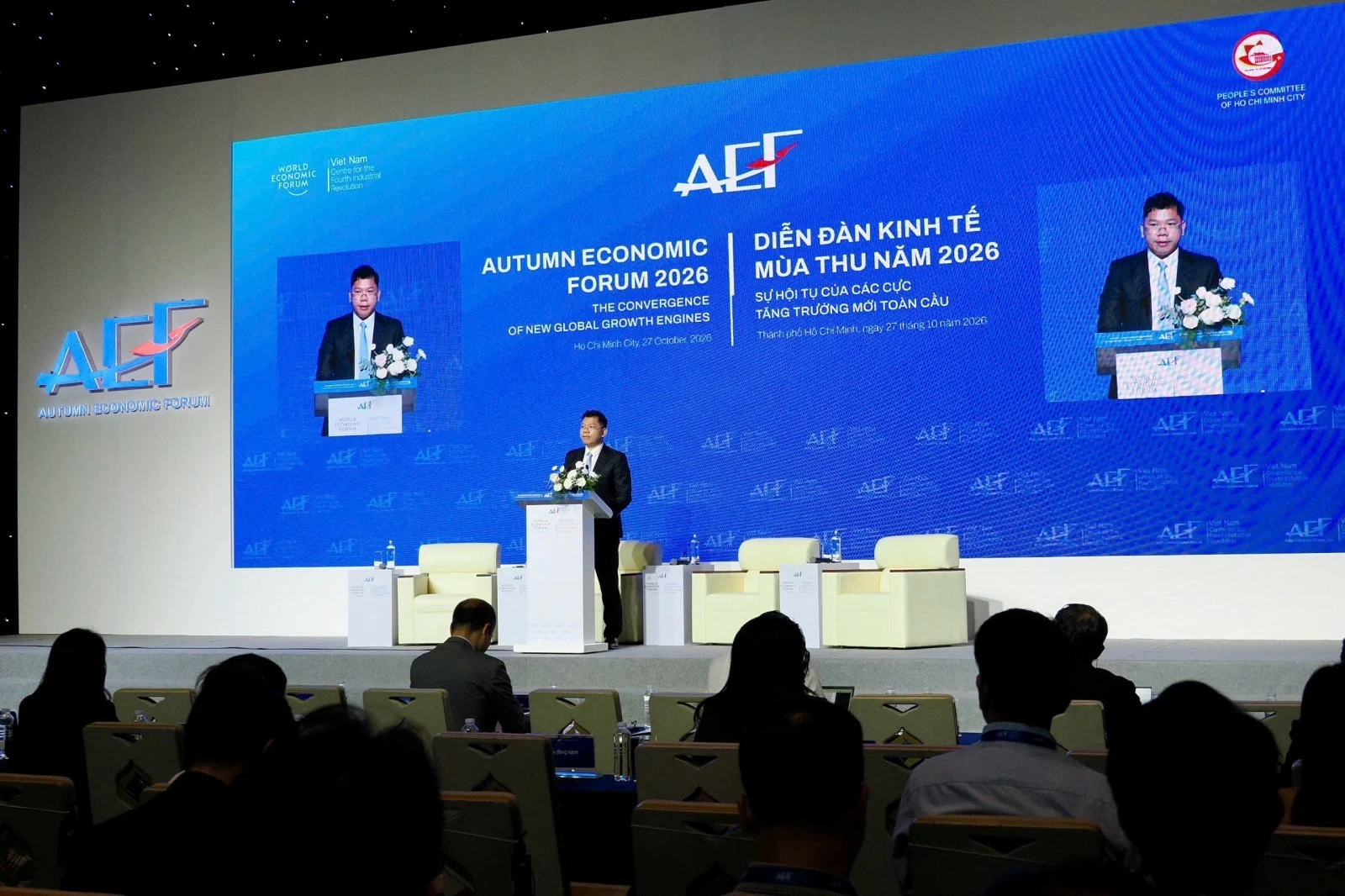 | | Hoang Nguyen Dinh, Vice Chairman of Ho Chi Minh City People's Committee gave speech at the Autumn Economic Forum 2026 on the city potential and development strategies. Photo: Le Toan | In 2025, Ho Chi Minh City and the World Economic Forum issued a joint statement on smart manufacturing and responsible industrial digital transformation, focusing on three key priorities. First, greening and transparency are no longer merely compliance costs but have become prerequisites for businesses to access markets and capital. Second, business competitiveness depends not only on companies' internal efforts but also on the wider ecosystem, including technology, human resources, logistics infrastructure and data. Thirdly, cities and the younger generation of entrepreneurs are emerging as new players in shaping technology partnerships and creating new drivers of growth. |