


Heineken to shift production from Singapore to Vietnam and Malaysia
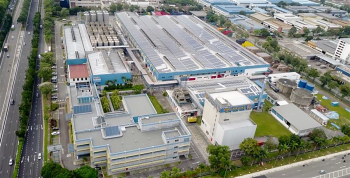
Dutch brewer Heineken will shift its brewing production from Singapore to Vietnam and Malaysia as part of its strategy to build a more agile regional supply approach.


In a recent assessment of the impact on the insurance sector of the conflict, global rating agency Fitch Ratings assumed that initial claims are expected to be recorded in the first quarter of 2026, reflecting a hit to the profitability of insurers.
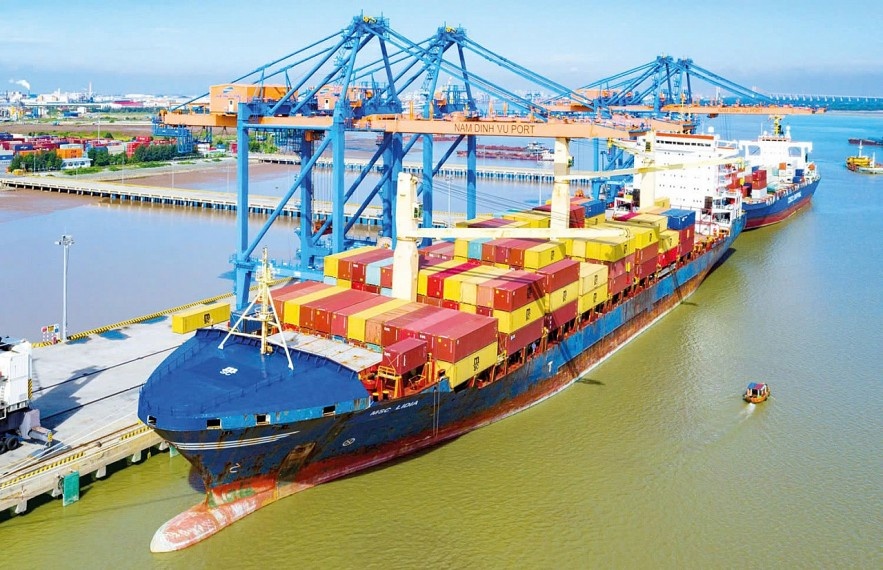 |
| For high-risk lines such as hull insurance, domestic insurers typically cede a large proportion of risk to reinsurers |
Statistics indicate that around 1,000 vessels, with a combined hull value exceeding $25 billion, are operating in the Gulf region and adjacent waters. Risk accumulation is high, given the concentration of ships around the Strait of Hormuz.
In practice, many war-risk insurance contracts in the marine and aviation sectors have been abruptly cancelled or renegotiated at significantly higher premiums.
“As a result, war-risk insurance costs for vessels transiting the Strait of Hormuz have fluctuated sharply, in some cases rising by as much as twentyfold. Elevated premiums are likely to persist through the end of 2026,” Fitch Ratings noted.
The Middle East conflict is assessed to have a limited direct impact on Vietnam’s non-life insurance market, mainly affecting transport and cargo lines, which represent a small proportion of total revenue.
Data from the Insurance Supervisory Authority under the Ministry of Finance indicate that in 2025, cargo insurance accounted for 3.83 per cent of gross written premiums, aviation insurance 1.14 per cent, and hull and shipowner liability insurance 2.66 per cent.
A survey by VIR’s reporters at several insurers, including Bao Viet, MIC, PTI, BSH and DBV, shows that no claims have yet been recorded from customers. This is partly due to the limited presence of Vietnam’s fleet in the region.
According to the Vietnam Maritime and Inland Waterways Administration under the Ministry of Construction, as of early March 2026, only 17 oil tankers owned by Vietnamese companies, along with 213 seafarers, were operating in the Middle East.
Notably, the Nghi Son Refinery relies entirely on crude oil imports from the Middle East, with approximately four shipments per month.
In 2025, Vietnam’s total import-export value with the Middle East accounted for only about 2 per cent. Despite the modest share, certain commodities remain heavily dependent on the region, particularly crude oil, of which around 80 per cent of imports originate there.
In addition, for high-risk lines such as aviation and hull insurance, domestic insurers typically cede a large portion to reinsurers, resulting in very low retention levels – around 2 per cent for hull and 0.3 per cent for aviation. This significantly limits the direct impact on business performance.
A representative of PVI said the company has not recorded any direct impact so far. However, the conflict could indirectly affect clients’ operations, such as supply chain disruptions or reduced asset utilisation, thereby lowering premium revenue.
According to the PVI representative, the company mainly insures engineering and fire risks, with insured assets located domestically.
While it participates in reinsurance across multiple markets, its retained risk is minimal, so the overall impact is negligible.
A representative of Bao Viet Insurance said the company is updating information from international markets to advise import-export enterprises on marine insurance coverage, war-risk protection, and supply chain safeguarding solutions, while ensuring customers’ rights in line with signed contracts.
Assessing the direct impacts of the Middle East conflict, Tran Nguyen Dan, director of the Institute of Financial Risk Management and Insurance (IFRM), noted that both protection and indemnity insurance and hull insurance exclude war risks.
Typically, insurers exclude areas with high-risk accumulation and may immediately adjust contract terms, for example by denying coverage for vessels passing through the Persian Gulf.
“Basically, claim costs are not increasing, meaning the direct impact in this aspect is negligible,” he said.
Meanwhile, according to the head of analysis and research at a major Hanoi-based fund management company, in high-risk areas, insurance premiums – particularly war-risk premiums – have surged from around 0.25 per cent to 3 per cent of a vessel’s value (a 10–12-fold increase), mainly applied to ships transiting conflict zones.
“Shipping routes from Vietnam to Europe and the United States are not subject to these charges, but they are still indirectly affected by rising fuel prices and the risk of vessel shortages, which prolong transit times and increase costs,” the expert added.
On indirect impacts, according to Dan from IFRM, disruptions in oil supply would push fuel prices higher, driving up transportation costs and, in turn, commodity prices.
As cargo insurance premiums are typically calculated based on the total cost of goods, insurance, and freight, this would raise the premium per unit of goods, potentially boosting premium revenue in this segment.
However, experts warn that the more significant downside lies in the drag on GDP growth. This would dampen demand for non-life insurance and affect the life insurance segment.
Under a prolonged indirect impact scenario, the decline in premium income could be substantial if the conflict does not end soon.