




Lynas secures Vietnam metal processing deal with LS Eco Energy
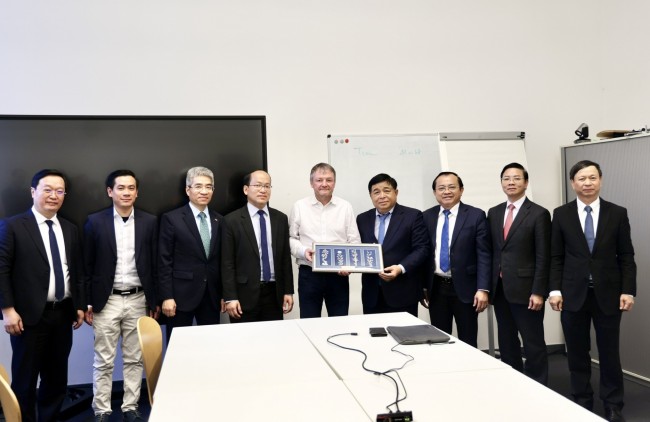
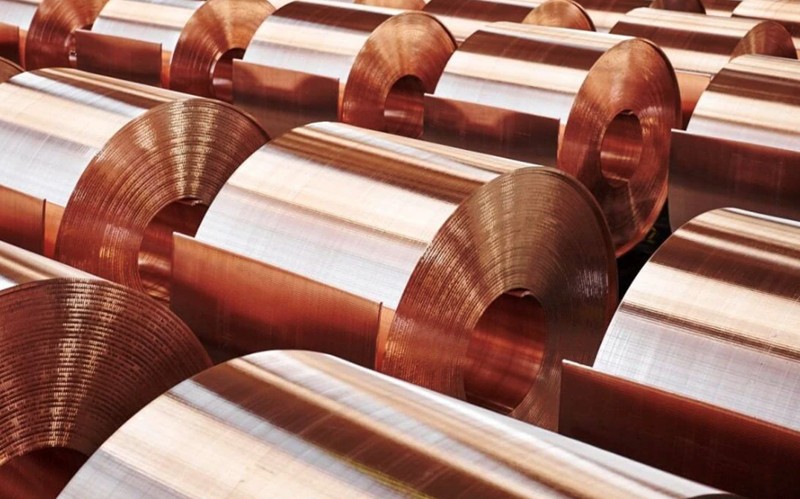
Australian rare-earths miner Lynas has signed a framework agreement with LS Eco Energy to produce rare earth metals at a new facility in Vietnam.

Identifying industrial development as a key driver of economic growth, Phu Tho province in Vietnam's northeast has taken decisive steps and expedited a series of coordinated measures to improve the local investment environment, enhance competitiveness, and attract large-scale projects, particularly foreign direct investment (FDI).
 |
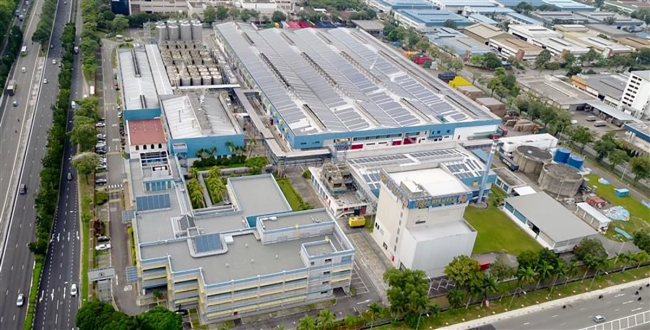
| Projects featuring advanced technologies, modern management practices, and efficient land use are being prioritised for investment in the province. Source: Phu Tho Portal |
As a result, the industrial sector has maintained strong momentum, making important contributions to driving the province's socioeconomic development.
Over the first 10 months of 2025, Phu Tho's industrial production recorded solid growth, reinforcing its role as the leading pillar of the provincial economy.
Operations at major industrial parks remain stable, while numerous foreign-invested projects in electronic components, precision engineering, and electrical equipment entered steady production, significantly contributing to the industry-construction sector's overall performance.
The province's Index of Industrial Production (IIP) expanded 26.8 per cent over 2024, with manufacturing alone rising by 29.3 per cent. Alongside established enterprises such as Compal, Arcadyan, BH Flex, Cammsys and Innovation Vietnam, a number of new projects have begun commercial operations, including Lioho, Asahi Intecc, Kitz, Tamron, Stepper Vision, Utivina, TechL Vina, Ssep Vietnam, Meibang, and Sunny Apparel Hoa Binh, further expanding the growth potential of key manufacturing industries.
Most major industrial products posted strong increases on-year, such as laptop output up 32.3 per cent; electronic components up 21.5 per cent; animal feed 26.3 per cent; cement 25.5 per cent; ceramic tiles 19.3 per cent; and power generation 33.9 per cent. These figures underscore the province's appeal to export-oriented industries and global value chain manufacturers, while creating positive spillover effects for trade, services, and logistics development.
In a notable development, Phu Tho Industrial Parks Management Board has granted granted approval for an electronic components manufacturing and processing plant in Tam Duong I Industrial Park.
The project, developed by Korean-owned Jahwa Vina Co., Ltd with total investment value exceeding $105 million, is scheduled to begin construction in the fourth quarter (Q4) of 2025 and commence operations in Q2 of 2028.
Once operational, the project is expected to generate nearly $180 million in annual revenue, contribute $360,000 to state coffers and create 1,300 jobs. Jahwa Vina is among the prominent foreign investors expanding production in Phu Tho.
Under the provincial plan, post-merger Phu Tho (encompassing Vinh Phuc and Hoa Binh provinces from July) is positioned to become a centre for supporting industries and clean energy in the northern midland region.
Along with this, three development corridors have been designated: the Viet Tri-Vinh Yen corridor tailored for electronics and high-tech equipment manufacturing; the Thanh Thuy-Hoa Binh corridor for renewable energy, agricultural processing, and ecotourism; and the Phu Ninh-Yen Lap corridor for battery production, automotive components, and new materials. By 2030, the province aims to attract $8 billion in foreign direct investment, with 70 per cent directed to high-tech and green projects.
Economists note that the merger of the three localities has created a new regional structure with greater scale and competitiveness, positioning Phu Tho as a focal point for FDI flows shifting into Southeast Asia.
At a recent conference on industrial development and investment promotion, Chairman of Phu Tho People's Committee Tran Duy Dong emphasised, "Industry continues to be the principal economic sector and the key driver of the province's growth. All levels and sectors must be more decisive in investment promotion and resolving difficulties for businesses, while prioritising on-site investment promotion and supporting businesses to expand, particularly in electronics, automobile and motorcycle manufacturing, and supporting industries.
Regional centre for industry, services and innovation
Phu Tho is not only expanding traditional industry but is also demonstrating strategic vision in transitioning towards green, high-tech, and innovation-driven growth.
 |
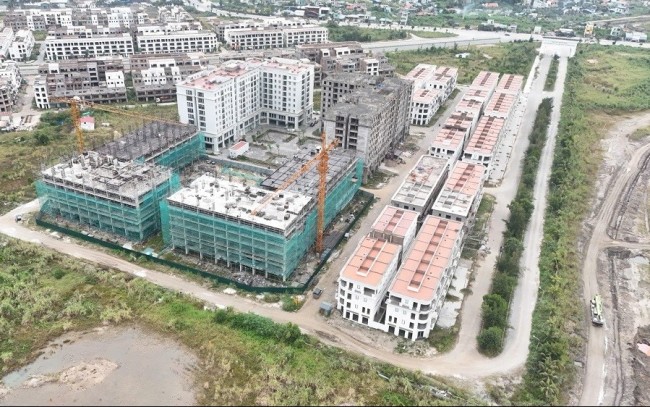
| The fully modernised and synchronized infrastructure of Ba Thien II Industrial Park enhances its appeal to investors. Source: Phu Tho Portal |
The province plans to convert existing industrial parks into eco-industrial zones aligned with circular-economy principles, while developing modern clusters with advanced waste-treatment systems. Priority has been given to clean industries such as precision engineering, electronics, new materials, agricultural processing, and renewable energy.
Following the administrative consolidation, Phu Tho has restructured 12 industrial parks and consolidated the infrastructure of Phu Ham, Thuy Van, Khai Quang and Lac Thinh IPs, with a combined area of over 3,500 hectares.
By 2026, these IPs are expected to feature integrated infrastructure meeting international standards in electricity, water supply, internal transport, telecommunications, and wastewater treatment.
In terms of transport and logistics, once completed, the Hoa Binh-Vinh Phuc expressway is expected to reduce logistics costs by 40 per cent and enhance connections to Dinh Vu Port in Haiphong and Noi Bai International Airport in Hanoi.
Meanwhile, the Viet Tri-Lam Thao Logistics Centre, with total capital of $240 million and the engagement of CJ Logistics from South Korea, is seen as a strategic link in the region's supply chain development.
The province is also proactively implementing Resolution 57-NQ/TW on science, technology, and innovation, focusing on the establishment of the Phu Tho Innovation and Startup Centre and fostering an ecosystem for incubating enterprises in high technology, smart agriculture, and tourism-services.
Chairman Tran Duy Dong said, “The province consistently prioritises industrial development as part of its long-term strategy. Phu Tho gives priority to developing high-tech industrial parks to attract investment in emerging industries with high added value and environmental friendliness.”
The strong performance of Phu Tho's post-merger economy shows that the new governance model is working effectively, creating powerful momentum for investment attraction, productivity improvement, and higher-quality growth.
With its current trajectory, Phu Tho is moving closer to its goal of becoming a regional centre for industry, services, and innovation in the northern midland and mountainous region.