





Heineken to shift production from Singapore to Vietnam and Malaysia
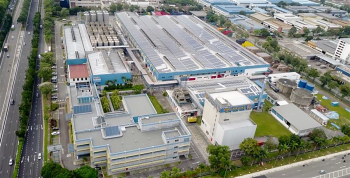
Dutch brewer Heineken will shift its brewing production from Singapore to Vietnam and Malaysia as part of its strategy to build a more agile regional supply approach.

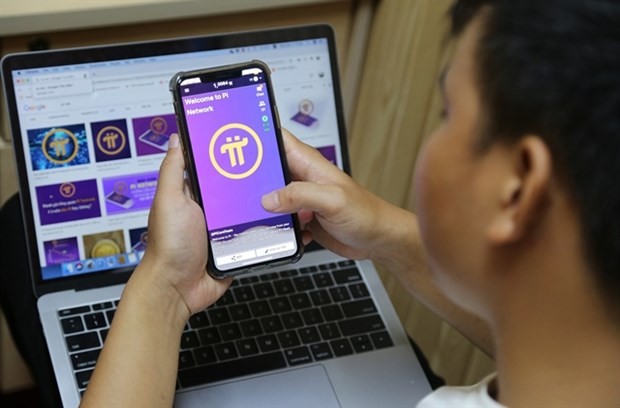 |
| There are still different viewpoints and approaches on how to manage digital assets and promote their development. (Photo: toquoc.vn) |
According to Dang Huy Dong, Director of the Planning and Development Institute, it has become pressing for countries, including Vietnam, to develop appropriate legal frameworks to promote the development and application of blockchain as well as digital assets.
Vietnam also needs to create a fair and transparent environment to exploit the values of digital assets, thereby having a mechanism to encourage creativity and technological innovation to enable the country to benefit from opportunities arising from Industry 4.0 and keep up with the development of other countries.
Digital assets witnessed rapid growth in recent years along with the development of science and technology, and the fourth industrial revolution.
Boston Consulting Group has estimated that tokenized assets may account for 10% of global gross domestic product (GDP) by 2030, equivalent to 16.1 trillion USD, expecting a rapid growth from 310 million USD in 2022, or 0.4% of GDP.
Nguyen Khanh Bao from the Ministry of Information and Communications cited statistics of Digital Assets – Worldwide/Statista Market Forecast which showed that there were more than 2 billion transactions, worth a total of 1.4 trillion USD, from cryptocurrencies in 2021.
The revenue from the digital asset market was forecast to reach 56.42 billion USD in 2021 and register an average annual growth rate of 16.15% in the 2023-2027 period to reach 102.7 billion USD in 2027.
The number of users would reach 994.3 million in 2027, or a user penetration rate of 12.5%.
Vietnam currently ranks 11th with a penetration rate of 6.1% of the population and in the top 20 countries with the highest penetration rates of digital assets.
A representative from Blockchain Association said that Vietnam was in the top 10 in the world in terms of the percentage of the population owning cryptocurrencies.
According to Dong, Blockchain is considered one of the leading technologies in the list of prioritized technologies for research, development and application to participate in Industry 4.0.
The law of Vietnam has not yet recognised the ownership of digital assets. However, transactions and exploitation of digital assets have taken place regardless.
There are still different viewpoints and approaches on how to manage digital assets and promote development.
Bao said many countries took action to develop a legal framework for digital assets, including the EU, Japan, the US and China. But in Vietnam, there had been no regulations established.
He said that reviews of the existing 8 relevant laws and codes showed that there had been no clear definition and classification of crypto assets.
A research team from the institute proposed a legal framework to be completed, including a clear and detailed definition of digital assets to ensure the appropriateness to Vietnam’s situation.
Cryptocurrencies should be recognised as a new type of asset which has prerequisites for circulation, researchers said.
Policymakers should consider taxing transactions related to digital assets, researchers said, adding that initial coin offerings (ICOs) should also be allowed and put under management together with trading platforms.
The research team also proposed to improve the technology park models specialised for blockchain research, development, application and testing, with a priority on app-based products which generate economic value for the country.
Pham Hong Hanh, from the National Assembly Office’s Economics Department, said that it was essential to build a legal framework to promote the development and application of blockchain technology and manage virtual assets.
However, the level of regulation should be put into careful consideration to ensure a balance between the goals of encouraging innovation and protecting the interests of organisations and individuals.
She said that crypto assets, like non-fungible tokens, and cryptocurrencies were the best-known applications of blockchain technology, adding that these were new issues. It would be difficult to build a complete and comprehensive legal framework the first time. Therefore, developing a sandbox would be the appropriate approach.
Le Thi Hoang Thanh, Deputy Director of the Department of Civil and Economic Law under the Ministry of Justice, said that digital assets by nature reflected a value similar to other traditional ones. Thus, they should be treated as assets.
To promote Industry 4.0 in Vietnam, the law must play a role in promoting and protecting ownership of new types of assets created by this revolution. However, it would be impossible to raise comprehensive solutions immediately.
Thanh said the approach for Vietnam should be to closely watch the development of technology and markets while enhancing exchanges and learning from international experiences and consulting relevant parties to gradually raise appropriate policies./.