



In the latest draft of the Law on Personal Income Tax submitted to the National Assembly on December 2, the government proposes raising the revenue threshold exemption for tax household and individual businesses from VND200 million ($8,000) per year to $20,000 per year. The same $20,000 threshold would also be deductible before applying a ratio-based tax on revenue.
The draft additionally introduces a provision requiring household and individual businesses with annual revenue above $20,000 and up to $120,000 to calculate tax based on income (revenue minus expenses).
This aims to ensure the tax is levied in accordance with the taxation nature with a 15 per cent tax rate application, similar to the corporate income tax rate prescribed in the Law on Corporate Income Tax No. 67/2025/QH15 for enterprises with revenue below $120,000 per year.
 |
Following this approach, all household and individual businesses would pay tax based on their actual income; if they have no income, they would pay no tax. Only when a household or individual business cannot determine its expenses would the ratio-based tax on revenue be applied.
Assessing the reasonableness of this dual tax calculation method, lawyer and tax expert Phan Hoai Nam, CEO of W&A Consulting and an arbitrator at the Vietnam International Arbitration Centre (VIAC), believes that maintaining two parallel methods, one based on income and the other based on a revenue ratio for businesses unable to determine their costs, is a reasonable approach during transitional period.
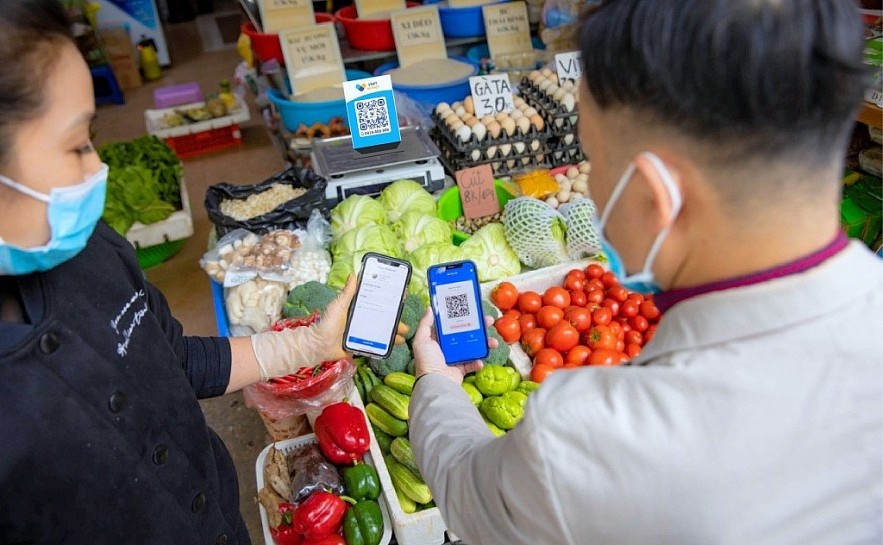
Given the highly diverse structure of household businesses in Vietnam, ranging from small roadside vendors to more stable business models, it is unrealistic to expect all of them to meet the same standardised tax calculation requirements as enterprises.
According to lawyer Nam, the most important aspect is that this model reflects the actual management capacity of the household business sector.
For households with revenue under $120,0000 yet unable to determine or substantiate their expenses, retaining the ratio-based method offers a practical option, easing administrative pressure and avoiding disruptions to business operations.
“On the other hand, this policy also encourages better-equipped households to proactively collect invoices and records to qualify for the income-based method. This marks an important shift, gradually moving the system from presumptive taxation to taxation based on actual income, a trend aligned with international standards and promoting greater fairness among taxpayers,” he noted.
It is evident that the tax policy for household and individual businesses in the draft Personal Income Tax Law has been carefully and responsibly developed by the Ministry of Finance.
The draft reflects a comprehensive review aimed at ensuring consistency across tax policies and legal regulations on tax administration, while encouraging eligible households to transition to enterprise status as required under Politburo Resolution No. 68-NQ/TW on private sector development.
According to lawyer Nam, alongside this policy direction, the tax authority must issue detailed guidelines, transparent criteria for determining expenses, and ensure a robust data management infrastructure to minimise risks of abuse.
“The key to determining expenses during this transitional shift in tax calculation methods is to establish a mechanism that is easy to implement, to understand, and to monitor. If this can be achieved, we will have a tax system that is fairer, more transparent, and better suited to the realities of Vietnam’s small and micro business sector,” Nam noted.
According to the Ministry of Finance, by raising the revenue threshold exempt for personal income tax to VND500 million ($20,000) per year, allowing a $20,000 deduction from revenue before tax calculation, and adding the income-based tax method for household and individual businesses, the draft Personal Income Tax Law establishes a fair and equitable legal framework.
This framework is better aligned with the operating conditions of household and individual businesses in Vietnam, helping them feel secure in production and business activities, contributing to ensuring stable livelihoods and spurring economic development.