



Heineken to shift production from Singapore to Vietnam and Malaysia
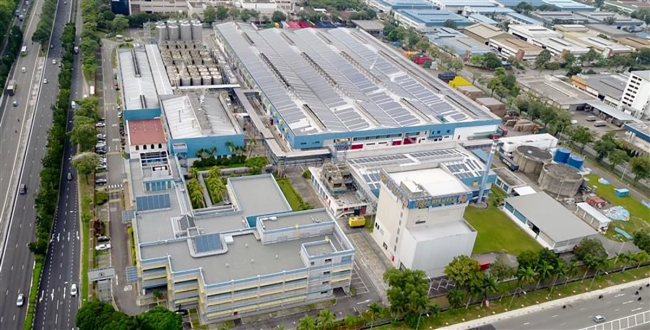
Dutch brewer Heineken will shift its brewing production from Singapore to Vietnam and Malaysia as part of its strategy to build a more agile regional supply approach.


 |
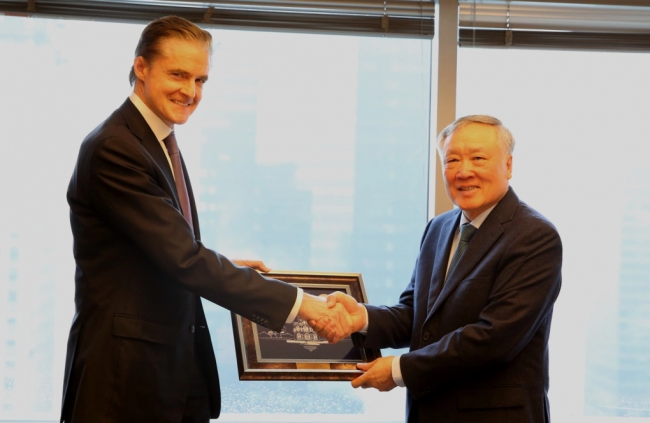
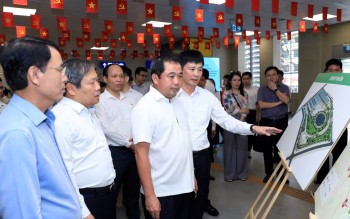
| (L-R) William Lawrenson, British deputy consul general, and Ly Hoang Vu, trade manager for Financial and Professional Services at the British Consulate General in Ho Chi Minh City |
At the end of October, the visit of Party General Secretary To Lam to the United Kingdom at the invitation of UK Prime Minister Keir Starmer marked a historic turning point in bilateral relations. The two leaders agreed to upgrade ties to a comprehensive strategic partnership (CSP), the highest level in Vietnam’s foreign policy framework.
Establishing a CSP between Vietnam and the UK not only affirms strategic trust but also opens up broad cooperation opportunities in key areas: politics, security, economy, education, and climate change response. After 52 years of diplomatic relations and 15 years as strategic partners, the two countries are entering a new phase of comprehensive cooperation, aiming for shared goals: peace, stability, and sustainable prosperity.
The UK is currently Vietnam’s third-largest export market in Europe. In the first nine months of 2025, bilateral trade reached $4.3 billion, up 9.6 per cent on-year. Both sides aim to double trade in the coming years, building on the UK-Vietnam Free Trade Agreement and the UK’s official accession to the Comprehensive and Progressive Agreement for Trans-Pacific Partnership in 2024.
Under the CSP, cooperation between two countries will focus on financial services and development of international financial centres (IFC); renewable energy and green growth; education and digital transformation; and urban innovation, exemplified by the partnership between Ho Chi Minh City and the Liverpool City Region.
The UK is one of the world’s leading financial centres, with financial services exports reaching £102.5 billion ($137.68 billion) in the four quarters to June 2025, and over 1,600 fintechs. We have many lessons and experiences to share with Vietnam. Moreover, numerous financial institutions and banks have long been present in Vietnam, contributing significantly to its socioeconomic development, such as Standard Chartered, HSBC, Dragon Capital, Prudential, and KPMG. Since Vietnam began the IFC initiative, these firms have provided valuable recommendations to the Vietnamese government.
In addition, other renowned UK financial institutions and companies such as Revolut, Wise, Ozone API, Raidiam, Sumsub, and iProov are showing strong interest in Vietnam’s market, opening prospects for cooperation in digital banking, international payments, digital assets, open banking, and open finance in Vietnam, as well as Vietnam’s IFC in Ho Chi Minh City and Danang city.
A cornerstone of development
The UK government is working with the State Bank of Vietnam, the Vietnam Banking Association, and Boston Consulting Group on a critical undertaking to enhance transparency and access to capital, laying a solid foundation for the IFC in Vietnam. This is the Trade Finance Registry (TFR) project, mentioned in Article 25 of the CSP framework.
Vietnam faces a trade finance gap of nearly £70 billion ($94 billion), mainly due to fraud risks, lack of transparency, and limited data sharing among banks. The TFR offers a solution by creating a centralised platform for banks to record and verify trade transaction information, thereby increasing trust and transparency in the system. For Vietnamese banks, the TFR is expected to deliver $60-74 million in value by preventing fraud and expanding lending capacity, while the UK could see trade growth of £15–25 million ($20-34 million), strengthening bilateral economic ties.
With UK government support, this initiative has progressed from concept to pilot and is now preparing for real-world testing and full-scale implementation. Embedded within Vietnam’s IFC development strategy, the TFR aligns with national priorities and promises significant economic benefits: job creation, greater participation of small businesses, and enhanced regional integration for Vietnam. This partnership demonstrates how innovation and collaboration can drive sustainable growth for both nations.
Since 2022, the UK has supported Vietnam in developing its IFC through legal frameworks, regulatory standards, and capacity building. Earlier in 2025, TheCityUK released a high-level recommendation report emphasising three pillars: green finance, capital markets, and fintech, aligning with Vietnam’s national financial reform roadmap.
A critical factor is the rule of law. IFCs need modern infrastructure and a transparent, stable legal framework consistent with international norms. A robust judicial system is the foundation for any IFC success, starting with a specialised court and international arbitration centre.
These institutions play a pivotal role. Firstly, they assure international investors that disputes will be resolved swiftly, with high-quality judgments based on familiar adjudication methods. Secondly, the court’s structure and judicial reputation send a strong signal of reliability and strategic intent to the global financial community – especially crucial for newly established IFCs like Vietnam’s.
Vietnam’s decision to adopt a common law system for its IFC reflects international practice and investor expectations, as all leading dispute resolution centres operate under common law principles. Common law offers flexibility to adapt to technological innovation and modern financial techniques, while building investor trust and reducing capital costs for businesses operating within the IFC.
The specialised IFC court will follow common law procedures but allow parties to choose civil law as the governing law for contracts if desired, ensuring consistency in adjudication. Approximately 40 per cent of international commercial contracts are governed by English law, and the UK Commercial Court is highly regarded for efficiency and fairness, reinforcing this choice.
Therefore, Vietnam should design its IFC court based on the UK Commercial Court’s methods and procedures. This must be clearly stipulated in the IFC’s founding resolution, so investors and legal advisors immediately recognise a familiar and reliable legal environment. This is a crucial step towards making Vietnam a world-class financial centre.
Shared future vision
Vietnam’s rapid growth and infrastructure investments, especially in railways, metro systems, and renewable energy, create major opportunities for UK expertise in design, construction, and technology. Healthcare is another promising sector, with rising demand for high-quality medical services and technology. UK companies such as Shell, BP, Rolls-Royce, AstraZeneca, HSBC, Standard Chartered, and Prudential are already present, and more are expected to join.
Vietnam’s boasts clear long-term goals to become a high-income country by 2045 and ensure net-zero emissions by 2050. In these and other aspirations, the UK remains a trusted partner, committed to supporting Vietnam in achieving these.
Vietnam’s ambitious projects, such as the North-South high-speed railway, metro systems in Hanoi and Ho Chi Minh City, and renewable energy initiatives, require substantial capital. During Party General Secretary To Lam’s recent UK visit, UK Export Finance (UKEF) signed a landmark MoU with Vietnam’s Ministry of Finance. This formalised cooperation sees UKEF offering at least £5 billion ($6.7 billion) in financing capacity, including local currency funding, to support Vietnam’s infrastructure and energy transition goals, covering metro expansion, highways, offshore wind, and IFC development.
A successful IFC is not just a hub for capital and financial services. Vietnam aims to build its IFC on a foundation of transparent, stable, internationally aligned legal standards. Adopting common law is a strategic move to build global investor confidence, reduce capital costs for domestic businesses, and foster financial innovation.
The IFC court and an international arbitration centre will uphold the rule of law, ensuring all executive and administrative actions are subject to independent oversight. This sends a powerful message to the global financial community about Vietnam’s commitment to transparency and fairness – the bedrock of long-term peace and prosperity.
British expertise, technology, and experience will help Vietnam create a modern IFC that meets regional and global integration requirements. As trust strengthens, capital flows will accelerate, creating jobs, driving innovation, and opening deep cooperation opportunities. This is the path for Vietnam and the UK to jointly shape a future of peace, prosperity, and sustainable growth.