


 |
| Helga Margarete Barth |
The economic, trade, and investment relationship between Germany and Vietnam has evolved significantly over the past few decades, with both countries fostering a partnership based on shared goals of sustainable growth and technological innovation. As Vietnam enters a period of ambitious economic and social transformation, Germany’s role as a key partner has never been more critical.
In 2025, Germany and Vietnam celebrated the 50 years of bilateral cooperation. This partnership has steadily matured, especially since the early 1990s, with Germany among the first Western nations to recognise Vietnam’s potential as a significant economic player in Southeast Asia. Subsequent developments were complemented by the 2019 agreement to deepen cooperation across sectors such as innovation, green energy, digital transformation, and education.
Germany’s advanced technological base, strong industrial sector, and commitment to sustainable development have provided Vietnam with access to important know-how in areas such as manufacturing, renewable energy, and vocational training. More than 500 German companies have set up operations in Vietnam, particularly in the automotive, machinery, and high-tech industries, while German expertise in fields like automation, precision engineering, and renewable energy continues to play an important role in modernising Vietnam’s industrial capacity. Germany is Vietnam’s biggest EU trade partner with more than €19 billion ($22.4 billion).
The signing of the EU-Vietnam Free Trade Agreement in 2020 further strengthened bilateral trade ties, reducing tariffs on goods exchanged between the two countries and opening new doors for Vietnamese exports, especially in agriculture, textiles, and electronics. This trade agreement has already spurred German interest in Vietnam’s dynamic consumer market, contributing to the further expansion of the economic relationship. About 4,000 German companies are exporting to Vietnam, where German products are appreciated for their high quality.
Germany’s economic stability
Germany’s economy is widely regarded as one of the most stable and resilient in the world. Several key factors contribute to this remarkable stability, making Germany an even more attractive partner for Vietnam as it seeks to modernise its own economy.
Germany’s industrial sector is the backbone of its economic power, with key industries such as automotive manufacturing, machinery, chemicals, and electronics leading the charge. Companies such as Mercedes-Benz, Siemens, BASF, B. Braun and Bosch are internationally recognised brands that are synonymous with quality and innovation.
The nation is also renowned for its cutting-edge innovations and high-quality products. As one of the largest patent holders in Europe, and the fifth largest worldwide, Germany’s focus on research and development positions it as a global leader in technological advancement. Berlin is recognised as one of the world’s leading startup hubs, making Germany a well-rounded partner in fostering innovation and entrepreneurship.
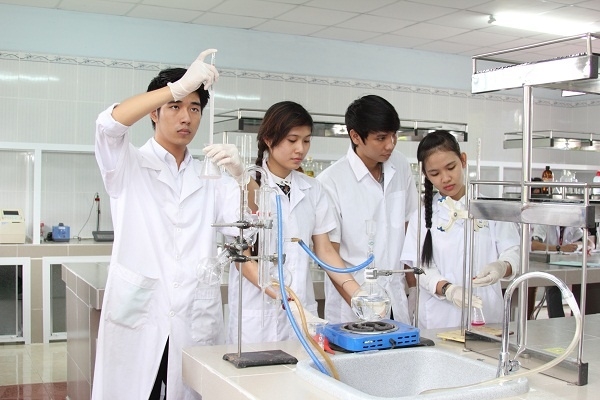
Germany’s dual education system, which combines practical training in the workplace with theoretical education, is a key factor in producing highly skilled workers. This system has resulted in a highly trained labour force, which is a cornerstone of Germany’s economic success. For Vietnam, adopting similar models and collaborating with German institutions can enhance its own vocational training programmes.
Against a background of more than 100 full universities, Germany’s strong commitment to research and development is another key factor in its economic success. The close collaboration between industry and academia is a hallmark of the German model, with major investments from both sectors. With more than 400 research institutions, including the Helmholtz Centres, Fraunhofer Institutes, and Max Planck Society, Germany is a leader in sci-tech research.
Germany’s export-driven economy is also one of its key strengths, with exports accounting for over 50 per cent of its GDP. As one of the world’s largest exporters, Germany’s high-quality industrial products are in demand globally, making it an important partner also for Vietnam as it seeks to strengthen its manufacturing base and expand its exports.
Furthermore, the strength of Germany’s Mittelstand, or its small- and medium-sized enterprises, is often overlooked but plays a crucial role in its economic success. They are highly specialised and many of them are world leaders in their fields. With almost 1,000 “hidden champions”, Germany’s Mittelstand provides a solid foundation for economic growth. Vietnam’s own small business sector can learn from this model, strengthening its small businesses and fostering innovation at the grassroots level.
Looking ahead, Vietnam has set out an extremely ambitious agenda for the coming years, which will require significant upgrades to infrastructure, industries, and human capital – precisely the areas where Germany’s strengths can be of tremendous value.
One of the most pressing priorities for both Vietnam and Germany is digital transformation. As the country rapidly urbanises and its population becomes increasingly tech-savvy, the government is committed to fostering a robust digital economy. Germany’s leadership in Industry 4.0, smart manufacturing, and automation makes it an ideal partner to help Vietnam achieve its digitalisation goals.
Furthermore, Vietnam aims to leverage its growing technological ecosystem to become a regional hub for innovation. In fields such as AI, machine learning, and biotechnology, Germany’s expertise in research and development presents an opportunity for collaboration that could yield significant breakthroughs. German companies, with their world-class research facilities and strong track record in innovation, can play a key role in supporting Vietnam’s transition to a knowledge-based economy.
Green energy and trade
Sustainability is another central pillar of Vietnam’s development agenda. As the country is also very much confronted by the challenges of climate change, particularly rising sea levels and extreme weather events, it is committed to reducing its carbon emissions and transitioning towards a low-carbon economy. This is in line with Vietnam’s ambitious pledge to achieve net-zero emissions by 2050.
German companies are already playing an active role in Vietnam’s renewable energy sector, particularly in wind and solar power. With a vast coastline and abundant natural resources, Vietnam has the potential to become a major player in renewable energy production in the region. Germany’s advanced technologies in wind turbine manufacturing, solar panel production, and energy storage systems can help Vietnam scale up its green energy capacity.
Additionally, as Vietnam seeks to build a circular economy, Germany’s experience in waste management, recycling, and resource efficiency will be crucial for developing sustainable urban systems and infrastructure.
On the political level, Germany supports Vietnam’s climate and biodiversity goals through the International Climate Initiative, which is one of the most important instruments of the German government for international climate financing. As of 2026, Vietnam is a priority partner country for the initiative.
Vietnam’s rapid economic growth and increasing integration into the global economy present new opportunities for German companies. In particular, the automotive and manufacturing sectors are expected to experience substantial growth in the coming years. As Vietnam’s middle class expands, so too will the demand for high-quality vehicles, industrial machinery, and consumer products. German automotive giants have already established a strong presence in the Vietnamese market, and this trend is likely to continue as consumer purchasing power rises and the demand for green-powered vehicles increases.
Additionally, Vietnam’s industrial sector is evolving, with a growing emphasis on high-tech manufacturing and automation. Germany’s expertise in precision engineering, robotics, and advanced manufacturing technologies offers a perfect match for Vietnam’s needs as it aims to upgrade its industrial base. By fostering collaborations between German and Vietnamese companies, the two countries can strengthen their position in global supply chains, particularly in sectors like electronics, textiles, and automotive components.
The ongoing trade liberalisation between the European Union and Vietnam is likely to continue fuelling growth in bilateral trade. The agreement eliminates tariffs on over 99 per cent of goods traded between the two countries, further enhancing Vietnam’s competitiveness as a manufacturing hub for global markets.
Workforce development
For Vietnam’s economic ambitions to be fully realised, developing human capital is critical. The Vietnamese government has placed a strong emphasis on education and vocational training to build a skilled workforce capable of thriving in a rapidly evolving global economy. Germany, with its robust vocational education system and focus on industrial training, is ideally positioned to partner with Vietnam in these areas.
We cooperate closely also in this field, for example, through a German-Vietnamese project of vocational training inter alia in electrical engineering at Vietnamese vocational colleges with training courses for the qualification of specialists in mechatronics and industrial electronics.
Another key example strong cooperation is the Vietnam-German University (VGU) in Ho Chi Minh City, which offers programmes in engineering, technology, and management based on Germany’s educational standards. This unique initiative, a joint effort to establish a state-of-the-art campus, will further enhance VGU’s role in equipping future leaders with the skills needed for Vietnam’s transformation.
In addition, the German Academic Exchange Service plays a vital role in strengthening educational ties, supporting Vietnamese students with scholarships and fostering academic exchange. Its programmes help facilitate knowledge transfer and research collaborations between German and Vietnamese institutions, contributing to the development of Vietnam’s higher education sector and innovation capacity.
These efforts, coupled with Germany’s world-class expertise in research and technology, position both countries to continue growing their collaboration in education, further fostering the exchange of talent and ideas that will support Vietnam’s ambitious development goals.
The partnership between Germany and Vietnam holds the potential to reach new heights. Germany’s strengths in technology, industrialisation, sustainability, and education align very well with Vietnam’s ambitious goals for economic modernisation and innovation. By continuing to deepen their long-standing cooperation, the two countries can contribute to a future of shared prosperity and sustainability, positioning themselves as relevant players and partners in the global economy.