

Heineken to shift production from Singapore to Vietnam and Malaysia
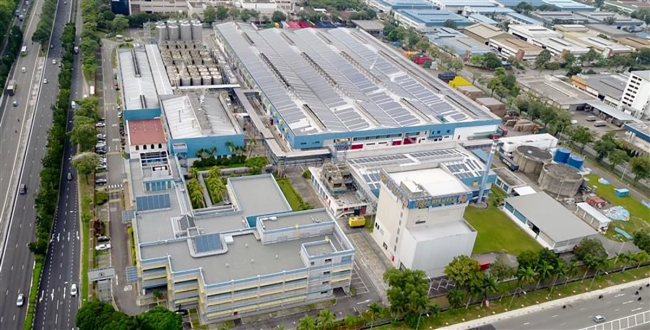
Dutch brewer Heineken will shift its brewing production from Singapore to Vietnam and Malaysia as part of its strategy to build a more agile regional supply approach.


 |
| Adam M. Tugio |
Indonesia and Vietnam stand as two dynamic middle powers within ASEAN, bound by a shared history of anti-colonial struggle and a common vision for prosperity. From their independence movements in 1945 to the establishment of a comprehensive strategic partnership in 2025, both nations have demonstrated remarkable economic transformation.
This elevation signifies not merely enhanced diplomatic status but a strategic recognition of mutual interests in regional stability, economic complementarity, and shared developmental aspirations. With bilateral trade reaching $17.2 billion in 2025 and both countries targeting high-income status by 2045, the Indonesia-Vietnam relationship represents a critical axis for regional economic integration.
Today, Vietnam’s economic transformation stands as one of Asia’s most remarkable development stories, especially since the economic reforms of the mid-1980s. The shift from a centrally planned economy to a socialist-oriented market economy unleashed unprecedented growth, and positioning Vietnam as a manufacturing powerhouse.
The country’s GDP growth has consistently outpaced regional averages, driven by export-oriented industrialisation, foreign direct investment attraction, and progressive integration into global value chains.
Expanding ties
The 14th National Party Congress of Vietnam in January represented a watershed moment in Vietnam’s development journey, and charts an audacious course for the next two decades. The central objective is clear: transition from a lower-middle-income economy to middle-income status by 2030, and ultimately achieve developed, high-income classification by 2045, thus coinciding with the 100th anniversary of Vietnam’s independence.
This vision aligns remarkably with Indonesia’s own “Indonesia Emas 2045” (Golden Indonesia 2045) aspiration, creating a natural convergence of strategic interests.
To this end, the congress adopted a comprehensive development framework centred on three strategic breakthroughs: institutional reform and implementation by enhancing regulatory efficiency to create a business-friendly environment that attracts high-quality foreign investment and fosters domestic innovation; improving personnel development by investing in education and skills to build a workforce capable of driving knowledge-intensive industries and adapting to rapid technological change; and building modern, synchronised infrastructure by developing integrated physical and digital means to support advanced manufacturing and services sectors.
Economic relations between Indonesia and Vietnam have recorded impressive progress, with bilateral trade reaching a record high of $17.2 billion in 2025, representing a 3.18 per cent growth from the previous year. This trajectory positions both nations to potentially achieve their 2028 target of $18 billion in bilateral trade as early as 2026 or 2027, a testament to the deepening economic integration.
Vietnam Airlines’ launch of the Ho Chi Minh City-Denpasar and Hanoi-Jakarta routes in 2025 is already strengthening the economic ecosystem and people-to-people connections.
Beyond trade volumes, the quality and composition of economic cooperation have evolved significantly. Investment flows have surged in competitive sectors, demonstrating strategic complementarity. On the automotive sector, for instance, VinFast and Vingroup’s establishment of an electric vehicle (EV) factory in Subang, Indonesia, launched in December, represents a landmark investment that positions both countries at the forefront of the EV revolution in Southeast Asia.
On animal health, JAPFA subsidiary Vaksindo Vietnam Animal Health demonstrates cooperation in agricultural value chains, critical for regional food security, with its research-based vaccine factory already established in Hung Yen province.
Furthermore, on technology and education, FPT Corporation’s series of MoUs with Indonesian counterparts last year has opened new avenues for collaboration in higher education, research, and technology transfer.
The deepening of Indonesia-Vietnam cooperation occurs against a backdrop of unprecedented global complexity. The international order faces intensified strategic competition among major powers, technological disruption from the Fourth Industrial Revolution, and the explosive growth of AI, digital technology, quantum computing, and emerging innovations. These forces are fundamentally reshaping economic structures, supply chains, and competitive advantages.
For middle powers like Indonesia and Vietnam, this environment presents both challenges and opportunities. The fragmentation of global supply chains, driven by geopolitical tensions, creates space for regional production networks. The digital transformation offers pathways to leapfrog traditional development stages. Climate imperatives necessitate green transitions that can be jointly pursued.
Cooperation prospects
Looking at this year and beyond, several high-value sectors present untapped potential for bilateral cooperation.
First is e-vehicle and automotive integration. The VinFast collaboration exemplifies the transformative potential of EV cooperation. Indonesia possesses substantial nickel reserves, which are critical for EV battery production, while Vietnam has developed advanced manufacturing capabilities. A comprehensive EV ecosystem encompassing mining, battery production, vehicle assembly, and charging infrastructure could position both nations as regional EV hubs, creating multiplier effects throughout ASEAN.
Second is semiconductor and tech manufacturing. As global semiconductor supply chains diversify, both countries are positioning themselves as alternative manufacturing locations. Vietnam’s established electronics manufacturing base and Indonesia’s large domestic market create complementary advantages. Joint investments in semiconductor fabrication, testing, and packaging could enhance regional technological sovereignty.
Third is food security and agricultural technology. Potential collaboration with Vietnam’s TH Group in food security demonstrates opportunities for agricultural modernisation. Both nations face challenges of feeding growing populations while managing climate impacts. Cooperation in agricultural technology, supply chain logistics, and food processing can enhance resilience and productivity.
Fourth is renewable energy and green transition. Both nations have committed to ambitious climate targets and renewable energy expansion. Cooperation in solar, wind, hydropower, and emerging technologies like green hydrogen can accelerate decarbonisation while creating new industries.
Fifth is halal economy cooperation. Indonesia’s position as the world’s largest Muslim-majority nation and Vietnam’s growing halal industry creates opportunities for standardisation, certification cooperation, and market development. The global halal economy, valued at $2.8-7.7 trillion in 2025, represents a strategic growth sector. Especially when we look at the trajectory of Muslim population in next 50 years as Muslim population constitutes 25 per cent of 8.3 billion of today’s world population.
It is a strategic imperative, therefore, that economic cooperation between the two countries should focus on complementing each other based on mutual interests, rather than competing. The paradigm must shift from strong trading partners to collaboration in producing high value-added technology and innovation-driven industries.
This is particularly because both Indonesia and Vietnam share an extraordinary historical coincidence: the vision to become high-income countries by 2045, marking the centennial of their respective independence. This parallel aspiration provides a natural framework for coordinated developmental strategies.
Achieving this vision requires fundamental economic transformation. For both nations, the pathway involves maintaining high GDP growth rates while ensuring environmental sustainability and social inclusion. The two countries also need to pursue decarbonisation and digitalisation as complementary rather than competing priorities on green and digital transformation. Simultaneously, for innovation-driven industries, we need to move beyond labour-intensive manufacturing to knowledge-intensive, high-value sectors.
Increased connectivity – physical, digital, and institutional – will be paramount. Supply chain integration, facilitated by improved logistics infrastructure and harmonised regulations, can unlock significant efficiency gains. People-to-people connections, through education exchanges, tourism, and cultural programmes, build the social capital necessary for sustained cooperation.
The economic achievements of 2025 – record bilateral trade, landmark investments in EVs and technology, and enhanced connectivity – provide strong momentum for the journey ahead. Yet true potential remains untapped. By shifting from conventional trade to collaborative production of high-value technology, by complementing rather than competing, and by aligning developmental strategies towards the shared 2045 vision, Indonesia and Vietnam can emerge as exemplars of South-South cooperation and middle power partnership.