


Heineken to shift production from Singapore to Vietnam and Malaysia
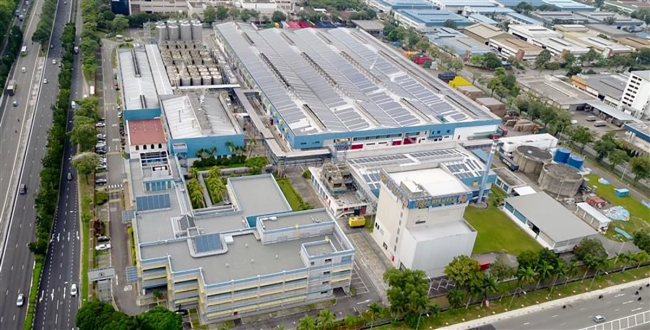
Dutch brewer Heineken will shift its brewing production from Singapore to Vietnam and Malaysia as part of its strategy to build a more agile regional supply approach.


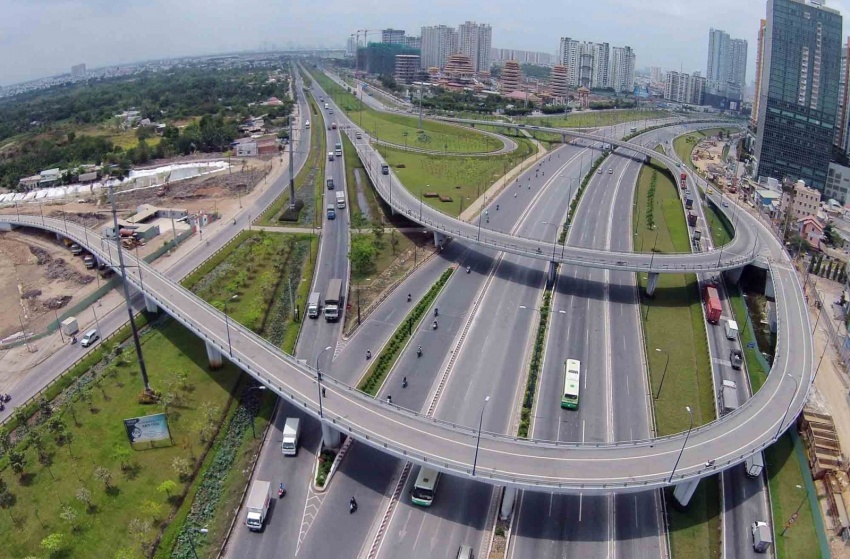 |
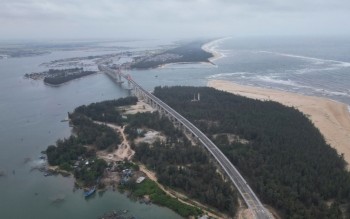
| Transport infrastructure is integrating |
Already this year, the government has issued various directives to resolve issues for a large number of stalled and long-suspended infrastructure projects.
“There should be a spirit that localities decide, implement, and take responsibility. For undertakings under a local authority, they need to resolve obstructions and administrative procedures immediately, avoiding buck-passing or evasion. Focus on addressing impediments for large-scale projects, public projects, social housing, energy, and real estate projects,” Permanent Deputy Prime Minister Nguyen Hoa Binh said.
For ventures beyond such authorities, relevant parties need to urgently report on the obstructions, propose specific solutions, and send them to the Ministry of Finance for compilation and submission to Steering Committee 751 and the prime minister, DPM Binh added.
This year will mark the finish line for many key expressway projects. An example is Ben Luc-Long Thanh Expressway, nearly 58 km long. It has currently achieved about 97 per cent of the workload, with 55km completed, including 30 km already in operation.
The two remaining components are the interchange with National Highway 51 (expected to be completed in April) and the Phuoc Khanh Bridge (to be completed in July).
In the north, Hanoi Ring Road 4 land clearance of 118km is nearing completion, while construction packages of the parallel route are being accelerated to finish in the second quarter. In addition, the construction of Ho Chi Minh City Ring Road 3 has exceeded 70 per cent of the workload, with the elevated section over Long Binh-Long Phuoc reaching almost 90 per cent completion. The entire route is targeted to be opened on June 30.
Elsewhere, after years of construction, Long Thanh International Airport achieved a significant milestone with its first commercial flight in December. This year, phase 1 is expected to commence commercial operations.
This year, the North-South high-speed railway, the most ambitious infrastructure project in the transport sector, is anticipated to break ground. According to the master plan, the railway line stretches over 1,540km, connecting Ngoc Hoi Station in Hanoi to Thu Thiem Station in Ho Chi Minh City, passing through 15 cities and provinces with 23 stations.
The high-speed trains are designed to operate at speeds exceeding 300km per hour; the preliminary total investment exceeds $67.3 billion, with the basic completion target set for 2035.
In addition, the Lao Cai-Haiphong railway project is regarded as a strategic missing piece for the northern economic corridor. The line, which will pass through Hanoi, is 420km long, with total investment exceeding $8 billion, featuring 18 stations and an annual freight capacity of approximately 21 million tonnes.
Construction of the station infrastructure component began in December, while the main line is scheduled to start in June this year, targeting full synchronous completion by 2030.
Ko Tae Yeon, chairman of the Korean Chamber of Commerce in Vietnam, said the government’s efforts to improve transport infrastructure, build smart cities, and pursue an environmentally friendly living environment have created many advantages for the Korean members, creating a basis for expansion in the country.
“Each region and locality has different infrastructure advantages, which also influence businesses’ decisions. For example, manufacturers of household appliances such as washing machines and refrigerators tend to choose coastal localities because these goods rely on seaport transport. Meanwhile, producers of components and electronics prioritise locations near airports,” he noted.
Bui Quy Thuan, head of the study board of the Vietnam Industry Park Finance Association, said, “Vietnam has seven major economic regions. In reality, regions with well-developed transport infrastructure achieve higher socioeconomic growth rates. Thus, developing transport infrastructure enables the economy to optimise resources, leverage comparative advantages across regions and areas in industrial production and services, leading to becoming more attractive in foreign investors’ eyes.”
However, distribution remains uneven, still concentrated in a few localities such as Ho Chi Minh City, Hanoi, Binh Duong, Dong Nai, Haiphong, and Bac Ninh, Thuan added, illustrating the importance of the synchronisation and completion of the connecting infrastructure system.
By the end of 2025, Vietnam had 3,345km of main expressways and 458km of interchanges and access roads in operation; it had fully completed and put into use 1,700km of seaways and 1,584km of national highways.
The total capacity of the seaport system increased 1.3 times compared to 2020, from 730 million tonnes to 930 million tonnes. The total capacity of airports rose more than 1.6 times compared to 2020, from 92.4 million passengers to 155 million passengers per year.
In addition, the airport system, major ports, and railways have been and continue to receive focused investment and upgrades, including the completion of Terminal 2 at Noi Bai International Airport and Terminal 3 at Tan Son Nhat.