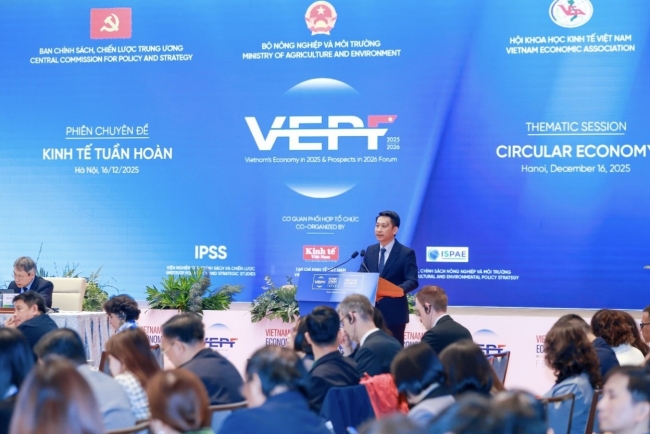




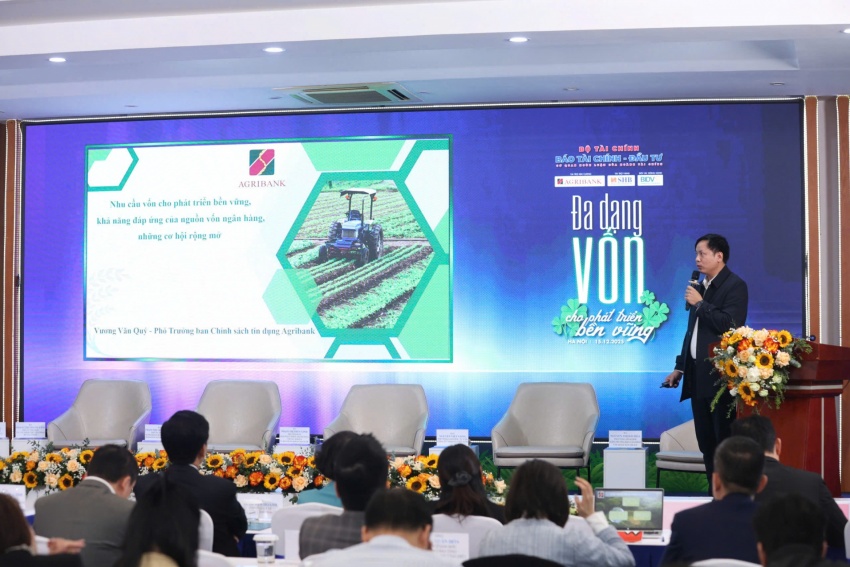
Speaking at VIR’s Diversifying Capital Sources for Sustainable Development conference on December 15, Vuong Van Quy, deputy head of Agribank’s Credit Policy Department, said the state-owned bank aims to go beyond financing agriculture and rural areas. “Sustainable development is not a destination, but a journey. On that journey, bank credit acts as the lifeblood nourishing a green economy,” Quy said, highlighting Agribank’s role in implementing the National Green Growth Strategy for 2021–2030 in coordination with the government and the State Bank of Vietnam.
According to Quy, Agribank’s green credit portfolio has recorded strong and stable growth. As of the third quarter, the bank’s outstanding green credit reached approximately $1.13 billion, serving nearly 40,000 customers. The structure of this portfolio clearly reflects Agribank’s sustainability-oriented lending priorities.
Renewable and clean energy accounts for the largest share, representing more than 53 per cent of total green credit, with outstanding loans of about $610 million. This is followed by sustainable forestry, with loans totalling approximately $278 million, or over 24 per cent, contributing significantly to forest protection and livelihood development beneath forest canopies.
Quy explained that green agriculture ranks third, with outstanding credit of roughly $239 million, or more than 21 per cent, focusing on clean farming models and high-tech agricultural applications.
“Agribank has been rolling out large-scale credit packages with preferential interest rates to unlock green capital flows,” noted Quy. “For high-tech and clean agriculture alone, we have taken the lead in allocating a minimum package of $2 billion, offering interest rate reductions of between 0.5-1.5 percentage points per year for enterprises and cooperatives applying advanced technologies.”
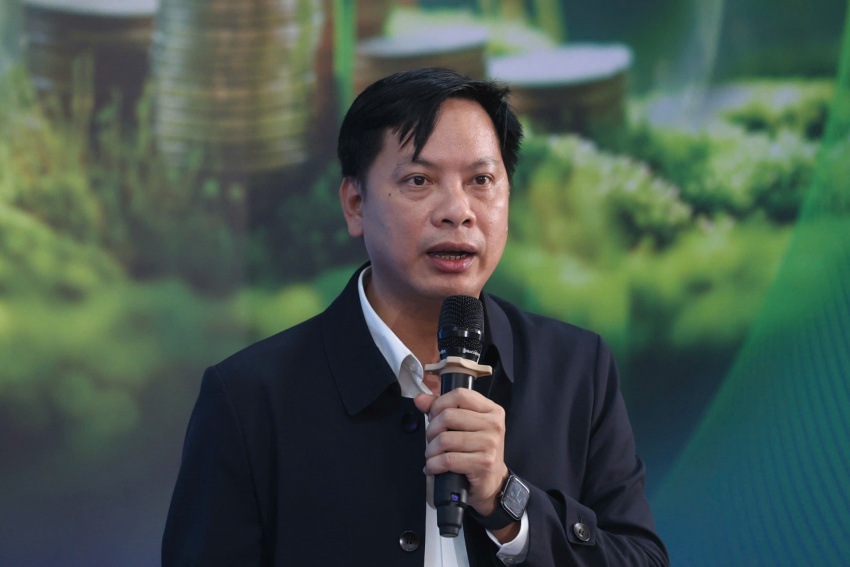 |
| Vuong Van Quy, deputy head of Agribank’s Credit Policy Department. Photo: Dung Minh |
In parallel, Agribank is implementing the one-million-hectare high-quality, low-emission rice initiative in the Mekong Delta, which is an undertaking of national strategic importance running through 2030.
“Under the programme, loans are offered at interest rates at least one percentage point lower than standard levels. As of April 30, Agribank had engaged with thousands of farming households and cooperatives across 12 provinces and cities in the region to deploy the initiative,” he said.
At the conference, Agribank’s representative also announced that it is currently rolling out three dedicated credit schemes for corporate and individual customers, with a combined scale of approximately $1.68 billion, to finance projects and business plans related to green products, services, and green transport.
To mobilise additional resources for green lending, Agribank has actively expanded cooperation with international partners, accessing concessional funding and technical assistance.
Quy assessed that the current legal framework is becoming increasingly supportive of green lending, describing 2025 as a potential turning point for the sector as regulatory reforms open up new growth opportunities.
“In particular, Decree 156/2025/ND-CP, effective from July 1, represents a historic boost for the circular economy,” he said. “Its most significant breakthrough is the provision allowing credit institutions to provide unsecured loans of up to 70 per cent of project value for organic agriculture and circular economy production models.”
“This is a golden opportunity for Agribank to be more proactive in financing cooperatives and agricultural enterprises that have traditionally struggled due to a lack of collateral,” added Quy. “The policy effectively unlocks capital flows, enabling banks to shift from asset-based lending to cash-flow and project-efficiency-based financing for green projects.”
He also highlighted Decision 21/2025/QD-TTg issued on July 4, which establishes environmental criteria and a national green taxonomy, as a critical step forward.
“With a clear set of criteria, Agribank can more accurately identify, appraise, and extend green credit, mitigate greenwashing risks, and help businesses better access state incentives,” said Quy.
 |
Despite these positive developments, Quy cited data from the State Bank of Vietnam (SBV) showing that green credit still accounts for less than 5 per cent of total outstanding loans across the economy, indicating significant untapped potential.
To further unlock capital for sustainable development, Agribank proposed several policy priorities. First, Vietnam should establish a national database on emissions, energy, and biodiversity, accessible to enterprises and financial institutions for project assessment, alongside standardised regulations on greenhouse gas measurement and reporting.
“Second, concrete incentive policies are needed, such as corporate income tax reductions for green loans, interest rate subsidies or concessional refinancing, particularly for energy transition and sustainable agriculture, and the establishment of a national green guarantee fund to share risks with banks,” said Quy.
“Training and free technical support activities led by the SBV and international organisations are essential to strengthen environmental, social, and governance capacity among enterprises, including guidance on reporting and green technology adoption,” he added.
To diversify green capital sources, Quy suggested that Vietnam must also complete its legal framework for green bonds in line with international standards such as the Green Bond Principles, while encouraging stock exchanges to develop a secondary market to enhance liquidity.
Finally, Quy called for stronger coordination among ministries and agencies to engage international partners, align Vietnam’s standards more closely with global benchmarks, and streamline procedures to shorten approval timelines for green projects.