
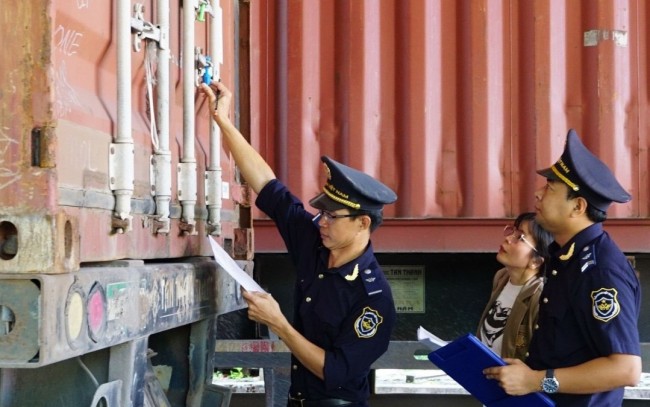



Heineken to shift production from Singapore to Vietnam and Malaysia
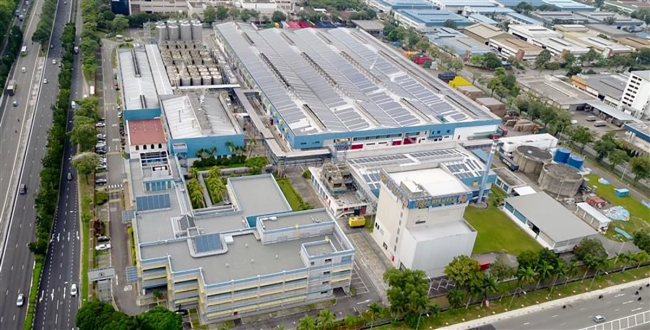
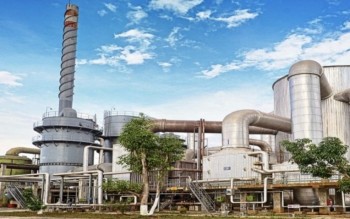
Dutch brewer Heineken will shift its brewing production from Singapore to Vietnam and Malaysia as part of its strategy to build a more agile regional supply approach.


On December 19, Vietnam Electricity (EVN) and its member units simultaneously held ground-breaking and inauguration ceremonies for large-scale energy projects across the country. The projects, implemented in the lead-up to the 14th National Congress of the Communist Party of Vietnam, include the inauguration and conclusion of the joint emulation campaign for the Hoa Binh hydropower plant expansion project, completion of the national grid power supply project for Con Dao district, inauguration of the Phuoc Thai 2 solar power plant, and the commencement of construction of the Huong Phung 1 and Cong Hai 1 wind power projects, Phase 2.
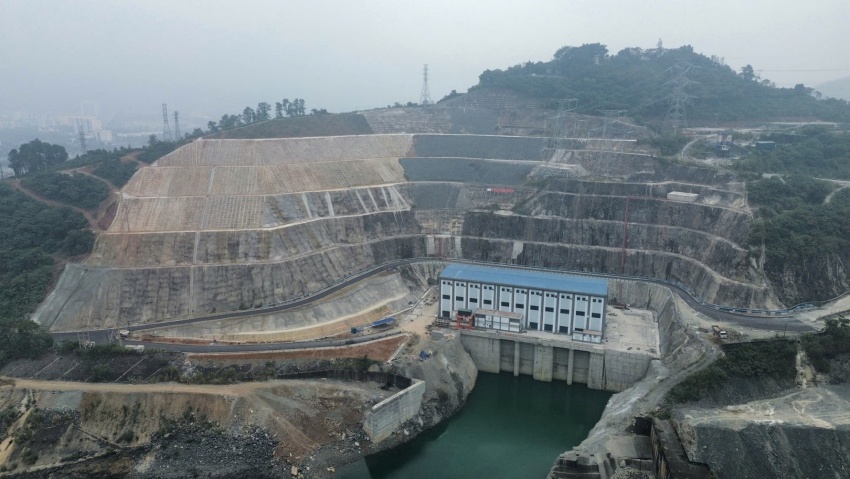 |
| Hoa Binh hydropower plant expansion project |
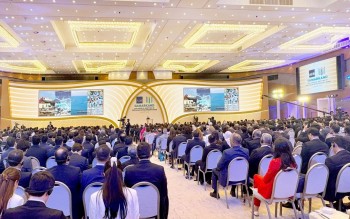
In Phu Tho province, EVN and Power Project Management Board No.1 held a ceremony to inaugurate Hoa Binh hydropower plant expansion project and to conclude the associated emulation campaign.
The undertaking, with a total installed capacity of 480 MW and an average annual output of approximately 488.3 million kWh, is invested by EVN, with Power Project Management Board No.1 acting as the investor’s representative. The expanded plant is located on the right bank of the existing Hoa Binh dam. The powerhouse lies within Hoa Binh ward, while the intake and headrace canal are situated in Thong Nhat ward, Phu Tho province.
The expansion shares key structures, reservoir, dam and spillway, with the existing plant. Newly built components include the headrace canal, intake structure, water conveyance tunnel and powerhouse. The total investment exceeds VND9.22 trillion ($370 million), comprising two 240 MW generating units. Upon completion, the project will raise the total installed capacity of the Hoa Binh Hydropower Complex to 2,400 MW.
Once operational, the venture will enhance peak-load capacity for the national power system, optimise the use of excess flood-season water, improve frequency regulation and system stability, reduce overall system costs, and ease operational pressure on existing units, thereby extending equipment lifespan and lowering maintenance costs.
As a national key energy initiative of strategic importance, the Hoa Binh expansion marks a further step in Vietnam’s efforts to master advanced technologies and modernise its power sector.
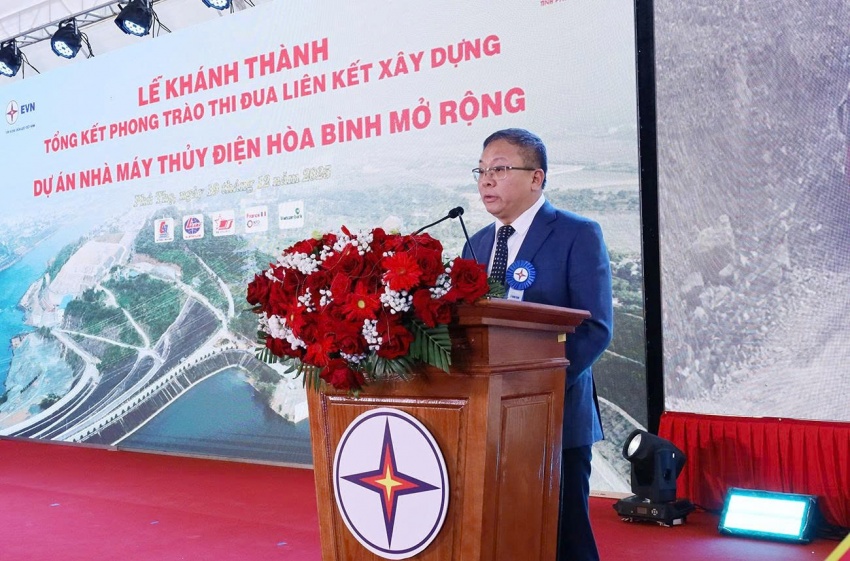 |
| EVN deputy general director Pham Hong Phuong |
Speaking at the ceremony, EVN deputy general director Pham Hong Phuong highlighted the project’s large scale and technical complexity. Implementation faced prolonged site clearance, COVID-19 disruptions and supply chain interruptions. In October 2021, heavy rainfall and adverse geological conditions caused landslides at the foundation pit, forcing an 11-month suspension under the Prime Minister’s directive. Following resumption, the schedule was adjusted, with completion targeted for the fourth quarter of 2025.
To meet revised deadlines, EVN coordinated closely with all parties, applying special construction solutions, mobilising maximum manpower, operating continuous multi-shift schedules, deploying specialised equipment from other EVN hydropower plants, and maintaining on-site leadership oversight.
“The completion of this project reflects the dedication, ingenuity and relentless efforts of thousands of workers over more than four years, working in challenging conditions in line with the prime minister’s guidance,” Phuong said.
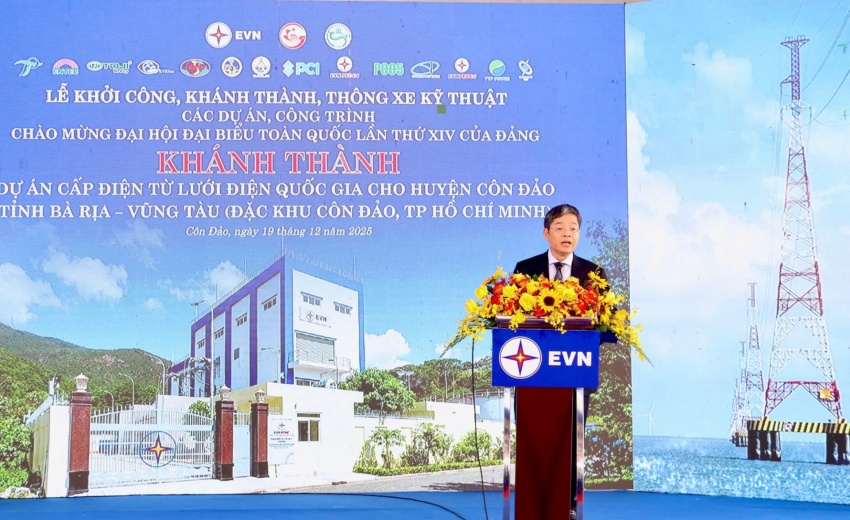 |
| Inauguration ceremony for the national grid power supply system to Con Dao Special Administrative Zone |
In Ho Chi Minh City, EVN and Power Project Management Board No.3 inaugurated the national grid power supply project for Con Dao Special Administrative Zone.
The project comprises a 103.7-kilometre 110 kV transmission line with a hybrid structure, connecting from the 220/110 kV Vinh Chau Substation (formerly in Soc Trang Province) and crossing the sea to supply power to Con Dao. With a total investment of VND4.923 trillion ($197 million), construction began in December 2024. The line was energised in September, and the 110 kV Con Dao Substation was successfully commissioned on 4 September 2025.
The scheme ensures safe, continuous and stable electricity supply for Con Dao, supporting socioeconomic development, national defence and security, and improving local living standards. It replaces on-site diesel generation, reduces generation costs and greenhouse gas emissions, and demonstrates Vietnam’s capability to deliver large-scale, high-technology energy projects under harsh offshore conditions.
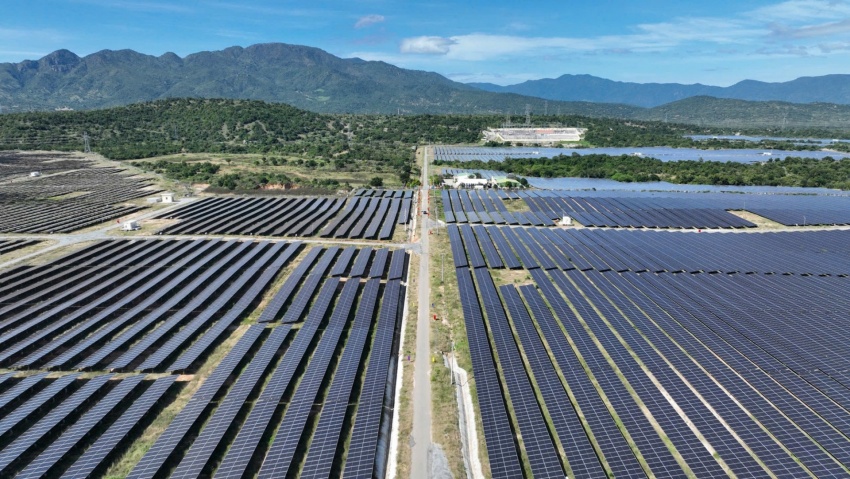 |
| Phuoc Thai 2 Solar Power Plant |
In Khanh Hoa Province, EVN and Power Project Management Board No.2 inaugurated the Phuoc Thai 2 Solar Power Plant.
The plant has a capacity of 87.5 MW (equivalent to 100 MWp) with an investment of VND 1.495 trillion ($60 million), located in Phuoc Huu Commune, Khanh Hoa Province. It is connected to the national grid via the 220 kV Phuoc Thai Substation and transmission line. Developed under the revised Power Development Plan VII, the plant employs high-efficiency photovoltaic panels and modern string inverter technology, supplying an estimated 168.92 million kWh annually.
In Quang Tri and Khanh Hoa provinces, EVNGENCO2 launched construction of Huong Phung 1 Wind Power Plant and Cong Hai 1 Wind Power Plant - Phase 2.
Huong Phung 1, located in Huong Phung Commune, Quang Tri Province, has a capacity of 30 MW with six turbines and an investment of VND1.129 trillion ($45 million), producing an estimated 88.55 million kWh annually. Cong Hai 1 - Phase 2, in Khanh Hoa Province, has a capacity of 25 MW with five turbines, an investment of VND939.8 billion ($37 million), and an average output of 73.04 million kWh per year. Both projects are scheduled for commercial operation in the fourth quarter of 2026.
Once operational, the two wind projects will supply over 160 million kWh of clean electricity annually, diversifying the national energy mix, reducing reliance on fossil fuels, and enhancing power supply security, while creating local employment and contributing stable revenues to provincial budgets.