

Heineken to shift production from Singapore to Vietnam and Malaysia
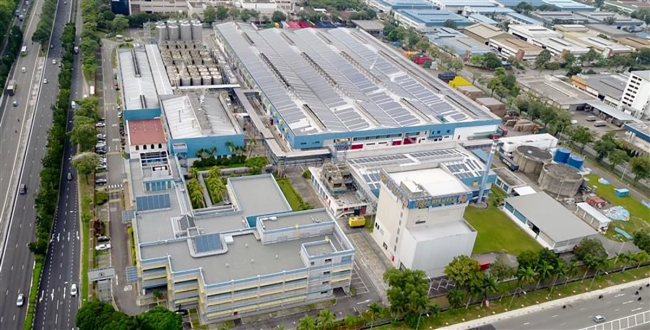
Dutch brewer Heineken will shift its brewing production from Singapore to Vietnam and Malaysia as part of its strategy to build a more agile regional supply approach.


In Vietnam’s insurance market, large in scale yet characterised by relatively low policy values, the challenge is no longer expansion alone, but how to balance cost efficiency with service quality. This pressure is exposing the limits of manual operations, particularly in underwriting, claims processing, and fraud prevention. As a result, AI is rapidly moving from experimentation to necessity.
 |
| Hanh Tracy Dao, country manager, Igloo Vietnam |
AI is set to become core operational infrastructure for insurers. As competition intensifies and margins continue to tighten, the effective use of AI to sharpen pricing accuracy, accelerate claims processing, and strengthen fraud detection will increasingly determine market competitiveness.
At Igloo, AI is not treated as a foundational platform embedded across the entire insurance lifecycle, from product design and underwriting to claims management. Crucially, in a market where consumer trust is still being rebuilt, the responsible, transparent, and regulatory-compliant deployment of AI will be essential. Only then can automation truly serve as a catalyst for both operational efficiency and renewed confidence in the insurance industry.
Demographic and environmental trends will continue to shape insurance demand in 2026. An ageing population is driving sustained growth in health insurance and supplementary coverage, while ongoing urban development is increasing exposure to property-related risks, fire incidents, and construction liabilities.
At the same time, as Vietnam increasingly feels the effects of floods, storms, and other extreme weather events, climate risk has moved from a long-term consideration to a day-to-day operational reality. These disruptions are directly impacting urban infrastructure, supply chains, and the operations of small and medium-sized enterprises (SMEs), prompting both individuals and businesses to seek more practical and responsive protection solutions.
Against this backdrop, the insurance industry is shifting away from standardised offerings towards more flexible, parametric solutions designed around specific usage scenarios and risk profiles. In response, Igloo enables businesses to develop insurance packages that are tailored to distinct customer segments, aligning coverage more closely with real-world risks and evolving protection needs.
Distribution remains one of the most decisive factors in insurance growth. Bancassurance, alongside partnerships across banking, fintech, e-commerce, mobility, and digital platforms, continues to expand insurers’ reach while improving acquisition efficiency.
Through the embedded insurance model, coverage is seamlessly integrated into customers’ existing financial and digital journeys, from payments and lending to everyday online transactions, rather than offered as a standalone product. This collaborative approach has proven especially effective in extending protection to underserved segments such as SMEs, self-employed individuals, and digital-first consumers. In doing so, it helps narrow the economy’s protection gap.
Vietnam’s legal and regulatory environment is expected to continue its path towards greater standardisation in 2026, with increased emphasis on solvency management, consumer protection, information transparency, and risk-based pricing. While these shifts raise compliance requirements, they also create powerful incentives for insurers to improve product quality and elevate operational standards across the market.
Against this backdrop, insurers that leverage technology, supported by insurtech partners, will be better positioned to adapt. Digital compliance tools, data-driven reporting, and automated risk assessment enable companies to meet regulatory expectations more efficiently, while preserving the agility needed to innovate.
Regulation is not a constraint but a catalyst, accelerating the industry’s transition towards greater transparency, stronger governance, and, ultimately, long-term consumer trust.
As Vietnam’s insurance market matures, demand is moving decisively towards personalised and niche solutions. Customers increasingly expect coverage tailored to their specific needs across micro-insurance, SME protection, parametric products, or weather-indexed solutions.
Sustainable growth in 2026 and beyond will not come from selling more generic products, but from designing insurance that reflects real-world risks and behaviours, supported by technology and data.
Vietnam’s insurance market stands at a pivotal point in 2026. The recovery achieved last year has created momentum, but long-term success will depend on how effectively insurers embrace technology, adapt to regulatory change, strengthen ecosystem partnerships, and place customers at the centre of product design.
By integrating AI across the insurance value chain, enabling embedded distribution models, and supporting the development of personalised solutions, Igloo aims to help build a more inclusive and future-ready insurance ecosystem, one that strengthens Vietnam’s long-term economic resilience and social development.