

Heineken to shift production from Singapore to Vietnam and Malaysia
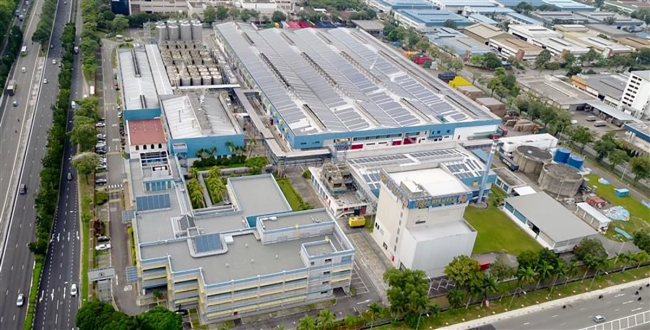
Dutch brewer Heineken will shift its brewing production from Singapore to Vietnam and Malaysia as part of its strategy to build a more agile regional supply approach.


Government agency Enterprise Singapore in late February was cited by the Vietnam Trade Office in Singapore as stating that in the first month of this year, Vietnam ranked as the city-state’s 10th-largest trading partner, with total bilateral trade amounting to about $3.6 billion, marking a 33.9 per cent increase compared with the corresponding period last year.
Of this figure, Singapore’s exports to Vietnam reached as much as $2.34 billion, up 13.6 per cent on-year, while imports from Vietnam surged to about $1.26 billion, representing a rise of 100 per cent on-year.
Singapore continued to post a trade surplus with Vietnam, recording a figure of $1.08 billion in January, representing a 24.6 per cent decline compared with the same period last year.
In terms of exports, electrical machinery and equipment, mineral fuels, oils, and waxes remained Singapore’s top export items to Vietnam. Their combined export value reached $1.74 billion, accounting for 76.2 per cent of Singapore’s total export turnover to Vietnam in the month.
When it comes to imports, statistics from Enterprise Singapore show that in January, electrical machinery and equipment and parts also remained the largest import category for Singapore from Vietnam, valued at over $520 million, up 76.5 per cent on-year and accounting for 41.4 per cent of Singapore’s total imports from Vietnam.
Ranking second and third in terms of import value were nuclear reactors, boilers, machinery and mechanical appliances and parts, which reached $507.3 million, soaring 333.8 per cent, and glass and glassware at $61 million, down 6.2 per cent.
In addition, Singapore also imported a wide range of other product categories from Vietnam, many of which recorded notable growth compared with the same period last year, according to Enterprise Singapore.
Last year, total bilateral trade hit a record figure of nearly $31.63 billion, breaking the record $25 billion reached in 2024.
In mid-February, Prime Minister Pham Minh Chinh talked over the phone with Singaporean counterpart Lawrence Wong to further advance and deepen the Vietnam-Singapore comprehensive strategic partnership. The Vietnamese leader proposed that Singapore further increase imports of Vietnamese agricultural products and effectively implement the memorandum of understanding on rice trade to help ensure food security.
Meanwhile, regarding investment ties, the Foreign Investment Agency under the Vietnamese Ministry of Finance reported that at present, Singapore investors have been cultivated over 4,430 valid projects in Vietnam, registered at $90.9 billion, making Singapore the second-largest investor in Vietnam, after South Korea.
In January, total newly registered and newly added capital and stake acquisition and capital contributions from Singaporean investors in Vietnam hit $1 billion, including 38 new initiatives valued at $906.1 million.
“With robust taxation policies, competitive labour costs and multilateral free trade agreements, Vietnam is emerging as a major manufacturing hub in Asia,” Enterprise Singapore said. “The country also aspires to move up the manufacturing value chain, with a focus on high-tech products and research and development activities.”
While talking with PM Wong, PM Chinh also shared Vietnam’s decision to establish its international financial centres (IFCs) in Ho Chi Minh City and the central city of Danang, proposing enhanced cooperation in developing these IFCs in a substantive and mutually beneficial manner, leveraging each side’s strengths and complementarities, thereby attracting resources and promoting broader ASEAN development.
In particular, Vietnam proposed that Singapore share its experience in designing organisational models and operating mechanisms for the IFCs, as well as in management and supervision to ensure financial and systemic security, the development and management of new financial sectors linked to IFC operations.
In January, Vietnamese Permanent Deputy Prime Minister Nguyen Hoa Binh informed Singaporean counterpart Gan Kim Yong in Singapore that Vietnam aims to mobilise high-quality resources, especially financial capital, to serve the country’s upcoming development phase.
Both sides also explored substantive cooperation programmes between the IFCs in Ho Chi Minh City, Danang, and Singapore, focusing on training and human resource development, especially high-quality financial management and supervisory personnel.
Deputy Prime Minister Gan Kim Yong highly appreciated Vietnam’s decision to establish IFCs, describing it as a timely and sound policy move. He stated that Singapore stands ready to support Vietnam by sharing operational experience and promoting financial connectivity between the IFCs of the two countries.
Vietnam last month also put forward some proposals for furthering bilateral cooperation, including prioritising the expansion and upgrading of the Vietnam-Singapore Industrial Parks (VSIP) network to second-generation models integrating not only industrial production but also services, high technology, and eco-urban areas.
The two sides aim to raise the total number of VSIPs to 30 in 2026, marking the 30th anniversary of the project’s presence in Vietnam.
PM Chinh called on Singapore to share experience and provide advisory support, while strengthening cooperation in financial and banking infrastructure development, particularly digital infrastructure, payment systems, cross-border payments, digital identification, and also cybersecurity.
He also encouraged closer connectivity between the two financial ecosystems and called on Singaporean banks, investment funds and fintech enterprises to expand long-term investment and operations in Vietnam.
PM Chinh also proposed expediting surveys for offshore wind power projects in Vietnam aimed at exporting electricity to Singapore, and incorporating the project into an intergovernmental cooperation framework to establish a legal basis and contribute to the realisation of the ASEAN Power Grid.
Both sides agreed to step up cooperation in carbon credit exchanges, further deepening the Singapore-Vietnam Green-Digital Economic Partnership.
The Vietnamese prime minister also called for enhanced cooperation in defence, security, and combating transnational crime, and asked Singapore to continue supporting Vietnam in human resource development and opening additional direct flights from Singapore to major Vietnamese cities to boost tourism.
PM Wong agreed to actively encourage cooperation in clean energy and expand collaboration beyond trade into other key areas, including defence and security. He reiterated Singapore’s continued support for Vietnam in human resource development, encouraging Singaporean universities to increase scholarships and further strengthen people-to-people exchanges.