








Lynas secures Vietnam metal processing deal with LS Eco Energy
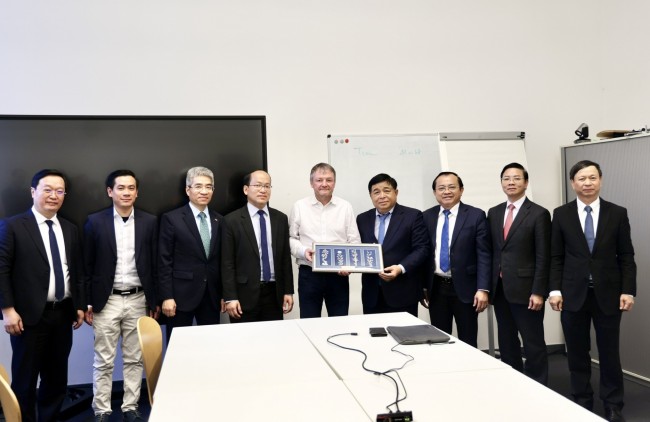
Australian rare-earths miner Lynas has signed a framework agreement with LS Eco Energy to produce rare earth metals at a new facility in Vietnam.

Sunny Days Piano (SND), a music and arts training centre, wrapped up a seed round investment from ThinkZone’s Global Minds Fund I in mid-November.
SND focuses on flexible, technology-enabled piano training for adults, built around a “lifetime flexibility” learning model, modern learning spaces, a proprietary piano curriculum, and a technology platform developed to optimise scheduling, operations, and teaching quality. The company is running seven locations across Ho Chi Minh City. The investment will support SND’s growth plans, including the expansion of new learning centres, development of international-standard programmes for children, and strengthening operational capabilities.
The move is aligned with the government’s policies to promote arts education in Vietnam. Circular No.29/2024/TT-BGDDT restricts extra tutoring in core subjects while encouraging training in literature, physical education, and the arts, while Resolution No.71-NQ/TW sets a direction for holistic education and laying the groundwork for integrating arts education into schools.
Likewise, Vuihoc, a Vietnamese K-12 edtech platform, also completed a strategic Series A+ round in September, raising fresh capital from new investors Vivendus Capital and the DBJ Capital (the venture capital arm of the Development Bank of Japan), along with continued support from existing backers TNB Aura and Vulpes Investment.
The new capital will be used to strengthen Vuihoc’s leadership position in the K-12 education market and to accelerate research and development of AI-powered products, further enhancing personalised learning experiences for Vietnamese students. This latest funding round also marks a strategic milestone as Vuihoc prepares for its upcoming Series B raise in the years ahead.
“Vuihoc’s mission has always been to make high-quality education accessible to millions of learners, regardless of geographic location or economic background,” said CEO Lam Do. “This funding round allows us to strengthen our current offerings while investing in the next generation of AI-driven tools that will empower both teachers and students.”
As reported by DealStreetAsia, Japan’s Gakken Holdings and Vietnam’s ABB have also acquired a 54.5 per cent majority stake in edtech firm Quang Ich Technology Group, which provides learning management systems and digital education tools to schools and education departments across Vietnam.
Gakken now holds 40.5 per cent and ABB 14 per cent. The two firms have previously partnered on education deals, including Gakken’s 2023 investment in DTP Education.
Another edtech company, Galaxy Education, has secured nearly $10 million in funding from East Ventures and other investors. The fresh capital will primarily fund GE’s national ESL (English as a Second Language) programme, which aligns with Vietnam’s directive to improve English proficiency across the country. The initiative targets both public schools and underserved communities, addressing teacher shortages and learning outcome gaps.
Logan Leung, deputy managing partner of Rajah & Tann LCT Lawyers, said it has continued to see investor interest in the education sector throughout 2025, driven by a combination of Vietnam’s growing middle class, the government’s national education strategy, and an increasingly digitised education sector.
“However, we have seen a gradual shift away from mega-acquisitions of educational institutions, many of which emerged after the pandemic period when some institutions faced financial distress,” Leung said. “School mergers and acquisitions (M&As) require significant capital, and the recent economic climate has made investors more cautious about pursuing these transactions. Some investors cited widening gaps in valuation expectations, with school owners anticipating lofty valuations based on perceived post-pandemic demand.”
Over the past year, there has been greater interest in asset-light and scalable business models, such as edtech and digital learning infrastructure. Investors see these as attractive opportunities within the education sector, offering growth potential without the same financial commitment required to acquire a school or chain of schools.
In addition, the government is proposing over around $21.9 billion to implement the 2026-2035 National Target Programme for Education Modernisation and Quality Enhancement. The goal of the initiative is to comprehensively standardise and modernise the education system, from preschool to higher education, in order to improve training quality and provide lifelong learning opportunities for all citizens.