



Heineken to shift production from Singapore to Vietnam and Malaysia
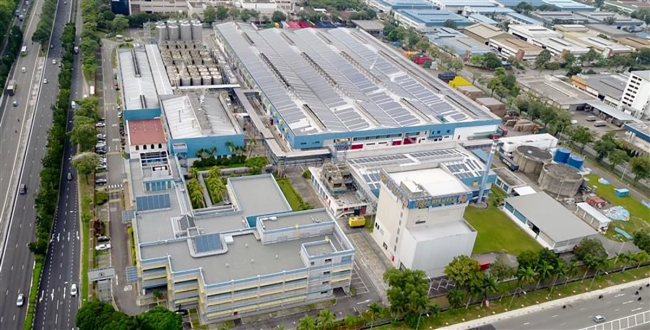
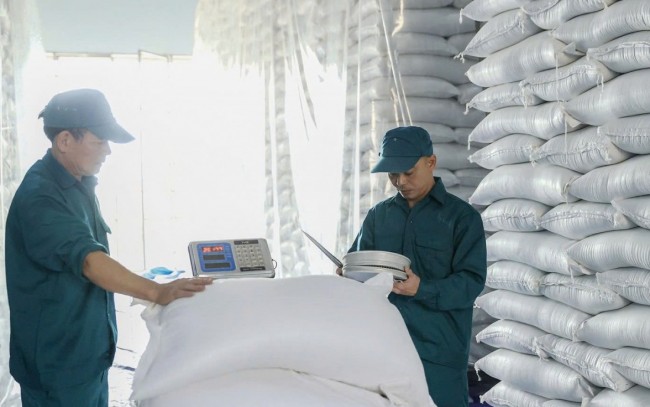
Dutch brewer Heineken will shift its brewing production from Singapore to Vietnam and Malaysia as part of its strategy to build a more agile regional supply approach.


The projects are expected to generate substantial spillover effects, opening new development space for many localities in the upcoming years.
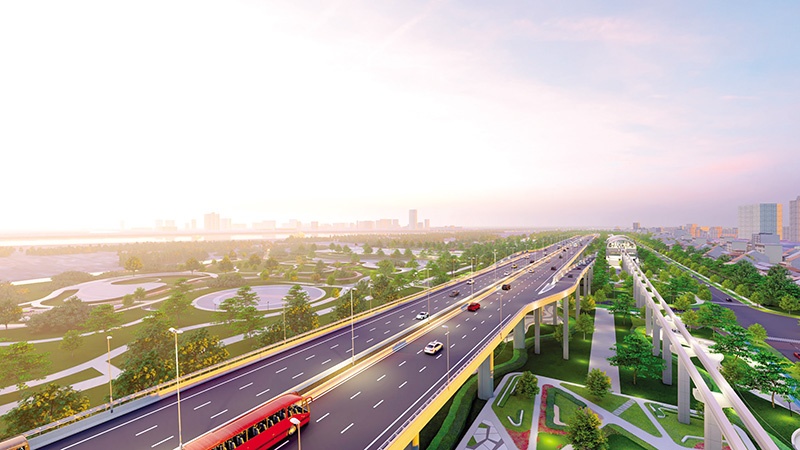 |
| A perspective of the Red River Scenic Boulevard project in Hanoi |
After signing the decision on project approval and investor appointment, the Ministry of Construction issued an urgent notice to Project Management Unit 7 and an investor consortium led by Deo Ca Group requesting the swift completion of all procedures required to commence construction of the Ho Chi Minh City-Trung Luong-My Thuan Expressway expansion under the public-private partnership (PPP) model.
As one of the largest transport projects selected for groundbreaking on December 19, the project is set to provide a major boost to driving economic development across the Mekong Delta region.
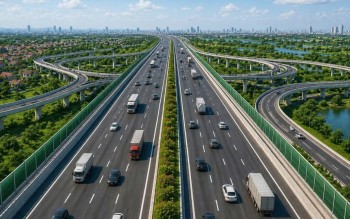
Upon completion in 2028, this expressway will have six to eight lanes, with a speed limit of up to 120 km per hour and significantly enhanced capacity, helping to radically resolve long-standing bottlenecks along the freight corridor connecting Ho Chi Minh City and the southeastern seaports with Can Tho.
Travel time will be shortened, and logistics costs for key regional exports such as agricultural and aquatic products will be significantly reduced.
“The project will also contribute to expanding the urban, industrial, and service development space, creating a foundation for sustainable growth across the Mekong Delta amidst intensifying climate change,” said Bui Xuan Dung, deputy minister of construction.
With a total investment of approximately $1.45 billion and contract provisions involving multiple parties over a nearly 20-year period, negotiating and signing the contract in just two weeks pose a significant challenge for both the investor consortium and relevant state management authority.
According to a representative of Deo Ca Group, in order to meet the PM's directive to begin construction on December 19, the investor must complete legal procedures to establish the project enterprise, finalise arrangements for equity financing and loan mobilisation, and assign personnel for contract negotiations.
“However, with extensive experience and as the investor involved from the earliest proposal stage, we will complete all legal procedures on schedule while ensuring that ceremonial and logistical preparations for the groundbreaking take place in a timely manner,” the company representative said.
The same sense of urgency can be seen not only at this project but also throughout the Ministry of Construction (MoC) and multiple project owners under the ministry, as preparations intensify for the groundbreaking ceremonies.
For more than two months, the special working group overseeing the groundbreaking of the Lao Cai-Hanoi-Haiphong Railway, led by Deputy Minister of Construction Nguyen Danh Huy, has been working overtime, often until 8-9pm, to stay on schedule. The project has a total investment approximating $8.13 billion.
The National Assembly has approved the investment plan for this modern, integrated railway line to meet domestic transport demand and support international rail connectivity between Vietnam and China.
Early commencement is expected to create vital momentum for rapid socioeconomic growth and maximise advantages along the Lao Cai-Hanoi-Haiphong economic corridor to ensure effective links with domestic and international rail networks within the broader framework of global integration.
On November 1, the MoC signed a decision dividing the overall project into two subprojects.
Subproject 1 involves building infrastructure connecting railway stations along the route and station plazas, with an estimated investment of nearly $92 million.
Subproject 2 includes construction of railway infrastructure, with an estimated investment reaching $6.2 billion.
One week later, the MoC approved Subproject 1, establishing the critical legal foundation required to begin work on this key component.
According to the MoC, the project developer, Railway Project Management Unit, is simultaneously advancing progressive steps, and land clearance for the groundbreaking ceremony is being closely coordinated by provincial authorities.
“On November 24, the MoC held discussions with Lao Cai People's Committee regarding planning and coordination for the groundbreaking to take place at Lao Cai Station,” the Railway PMU leadership said.
The MoC is also working closely with local governments to finalise the list of projects to break ground or be inaugurated on December 19, with the most notable among them being the Red River Scenic Boulevard in Hanoi.
This is a multipurpose project receiving special attention from the PM, who has asked Hanoi People's Committee and relevant ministries and agencies to mobilise all available resources to break ground on December 19, creating momentum and a fresh impetus for the capital as it enters a new development era.
The project carries a total investment of approximately $13.5 billion and covers a research area of about 7,800 hectares.
It is being developed under the PPP model by a consortium including Deo Ca Group, Van Phu Real Estate Development JSC, MIK Group Vietnam JSC, and Dai Quang Minh Real Estate Investment, with VPBank committed as the lead lender.
Among the project's three main components proposed by the investor consortium, the most notable is the boulevard, consisting of two roads running along both banks of the Red River, with a total length of approximately 92.4 km.
In addition, the consortium has proposed constructing two monorail lines on both sides of the river. These lines would generally follow the planned roads along the river, with certain adjusted segments to accommodate the transit-oriented development model, with a total length of about 85 km.
“We are directing agencies to urgently submit their feedback on the plans for the Red River Scenic Boulevard, as well as special policies needed to meet the schedule set by the prime minister,” said the MoC leadership.