




Heineken to shift production from Singapore to Vietnam and Malaysia
Dutch brewer Heineken will shift its brewing production from Singapore to Vietnam and Malaysia as part of its strategy to build a more agile regional supply approach.

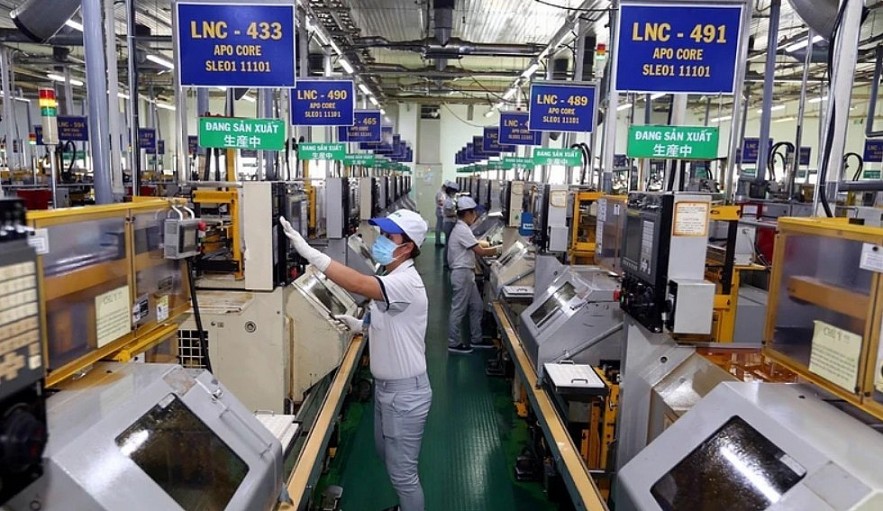 |
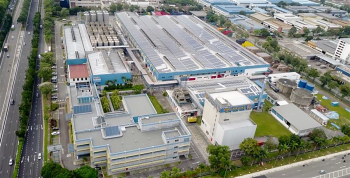
| A Japanese-invested factory in Tan Thuan Export Processing Zone, Ho Chi Minh City. (Photo: VNA) |
Thanks to thorough preparation in policies and infrastructure, as well as a fundamental shift in its strategy to attract foreign direct investment (FDI) capital, Ho Chi Minh City remains a highly attractive destination and continues to lead the country in FDI inflows.
Since the introduction of the Law on Foreign Investment 1987, HCM City entered a new chapter of development, marked by its strong opening-up and trade integration with the world.
During this period, many global corporations turned their attention to the southern hub, quickly seeking opportunities in this "promising land." In 1996, Japan's Furukawa Electric Group chose Tan Thuan Export Processing Zone to build and operate its first components manufacturing plant in Vietnam.
With continuous growth in both scale and quality, Furukawa Automotive Parts Vietnam Co., Ltd has become a key pillar in the automotive business of Furukawa Electric Group. HCM City, as a "fertile ground," has supported the firm in realising its development goals focused on quality, efficiency, and sustainability - in line with its parent company’s business philosophy.
Excellent human resources, a favourable investment environment, and well-developed infrastructure are the factors that have enabled the Japanese firm to reach the position it is today, according to Hirobe Masao, General Director of Furukawa Automotive Parts Vietnam.
Notably, HCM City also attracts foreign banks, financial institutions, and investment funds.
According to Huynh Buu Quang, CEO of Germany's Deutsche Bank in Vietnam, the bank has operated in HCM City for 33 years and looks forward to further expanding its presence.
The bank has seen great potential in the market and has continuously developed financial products to meet the investment and development demand of FDI enterprises, Quang said, noting that as HCM City moves towards becoming an international financial hub, the opportunities for Deutsche Bank are even greater.
Prof. Dr. Nguyen Trong Hoai from University of Economics Ho Chi Minh City (UEH) attributed the southern metropolis’s early success in attracting FDI to its 1990s industrial development policy targeting foreign investors. As a result, FDI enterprises in export processing zones and industrial parks have created a large number of jobs, not only for the city but also for neighbouring localities, importantly contributing to the national budget.
FDI enterprises have created competitive pressure on domestic businesses, which in turn has helped local companies grow and gain opportunities to start joining global supply chains, Hoai stressed.
Following the Tan Thuan Export Processing Zone, the establishment of the Saigon Hi-Tech Park (SHTP) in 2002 marked a major step forward in the city’s efforts to attract global "eagles". This also marked a turning point when FDI shifted significantly in quality - moving from labour-intensive industries to sectors focused on industrial, technological, and innovation-driven production. Many global giants did not hesitate to build billion-dollar factories here, such as Nidec of Japan, Samsung of the Republic of Korea, and Intel of the US.
In 2010, Intel officially put into operation its 1-billion-USD chip assembly and testing plant at SHTP, marking HCM City’s presence on the map of attractive global investment destinations. Intel’s stable and continuous growth over the years is the “fruit” of the city’s efforts in taking appealing policies on investment environment and infrastructure, providing maximum facilitation for businesses.
According to Kenneth Tse, Vice President and General Manager of Intel Vietnam, investors in HCM City can benefit from the most modern and comprehensive infrastructure system in Vietnam, including transportation and telecommunications networks. Along with open and supportive investment regulations and policies, the municipal authorities have worked to increase the number of skilled personnel in fields such as high-tech industries, information technology, and other services.
Michael Wekezer from the German Business Association in Vietnam said the southern metropolis appeals to many German businesses as it is a strategic economic hub with a young and skilled workforce, a business-friendly environment, and advantages from new-generation free trade agreements. He added that German enterprises see many opportunities in high technology, IT outsourcing, software development, and other advanced industries.
Evaluating this investment trend, Hoai stated that in the past 10 years, as digital transformation and green transition have become new growth pillars, the city's FDI inflows have focused on large technology corporations, including those operating in semiconductors. This is an important foundation for HCM City to turn into a world-class megacity.
The FDI inflows will help the southern hub increase its production value, create links for the development of supporting industries, help Vietnamese businesses join more deeply the global supply chain, as well as attract global technology talents to serve its development, Hoai went on./.