





Heineken to shift production from Singapore to Vietnam and Malaysia
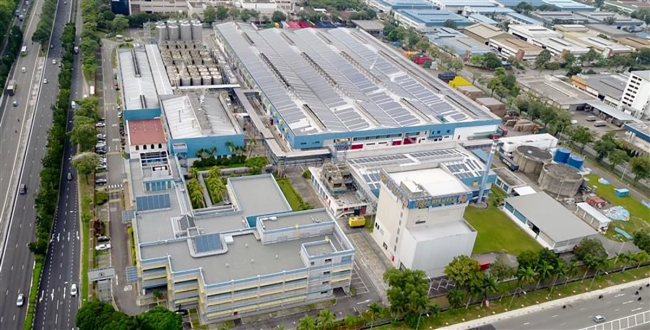
Dutch brewer Heineken will shift its brewing production from Singapore to Vietnam and Malaysia as part of its strategy to build a more agile regional supply approach.


According to analysts at Hanoi-based An Binh Securities JSC (ABS), the market’s performance was underpinned by progress in legal reforms, ongoing technological upgrades, and Vietnam’s FTSE market status upgrade, all of which helped strengthen market fundamentals. ABS noted that the stock market remains in a long-term upward cycle that has been sustained for many years, with medium- and short-term corrections seen as natural phases before the broader growth trend resumes.
 |
As of the end of November, the VN-Index was trading at a trailing twelve-month price-to-earnings (P/E) ratio of 14.75x, higher than the 2024 P/E of 13.42x following a prolonged rally. While this valuation is no longer particularly attractive, it still offers opportunities for investors, provided that listed companies can maintain solid earnings growth.
By market capitalisation, small- and mid-cap stocks are currently the most attractively valued, with an average P/E of 11.0x- 26.8 per cent below their three-year average and 25.4 per cent lower than the overall market average. By contrast, mid-cap stocks are trading at the highest P/E levels, above the market average but still below their own three-year average. Large-cap stocks have posted a strong gain of 17.8 per cent so far this year, outperforming the market average increase of 16.3 per cent.
From a return perspective, deposit interest rates are expected to rise by 40-60 basis points in 2026 amid credit growth pressures, returning to levels seen in 2021 and the first half of 2022. However, with corporate earnings growth projected to improve in 2026, bank deposits are likely to become less attractive relative to equity investments.
ABS analysts forecast that the 2025 after-tax profits of listed companies will have risen by around 26.2 per cent compared to 2024, driven mainly by strong growth in non-financial sectors, while financial sector earnings grow at a more modest pace.
In 2026, profits are expected to increase by a further 21.6 per cent on year, supported by both revenue growth and margin improvement. With interest rates expected to remain low and limited alternative investment channels available, capital streams are projected to continue flowing actively into the stock market next year.
For foreign investors, Vietnam’s investment outlook remains compelling, supported by forecasts of Vietnam scoring the highest GDP growth rate in the region in 2026. At the same time, the upgrade of Vietnam’s stock market by FTSE from ‘frontier’ to ‘emerging’ status is expected to prompt emerging-market-focused funds to allocate substantial capital to Vietnam.
Based on these factors, ABS analysts expect the VN-Index in 2026 to surpass its 2025 peak, targeting 1,940 points under a conservative scenario, and touching 2,040-2,188 points in a more positive scenario. As of the end of November, compared with major global stock indices, the VN-Index posted the strongest performance, surging 36.1 per cent over the past 12 months, followed by Japan’s Nikkei 225 with a 31 per cent gain.
Speaking at the conference reviewing the 2025 performance and outlining the 2026 work programme of the State Securities Commission on December 15, Deputy Minister of Finance Nguyen Duc Chi noted that the complex global economic environment in 2025, together with severe natural disasters, posed significant challenges to Vietnam’s economy in general and the stock market in particular. Nevertheless, against the broader macroeconomic backdrop, the stock market recorded inspiring results in 2025.
The Deputy Minister highlighted five key achievements that clearly reflected the efforts, solidarity, and determination of the entire securities sector throughout 2025. First, Vietnam’s stock market maintained positive momentum, with indices, liquidity, market capitalisation and the number of investors all showing marked growth, underscoring the market’s expanding scale, depth and increasing attractiveness.
Second, the legal framework governing securities and the stock market continued to be strengthened and refined. The amended Securities Law and related legal documents issued in 2025 helped establish a more synchronised and transparent legal framework, supporting more efficient market operations and healthy development.
Third, the official launch of the new IT system (the KRX system from May 5) laid an important foundation for the market’s long-term development, paving the way for the introduction of additional products and meeting the needs of a rapidly expanding market.
Fourth, Vietnam’s stock market was announced by FTSE Russell to be upgraded from ‘frontier’ market to ‘emerging’ market status, reaffirming the country’s position and credibility on the global financial map. And finally, market discipline and order continued to be strengthened, with violations detected and handled strictly in accordance with the law.
This has helped safeguard market transparency, protect the legitimate rights and interests of market participants, and advance the goal of developing a healthy and sustainable stock market.