


Heineken to shift production from Singapore to Vietnam and Malaysia
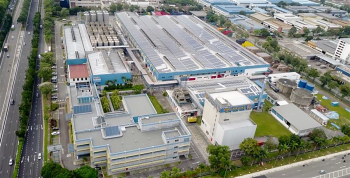
Dutch brewer Heineken will shift its brewing production from Singapore to Vietnam and Malaysia as part of its strategy to build a more agile regional supply approach.


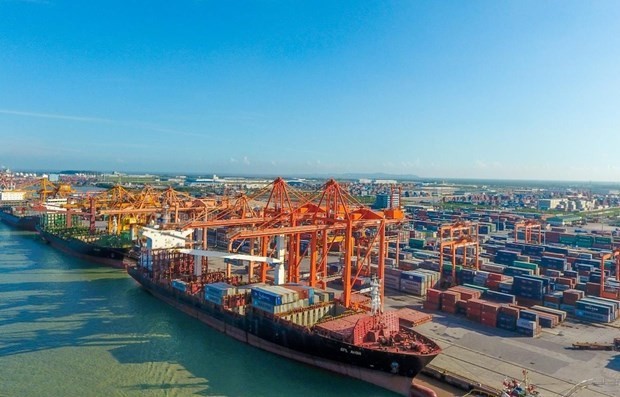 |
| There are 286 terminals with over 96km of quays across Vietnam at present. (Photo: VietnamPlus) |
Deputy Minister of Transport Nguyen Xuan Sang said that under the general plan for developing Vietnam’s seaport system for 2021 - 2030 with a vision to 2050, two special seaport complexes, Lach Huyen in Hai Phong and Cai Mep - Thi Vai in southern Ba Ria - Vung Tau province, will be developed to serve international vessels.
Lach Huyen is currently the deepest-water seaport in the northern region, covering 57ha in total with 750m of main quays. From this port, cargo can be transported directly to the US and Europe without having to transit regional ports like Singapore and Hong Kong, thus considerably reducing logistics expenses and promoting the competitiveness of Vietnamese exports.
Meanwhile, the Cai Mep - Thi Vai complex was chosen to become an international transshipment port as it is one of the 23 facilities worldwide capable of handling vessels with deadweight tonnage (DWT) of up to 250,000. It is also among the world’s 50 seaports handling the biggest volumes of containers. It accounts for over 16% of the total cargo throughput at seaports across the country, 35% of the container cargo volume nationwide, and 50% of the container cargo volume in the south.
The Ministry of Transport (MoT) will consider suitable policies to develop international transshipment ports in Van Phong of the central province of Khanh Hoa. Besides, it assesses the Tran De Terminal in Soc Trang province as potential for becoming a special seaport to serve as the gateway port of the Mekong Delta.
Meanwhile, though the soon-to-be-built Can Tho International Transshipment Port hasn’t been included in the general plan, Ho Chi Minh City is proposing the early construction of this facility and has received support from the MoT.
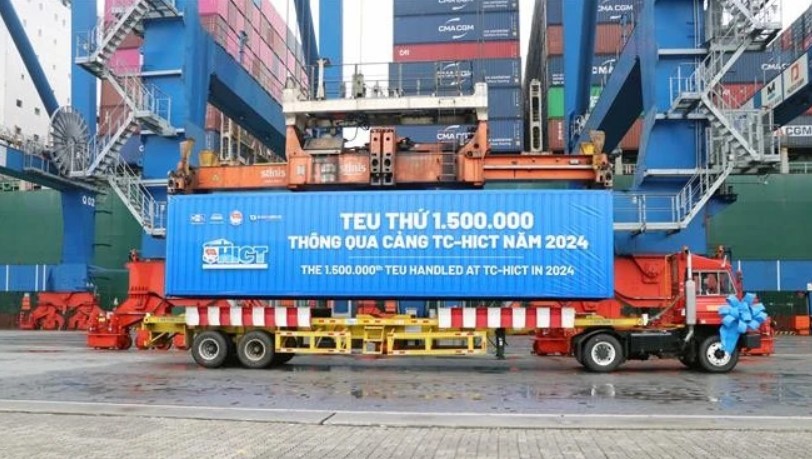
According to the MoT’s Vietnam Maritime Administration, by 2030, the seaport system in Vietnam will be developed to handle 1.14 - 1.42 billion tonnes of cargo, including 38 - 47 million TEUs (twenty-foot equivalent units) of container goods, and 10.1 - 10.3 million passengers. It will be developed on par with those in the region and the world by 2050.
To this end, about 313 trillion VND (12.7 billion USD) is needed to invest in the seaports providing goods loading services alone by 2030. The funding will come mainly from non-state budget sources, business investment, and other legal sources.
Deputy Minister Sang said attracting investment to seaports is not a worrying issue because over the past years, State investment in this field has accounted for just 16 - 17%, with the rest coming from the private sector. Many seaport projects have garnered attention from large domestic and foreign investors.The problem now is how to maximise the “super” ports that are about to come into being, he noted.
Tran Khanh Hoang, Vice Chairman of the Vietnam Seaports Association, considers the development of high-quality seaport infrastructure and the effective exploitation of the facilities as the prerequisite for successfully building a marine economy development strategy, especially for exporting countries like Vietnam.
To guarantee effectiveness, authorities and businesses should be prudent during investment consideration, understand cargo transportation demand, and detail investment roadmaps to avoid infrastructure redundancy, unnecessary competition, and resource scattering that may lead to increased expenses and financial risks, he suggested.
Pointing out weaknesses that hamper Vietnamese seaports from attracting large shipping companies, experts said quays of seaports aren't linked, making it hard for cargo from small vessels to be transferred on to larger ones. The country also lacks on-site specialised examination forces, a logistics ecosystem, an inter-regional and multi-modal transport system. Logistics costs are still high and the clearance duration is long.
If major ports are built, and those problems remain unsolved, investment effectiveness will be very low, he added.
Minister of Transport Nguyen Van Thang has asked the Maritime Administration quickly tackle those bottlenecks and build a medium-term capital allocation plan for 2026 - 2030. This will help to develop transport infrastructure facilities connecting the areas housing major seaports in order to elevate the stature of Vietnamese ports in the near future./.