

Heineken to shift production from Singapore to Vietnam and Malaysia
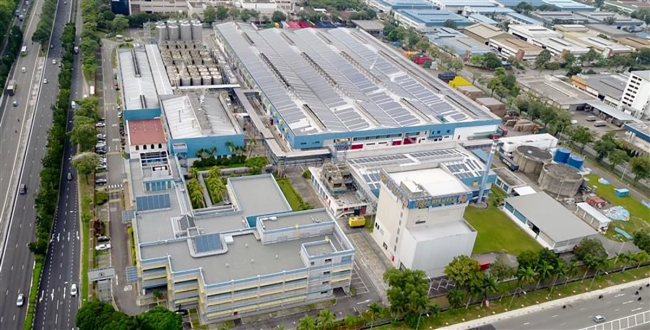
Dutch brewer Heineken will shift its brewing production from Singapore to Vietnam and Malaysia as part of its strategy to build a more agile regional supply approach.


Official figures say bilateral trade between Vietnam and the EU reached $73.8 billion in 2025, but the EU witnessed a trade surplus of $38.6 billion. Do you think that this figure will be a major concern for the EU, and what should be done to reduce it?
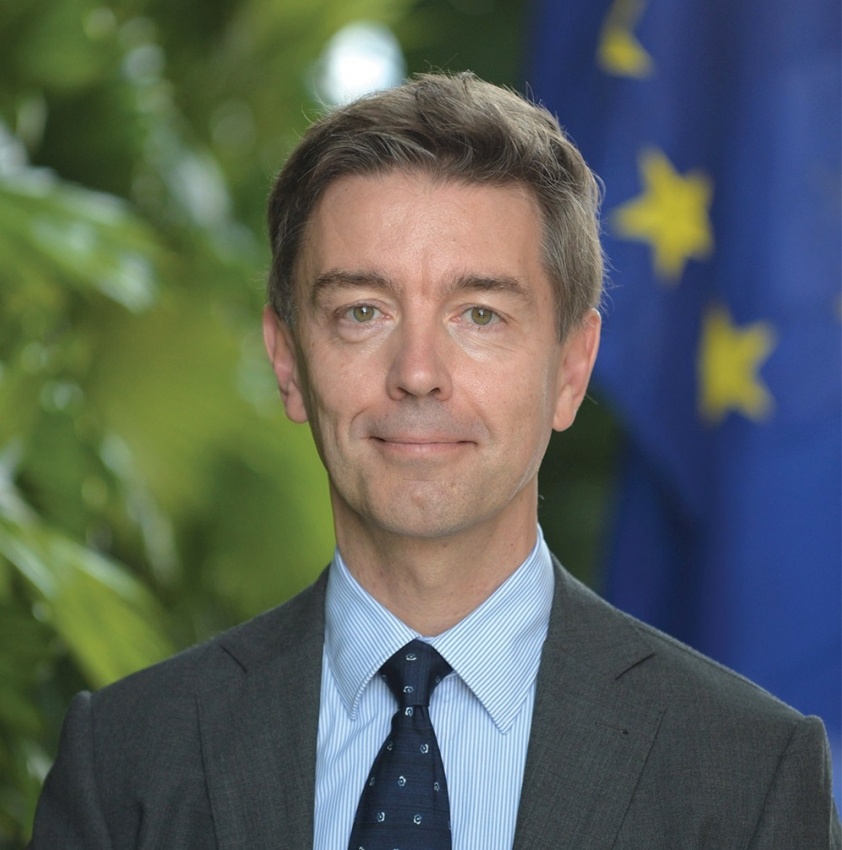 |
| Julien Guerrier |
We expect that EU-Vietnam trade and investment will continue to grow as it has over the past few years. Since August 2020, the EU–Vietnam Free Trade Agreement (EVFTA) contributed to improving investment conditions and market access for Vietnam and the EU in each other’s markets.
We need to ensure the full and effective implementation of the EVFTA so that businesses can compete fairly in each other’s markets, and trade and investment can flow freely. This will allow companies to make the most of the opportunities which the EVFTA offers. European companies have excellent technologies to bring, for example in secure and trusted communications networks, aviation, renewable energy, port construction and logistics, or railways. We look forward to seeing the quality of these offers and the benefits they will bring to Vietnam’s own ambitions fully reflected in EU companies’ successfully winning contracts in Vietnam.
The upgrade of the EU-Vietnam relationship to a comprehensive strategic partnership, the first such upgrade for the EU with a country in Southeast-Asia, illustrates areas where the EU and Vietnam intend to expand their cooperation in sectors of high interest for Vietnam, and where EU business has competitive offers for Vietnam. This upgrade also confirms the shared intent of the EU and Vietnam to work together in supporting the multilateral trading system. In 2026, Vietnam will also hold the rotating chair of the Comprehensive and Progressive Agreement for Trans-Pacific Partnership. Its dialogue with the EU offers an additional opportunity for addressing key global trade themes that will also be quite relevant for Vietnam’s own transition to a more advanced economy.
Will there be new cooperation between the two sides if the two sides will elevate relations, for example, any EU initiative to support enterprises from both sides?
The EU, member states, and businesses stand ready to work with Vietnam in Vietnam’s transition to a more advanced economy. The EU and Vietnam see particular future potential in critical raw materials, energy, including safe and low-carbon energy and technology, circular economy, logistics, transport and infrastructure. This includes secure and trusted communications infrastructure, semiconductors, AI, and digitalisation, including critical infrastructure and cybersecurity, resilience and diversification of supply chains, as well as sustainable agriculture, forestry, and fisheries.
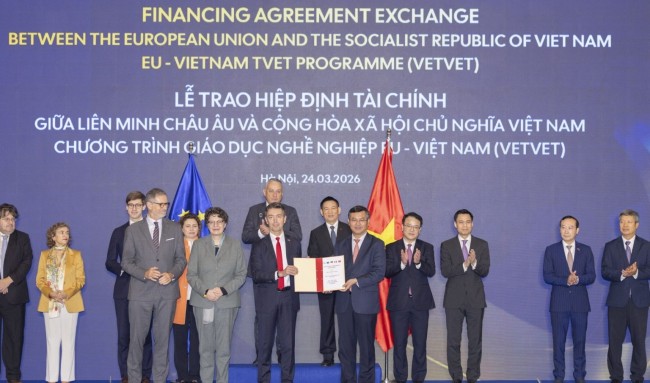
To make this concrete and practical, EU Commissioner for International Partnerships Jozef Síkela and EU Commissioner for Sustainable Transport and Tourism Apostolos Tzitzikostas will open the first EU-Vietnam Global Gateway Business and Investment Forum in Hanoi on March 24. It will focus on energy and sustainable transport to support Vietnam’s green and digital transition as foundational pillars for the whole economy.
A central pillar of this cooperation is the Just Energy Transition Partnership, through which the EU and its member states mobilise investment and expertise to support Vietnam in moving towards a low-carbon, climate-resilient economy and achieve its net-zero objective by 2050.
We are also working with Vietnam in the transport sector, combining EU grants and concessional loans to accelerate decarbonisation while improving connectivity. New projects starting this year will focus on the low-carbon circular economy and on environmental, social and governance (ESG) standards.
Close cooperation as Team Europe with EU institutions, member states and businesses, as well as non-governmental organisations, business and academic organisations in Vietnam, will ensure that we create tangible, inclusive and long-term benefits for businesses and citizens in the EU and Vietnam.
In Vietnam, the EU aims to mobilise high-quality investments that will foster innovation and create an enabling environment for long-term growth. How can Vietnam attract high-quality investments?
Cooperation initiatives in transport, the circular economy, or on ESG standards are an important focus. Equally important is investment in skills development and innovation, to ensure that Vietnam’s workforce and economy are future-ready and competitive.
At the same time, high-quality and high-tech European business offers will contribute to Vietnam’s broader economic transformation objectives. To make it attractive, this should mean real business opportunities for European companies. The views of European business in Vietnam as seen in the European Chamber of Commerce in Vietnam’s quarterly business confidence index are encouraging. Some 87 per cent of European investors would recommend Vietnam as a business location.
However, there remain challenges like administrative procedures and paperwork, uncertainty about regulations, or frequent changes and uneven application of these regulations. Customs procedures, unclear or overlapping government responsibilities, and challenges to bringing foreign talent are also mentioned as impediments.
The EU, together with businesses and member states, stands ready to identify and develop solutions with Vietnam that enable EU business to make its contribution. The EVFTA and its mechanisms, such as the EU-Vietnam Trade Committee and the EU-Vietnam Task Force, are an obvious starting point to develop the right solutions, but also to guide the work on future cooperation in sectors of mutual interest.
Vietnam is increasing its public investment to achieve higher growth in 2026. Do you think that this will benefit investors from the EU?
Vietnam and the EU intend to identify priority areas to expand market access for goods, services and public procurement, and to create business opportunities, in order to capitalise on each side’s strengths, needs and conditions. Vietnam and the EU intend doing this on the basis of openness, transparency and fairness. Quality, trustworthiness and sustainably are values that EU companies can bring. With this, we all stand ready to support Vietnam’s development and strategic autonomy. True business opportunities will be our strongest lever, and the best measure to gauge our shared success.