


Heineken to shift production from Singapore to Vietnam and Malaysia
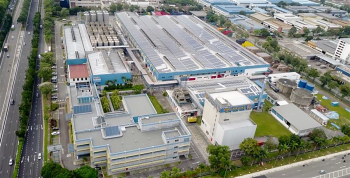
Dutch brewer Heineken will shift its brewing production from Singapore to Vietnam and Malaysia as part of its strategy to build a more agile regional supply approach.


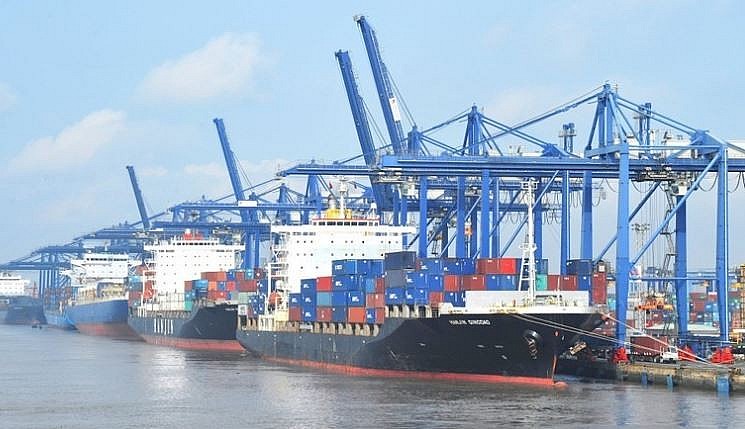 |
| Vietnam's logistics sector has seen strong growth in recent years. |
According to a Vietnam Report survey of logistics companies, changes in their revenue, costs and profits in 2024 provide clear signs of recovery. Vietnam’s import-export value is gradually approaching 800 billion USD, placing Vietnam among the top 20 economies with the largest trade volume. This presents an opportunity for logistics sector development.
According to the Vietnam Logistics Business Association (VLA), the growth rate of Vietnam’s logistics sector in recent years has reached approximately 14-16%, with a size of about 40-42 billion USD annually. In the World Bank’s rankings, Vietnam currently stands at 43rd out of 155 countries in logistics efficiency and is among the top five ASEAN countries, tied with the Philippines after Singapore, Malaysia, and Thailand.
Nguyen Thi Mai Linh, Head of Trade Facilitation Division at the Ministry of Industry and Trade, considers logistics one of Vietnam’s fastest and most stable growing service sectors recently, noting: “The e-commerce boom is driving logistics development. In particular, e-commerce logistics has transformed the logistics industry in providing services to meet increasing market demands.”
Sharing this assessment, Nguyen Xuan Hung, Head of E-commerce Logistics at the VLA, added that logistics companies have been undergoing significant transformation in connectivity, integration, and sharing. Additionally, Vietnamese logistics companies have made strong progress in digital transformation. Many Vietnamese companies have built and developed their own information technology systems to adapt and connect with foreign enterprises.
“This is most evident in e-commerce logistics. Logistics companies have applied e-commerce to create competitive advantages,” emphasised Hung.
Regarding policy mechanisms, speaking at the 2024 Vietnam Logistics Forum which was recently held in Ba Ria-Vung Tau Province, Minister of Industry and Trade Nguyen Hong Dien emphasised that the Party and State have issued numerous mechanisms, policies, and directives to effectively implement solutions to address difficulties, reduce costs, enhance competitiveness, and create a favourable environment for the development of the logistics service industry.
With the close attention and strong direction from the prime minister, the active and effective participation of ministries, agencies and local authorities, and especially the exceptional efforts of the business community, Vietnam’s logistics service industry has made significant progress, gradually affirming its brand and position in the region and the world.
Despite its achievements, Vietnam’s logistics industry has not developed to its full potential and advantages; logistics costs remain high, and competitiveness is low. The shortage of human resources, especially high-quality workforce, and a lack of infrastructure connectivity have been major bottlenecks hindering the development of logistics services.
In particular, domestic maritime transport has been heavily influenced by global shipping conditions, causing freight rates to increase significantly and change weekly, creating difficulties for businesses. Many transport and logistics companies have had to shift toward optimising multimodal transport, rather than relying on single modes as before.
Geopolitical changes and new business trends, along with intensifying strategic competition between major powers, pose new challenges for economic development, especially logistics services.
Currently, Vietnam’s advantage lies in its dynamic market for production and import-export activities. However, this advantage is not exclusive to domestic logistics companies, as foreign logistics companies are also ready to enter the market. They have strong initial financial resources and know how to exploit the weaknesses of domestic businesses, thereby creating competitive advantages. Moreover, domestic logistics infrastructure faces difficulties in combining various transport modes including road, sea, waterway, rail, and air transport.
Also at the 2024 Vietnam Logistics Forum, Prime Minister Pham Minh Chinh clearly identified the sector’s development bottlenecks. While awareness exists, it has not reached its full potential, especially regarding the role, position and importance of logistics and Vietnam’s position and role in global cargo transshipment.
The scale of the logistics industry remains small compared to the economy’s size and global logistics development requirements; state management personnel in logistics are lacking in quantity and quality; the connection between transport modes and warehousing is insufficient, especially inland warehousing; and logistics infrastructure remains outdated.
According to the prime minister, all resources originate from thinking, all momentum stems from innovation, and all strength comes from the people. Therefore, in the coming time, as global trade continues to develop, Vietnam cannot avoid integration and needs to innovate to reach further and integrate to develop in line with global trends. Logistics is the means to achieve this goal./.
| In 2024, Vietnam was ranked by international organisations among the top ten emerging logistics markets, the top four globally in the Logistics Opportunity Index, and the top 43 in the Logistics Performance Index. |