



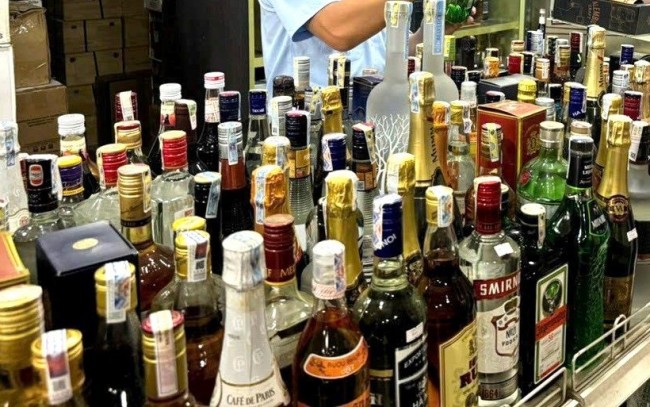
Heineken to shift production from Singapore to Vietnam and Malaysia
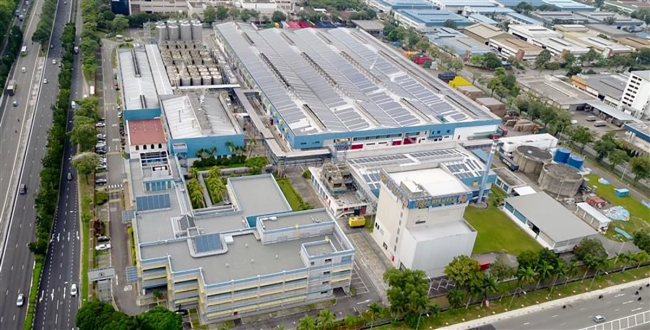
Dutch brewer Heineken will shift its brewing production from Singapore to Vietnam and Malaysia as part of its strategy to build a more agile regional supply approach.


In 2025, Cake by VPBank emerged as a standout performer in the fintech sector, building on its inclusion among the world’s top 100 digital banks in 2024 and becoming Vietnam’s first digital bank to report a profit. Powered by an AI-first strategy, robust technology infrastructure, rapid product development, and deep customer insights, Cake now serves 6.2 million customers, processes more than one million credit applications each month, and has recorded total transaction value of $12.8 billion, alongside steady growth in retail deposits.
 |
Cake’s total income surged 225 per cent in the first nine months of 2025, while operating expenses rose a more measured 83 per cent, reflecting improving cost efficiency as scale expanded.
In the third quarter, profit was four times higher than a year earlier, with earnings before interest, taxes, depreciation and amortisation also recording a sharp increase compared with 2024.
Earlier, in Q3 2024, Cake was ranked among the top 5 per cent of the world’s most efficient digital banks, a level of performance rarely seen in Southeast Asia.
Cake is also among Visa Vietnam’s most effective fintech partners for credit card growth. In 2025, it was recognised as Visa’s Leading Digital Partner for Total Card Transaction Volume and won the ‘Vietnam Pride’ Card Design Award for its 2-in-1 Freedom Card.
Beyond business performance, Cake has continued to strengthen a well-structured technology foundation throughout 2025. It is among the few banks in Vietnam to have successfully built and operated both its core banking system and an international card core platform in-house.
“Mastering our technology infrastructure has been critical to building customer trust, and it reflects our confidence in the capabilities of our predominantly Vietnamese engineering team,” said Nguyen Huu Quang, CEO of Cake by VPBank.
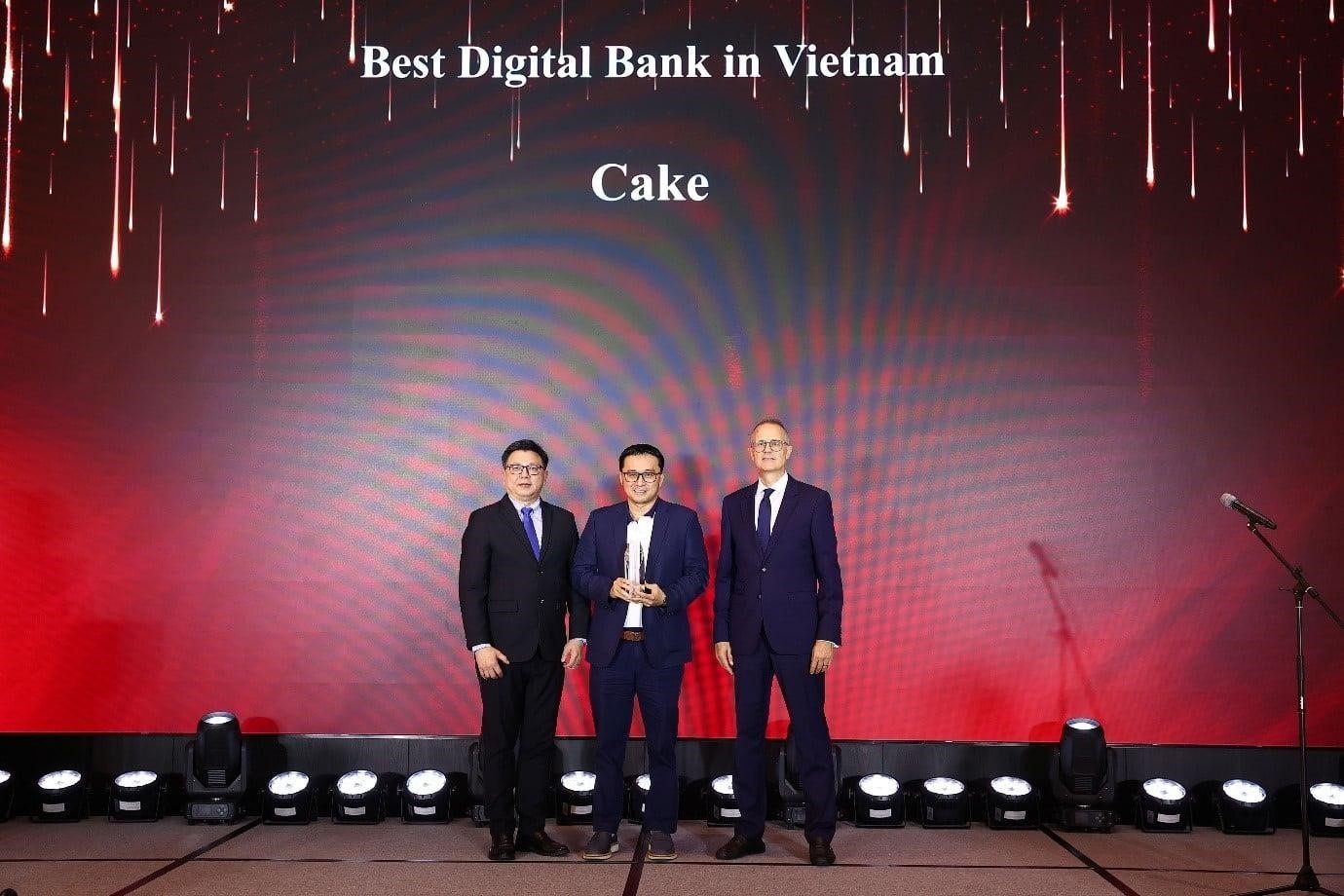 |
| Cake was named The 2025 Best Digital Bank in Vietnam by The Asian Banker |
Cake has developed and deployed more than 100 in-house AI models across core banking functions, including e-verification, customer service chatbots, credit approval, and debt collection.
AI is embedded across customer-facing services to streamline operations, control costs, and improve productivity. More than 700 automated AI processes operate around the clock, enabling faster and more consistent responses to customer needs.
The bank’s AI engineering team has also built a Vietnamese large language model (LLM) tailored to banking and financial services, trained on local transaction behaviour, operational workflows, and Vietnamese financial language.
Designed to improve contextual understanding while meeting security and scalability requirements, the model was ranked among the top 10 fine-tuned Vietnamese LLMs on the VLMU leaderboard and received recognition at Interspeech 2025, a prominent international academic conference on speech and language processing organised by the International Speech Communication Association (ISCA).
The effectiveness of Cake’s end-to-end application of AI is reflected in product performance and business outcomes.
Customer retention stands at around 80 per cent among frequent transacting users and rises to about 95 per cent among customers using financial services.
Cake’s technology infrastructure is designed to support tens of millions of users and is positioned for international expansion in the near future.
Last year, Cake showcased its technology capabilities by launching an AI-powered fast transfer feature. Unlike similar services at other banks that rely primarily on text-based data recognition, Cake’s solution allows customers to use images such as screenshots or photos of invoices, reducing manual data entry and enabling faster and more accurate transactions.
As demand for faster payments has grown, Cake was also among the first digital banks in Vietnam in 2025 to offer contactless payment options, including Apple Pay, Google Pay, Garmin Pay, and the Click to Pay online service.
The move places Cake among a small group of banks in Vietnam that have fully integrated cardless payment solutions, supporting a wide range of smart devices.
 |
| Cake and Vietnam Post mark the launch of the 2-in-1 Freedom Card |
Last August, Cake partnered with Vietnam Post to launch the 2-in-1 Freedom Card, which integrates both debit and credit functions into a single product, allowing users to manage cash flow more flexibly.
The product reflects an emerging direction in digital banking, as simplicity and real-time spending control become higher priorities for users. The “one card, multiple options” model helps streamline payment behaviour while maintaining security and flexibility.
Customer uptake is supported by both product features and Cake’s operational capabilities, which are underpinned by a robust security framework.
The bank complies with a range of recognised standards, including ISO/IEC 30107-3 Level 2 biometric certification (the highest level accredited by iBeta), ISO/IEC 27001:2022 for information security, and FIDO2 for passwordless authentication.
Together, these certifications reinforce digital trust and give customers confidence in placing their assets with a digital bank.
Over the past year, Cake has concentrated on strengthening its AI-driven digital banking model.
The focus has translated into a series of domestic and international recognitions, including Best Digital Bank in Vietnam and inclusion in the world’s Top 100 digital banks by The Asian Banker, alongside awards from International Banker, CafeF’s FChoice, and the Better Choice Awards.
Looking ahead to 2026, the competitive landscape is expected to intensify as sector restructuring brings in new entrants, many of which will benefit from lower barriers to customer adoption.
In this environment, scale alone is no longer a decisive advantage. Nguyen Huu Quang, CEO of Cake by VPBank, said competition is increasingly defined by efficiency, scalability, and system resilience.
Cake aims to position itself among Southeast Asia’s AI-driven banks over the next three to five years.
In fintech, sustainable growth depends less on feature volume than on trust built through data integrity, operational discipline, and long-term execution– areas the digital bank has identified as its strategic priorities.