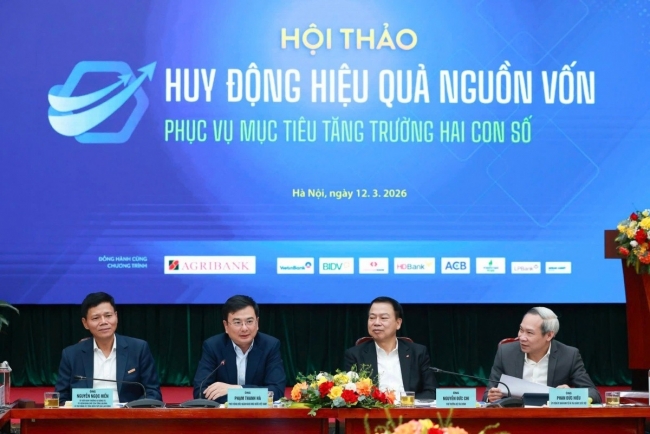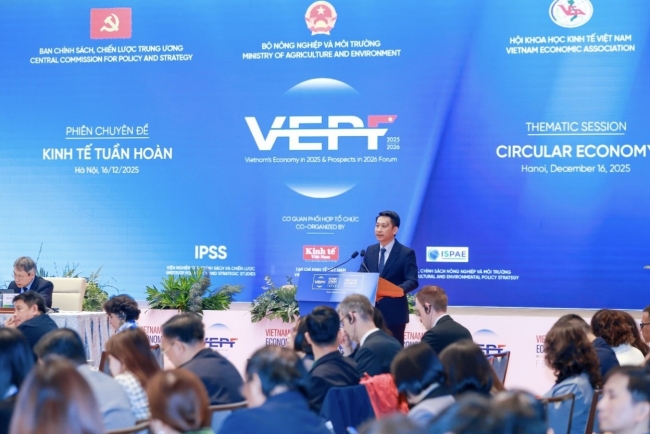



The recommendations were outlined at a December 11 seminar in Hanoi reviewing five years of implementation of Vietnam’s financial strategy, organised by the National Institute for Economics and Finance (NIEF) under the Ministry of Finance. Experts called for improvements in tax policy, debt-management frameworks, and capital-market development to strengthen the country’s long-term financial resilience.
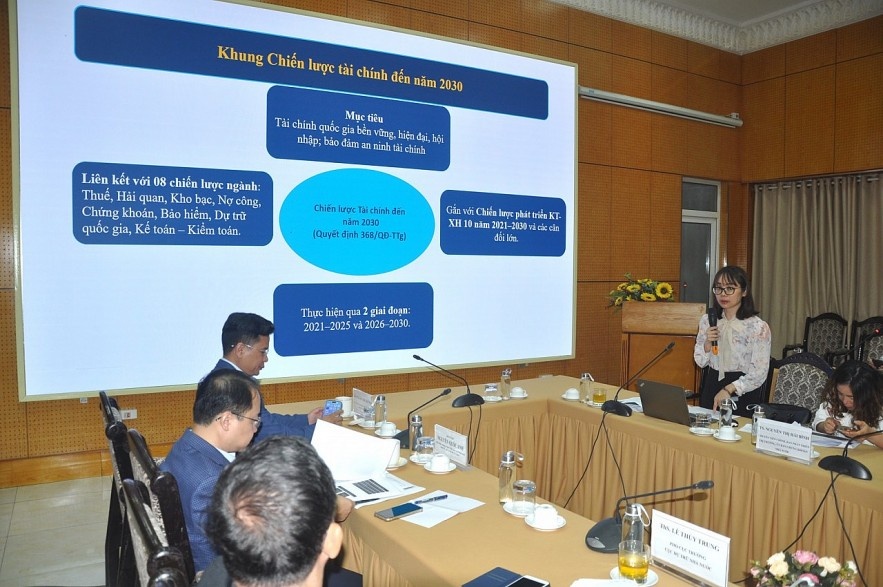 |
| Le Thi Mai Lien, head of the Division of Macroeconomics and Forecasting under NIEF, speaking at the seminar |
Assessing the implementation of the Financial Strategy through 2030, Le Thi Mai Lien, head of the Division of Macroeconomics and Forecasting under NIEF, noted that in the 2021-2025 period, revenue-raising policy continues to be restructured to build a sustainable state budget revenue system and contribute to constituting a competitive environment aligned with economic integration and development.
To date, the Ministry of Finance (MoF) has submitted and obtained National Assembly approval for a series of important tax laws.
These legislative advances reaffirm the MoF’s orientation towards building a modern and efficient tax policy framework that mobilises resources appropriately, ensures accurate and sufficient collection for the state budget, and supports social welfare, poverty reduction, and the private sector’s development.
During 2021-2025, the average ratio of budget revenue to GDP reached around 18 per cent. Local budget revenue accounted for roughly half of total state budget revenue on average for 2021-2023. Budget expenditure has been proactively managed to ensure strict compliance with policies and regulations, reinforce fiscal discipline, and increase spending efficiency.
“In terms of developing a modern, synchronised, transparent and sustainable financial market and financial services sector, the State Securities Commission and related units have been carrying out wide-ranging tasks to diversify products on the stock market-including the equity market, government bond market, corporate bond market, green bonds, derivatives, and new instruments- to increase supply and improve the quality of market offerings,” Lien added.
To contribute to the achievement of the financial strategy goals through 2030, expert Le Thi Thanh Thuy from the Policy Department under the Tax Department stated that the tax system reform strategy for 2026–2030 aims to improve the tax law framework to ensure transparency and fairness, remove impediments for production and business, and expand the tax base- particularly in the digital economy, e-commerce, cross-border platforms, natural resources, and capital markets.
“At the same time, the entire process of tax registration, declaration, payment, and refund shall be digitalised and integrated with the National Public Service Portal. Electronic invoices and e-tax services will be fully deployed so that by 2030 all core tax transactions take place in the digital environment. AI and big data will be leveraged to detect fraud, manage risks, and enhance audit efficiency,” Thuy said.
According to expert Hoang Thu Thuy of the Department of Debt Management and External Economic Relations (Ministry of Finance), the 2026-2030 period marks the second phase of implementing the Public Debt Management Strategy to 2030, during which Vietnam faces substantial capital needs to support its three strategic breakthroughs: institutional improvement, development of modern and synchronised infrastructure, and enhancement of human capital quality- particularly in line with the Party and state leadership’s goal of achieving double-digit GDP growth.
“In this context, public debt management will continue to uphold fiscal discipline while making use of available fiscal space to mobilise resources supporting medium- and long-term development objectives in an effective and sustainable manner,” she noted.
According to Thuy, the MoF will recommend further study of the necessity to establish a dedicated Debt Management Office to bolster professionalism and effectiveness in debt management.
The MoF is also calling for a strong acceleration of public investment disbursement, especially for official development assistance and concessional foreign loans, through cutting and simplifying administrative procedures, strengthening decentralisation for ministries, sectors, and localities, ensuring direct accountability of project leaders for implementation progress, and applying special mechanisms for national key projects.
“With the achievements already made and the comprehensive and decisive implementation of the above solution groups, public debt will continue to be maintained within safe limits in the 2026-2030 period, contributing positively to Vietnam’s goals of rapid and sustainable economic growth in the new era,” Thuy added.