


Vietnam’s stock market is attracting renewed foreign interest amid a steady rise in the index, growing optimism among global funds, and early signs of a sustained return of capital inflows. Since December, net buying sessions by foreign investors have occurred with increasing frequency, marking a sharp contrast with market conditions a year earlier and reinforcing expectations of broader capital reallocation into emerging markets.
Vietnam was mentioned for the first time in BlackRock’s 2026 Global Outlook report, published in December, signalling growing attention from global institutional investors. BlackRock is the world’s largest asset manager, and its inclusion of Vietnam is widely seen as a positive indicator of improving market visibility.
 |
According to the report, three emerging markets – Mexico, Brazil, and Vietnam – are set to benefit from the restructuring of global supply chains. Vietnam is increasingly viewed as a link capable of more in-depth engagement in global value chains over the medium to long term.
Echoing BlackRock’s view, PYN Elite Fund – a Finland-based foreign fund with more than a decade of investment in Vietnamese equities – has also issued positive assessments of the economy as well as Vietnam’s stock market as it enters 2026.
In a recent letter to investors, Petri Deryng, head of PYN Elite Fund, raised his VN-Index target to 3,200 points, marking the fund’s third adjustment, compared with only one target revision throughout 15 years of investing in the Thai market.
"This target is entirely achievable within the next three years, assuming that earnings of listed Vietnamese companies can sustain an average annual growth rate of 18-20 per cent," he wrote
Drawing on direct engagement with foreign investors, particularly institutions from Japan, Tran Thang Long, head of Research at BIDV Securities, said Vietnam is receiving considerable attention.
“Market upgrade is a highly significant event that does not occur frequently – perhaps only once every few decades. As a result, international investors are closely monitoring this process,” Long said.
Actual trading data over the past month show a clear increase in net buying sessions by foreign investors. Statistics indicate that foreign investors were net buyers in 15 out of 28 sessions, reversing a prolonged period of net selling earlier.
According to Nguyen The Minh, head of Research and Development Division at Yuanta Vietnam Securities, foreign selling pressure has eased significantly, with signs of a return to net buying as the VN-Index continues to establish new highs.
"Foreign capital has been refocusing on leading sectors such as banking, securities and oil and gas, signalling a shift in risk appetite and a reassessment of market prospects," said Minh.
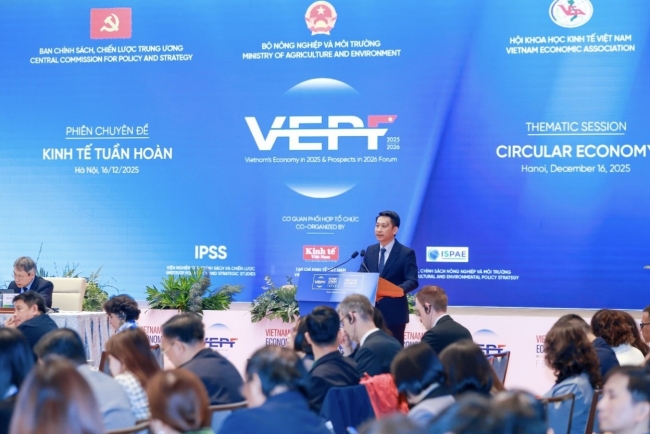
Speaking at a Hanoi seminar on investment opportunities for the year ahead on January 13, Nguyen Thi Thu Hien, CEO of Techcom Securities (TCBS), said that a market upgrade should be viewed as a medium-term factor, with impacts unfolding over many years rather than acting as a short-term catalyst in 2026.
“According to estimates, over the next five years, total foreign capital inflows into Vietnam driven by market upgrading could reach around $25 billion. In 2026 alone, these inflows are forecast at approximately $2–6 billion. The positive point is that foreign capital is expected to be disbursed gradually and steadily,” Hien said.
As Vietnam is included in a growing number of international indices, the pool of eligible stocks is expected to broaden to include more blue-chip names, supporting more sustainable passive investment inflows.
“Even as market upgrade prospects improve, foreign investors will remain cautious in an environment of high global interest rates and ongoing exchange rate volatility. Capital inflows are therefore likely to be more selective, as investors continue to weigh investment efficiency in Vietnam against opportunities in their home markets,” added Hien.
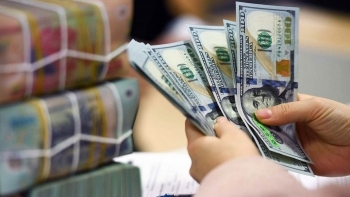
The BlackRock report also noted that the fund does not yet see a clear trend for the US dollar in 2026, citing ongoing uncertainties surrounding monetary policy and leadership at the US Federal Reserve.
Market observers believe pressure on the USD–VND exchange rate has eased significantly, supported by higher domestic interest rates and expectations of US rate cuts. In its 2026 strategy report, analysts at VPBank Securities said exchange rate volatility has been one of the main constraints for foreign investors in recent years, but this factor is likely to be gradually alleviated over the course of the year.