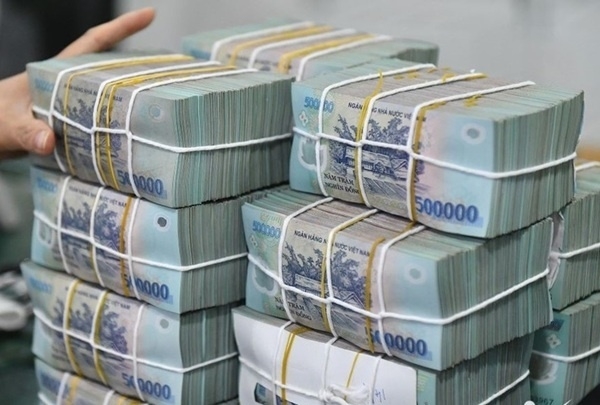



Fresh figures from Vietnam Customs showed that in the January-November period, Vietnam’s total trade with member states of the Regional Comprehensive Economic Partnership (RCEP) is estimated to have come in at $453.16 billion or nearly 54 per cent of Vietnam’s total trade.
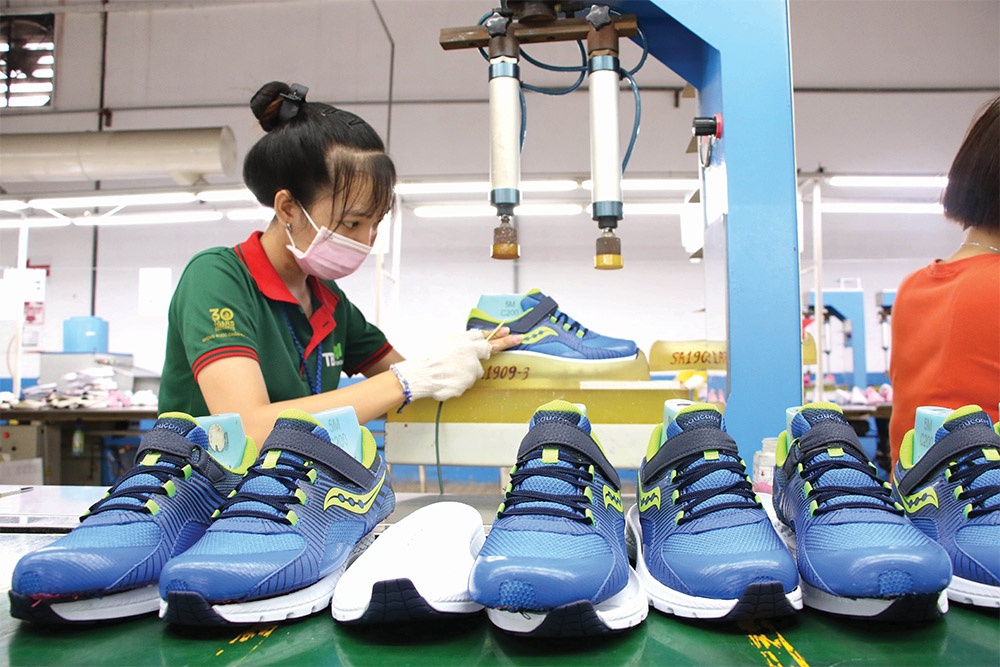 |
| The RCEP offers rules of origin advantages for Vietnamese companies that the CPTPP does not, photo Le Toan |
In which, Vietnam’s export turnover is estimated to have reached about $154.31 billion, accounting for 35.87 per cent of Vietnam’s total export turnover. Vietnam’s total import value is estimated to have sat at $298.85 billion, responsible for 72 per cent of Vietnam’s total import turnover.
Clinched in November 2020 by the 10 ASEAN member states and the bloc’s five partners of Australia, China, Japan, South Korea, and New Zealand, the RCEP became valid in early 2022.
The RCEP consists of major raw material suppliers in the world such as China, Japan, South Korea, and ASEAN countries, helping to connect the current ASEAN+ free trade agreements (FTAs) but applying only one set of rules of origin (ROO), contributing to the diversification of raw material sources, thereby promoting the development of supply chains.
In fact, while implementing projects in Vietnam, investors would need to import a large volume of products for production and then exports abroad, including to RCEP member markets. It is because the country’s supporting industries remain weak and many types of materials are nowhere to be found here.
“One of the most noticeable points in the RCEP is that this agreement has been designed to reduce costs and time for businesses, and the deal allows them to export goods to each member market without having to meet that market’s own requirements,” said an expert from the Centre for WTO and International Trade under the Vietnam Chamber of Commerce and Industry. “This will help investors increase investment in Vietnam.”
For example, for the Comprehensive and Progressive Agreement for Trans-Pacific Partnership (CPTPP), businesses from Vietnam often find it difficult to take advantage of tariff incentives for their garments and textiles due to tough requirements in ROO applied commonly within the bloc because a large part of materials Vietnam need are imported from China, which is not a CPTPP member.
However, for the RCEP, the burden of import costs for input materials will be reduced thanks to tariff incentives, the representative pointed out.
Tariff incentives
Last year, total Vietnam’s imports from China hit $144.3 billion – up 30.4 per cent on-year, and accounting for nearly 38 per cent of Vietnam’s total import turnover of $380.76 billion. In the January-November period of 2025, total Vietnam’s imports from China reached $167.5 billion – up 28.2 per cent on-year, and accounting for nearly 41 per cent of Vietnam’s total import turnover of $409.61 billion.
The RCEP will provide major benefit for Vietnam’s many key export items including garments and textiles, and agro-forestry-fishery products shipped to the member markets such as Japan and South Korea.
Specifically, under the Vietnam-Japan FTA and ASEAN-Japan Comprehensive Economic Partnership and under the Korea-Vietnam and ASEAN-Korea deals, the garments and textiles are subject to meeting phase-2 ROO, meaning cloth must be produced within ASEAN or Japan or South Korea before receiving tariff incentives.
Meanwhile, under the RCEP, Vietnam can import cloth from everywhere and conduct production in its territory, and the products can enjoy tariff incentives when exported to Japan or South Korea.
Similarly for aquatic products, the RCEP allows the country to import breeds from anywhere or source the breeds from inside of its territory, and all export products are still entitled to tariff incentives.
Under the RCEP’s commitments, member states committed to remove 87.8-98.3 per cent of tariff lines for Vietnam, and ASEAN countries vowed to do that with 85.9-100 per cent of tariff lines. The longest roadmap for tariff elimination is 15-20 years from the RCEP becoming valid.
According to the MoIT, another reason for Vietnam to believe that it can continue increasing trade with the RCEP region is that in the future, the agreement will continue expanding its membership.
At an economic minister conference in Malaysia in October, RCEP member countries gave the green light to the bloc’s expansion process.
Currently, accession negotiations are underway with four prospective members namely Hong Kong (China), Sri Lanka, Chile, and Bangladesh, whose trade in 2023 reached $5.6 trillion.
More beneficiaries
According to the Vietnam Institute of Strategy and Policy for Industry and Trade (VIOIT), the RCEP expansion has received strong support and broad consensus from existing member states. This is a signal of its growing appeal - an FTA covering a population of 2.2 billion people and accounting for around 30 per cent of global GDP.
Expanding membership will increase market scale, open up prospects for restructuring regional supply chains, and connect more economies across East Asia, South Asia and South America, the VIOIT said.
A September report by the VIOIT notes that, for Vietnam, this move opens up significant prospects, with export markets expanding towards new, high-potential partners. As a result, Vietnamese enterprises will be better placed to reduce their dependence on a number of traditional markets, while enhancing their ability to adapt to global volatility.
According to the National Statistics Office, in the January-November period this year, Vietnam’s total export is estimated to have been $430.14 billion, up 16.1 per cent on-year. The manufacturing and processing industry continues taking the lead in the economy’s total export turnover, with $381.72 billion, accounting for 88.7 per cent, and climbing 17.1 per cent as compared to the corresponding period last year.
Many groups of manufacturing and processing products recorded high on-year export growth, such as computers, electronics products, and components (48.5 per cent); machinery, equipment, and tools (11.6 per cent); and transport means and accessories (13.4 per cent).
The VIOIT said the expansion of RCEP membership brings many advantages to these sectors. For textiles and yarn, the participation of Bangladesh and Sri Lanka will help supplement abundant sources of raw materials, supporting enterprises in better meeting ROO in order to enjoy tariff preferences. In electronics, enterprises have more options for sourcing components at competitive costs, thereby easing reliance on imports from certain traditional markets.
Agricultural and aquatic products are expected to see significant prospects as RCEP expands. Chile and Bangladesh are potential markets with demand for rice, coffee and seafood, which are key strengths of Vietnam.
Beyond market expansion, Vietnam will also have opportunities to access supplies of raw materials, parts and components from new partners. This is particularly important in the context of continued volatility in global oil prices and logistics costs, which is placing pressure on production and export activities.
According to the Foreign Investment Agency under Vietnam’s Ministry of Finance, cumulatively as of late November 2025, Vietnam attracted more than $121 billion in registered investment capital from ASEAN member states, including Singapore ($89.5 billion), Thailand ($15.2 billion), Malaysia ($14.85 billion), and Indonesia ($677.7 million).