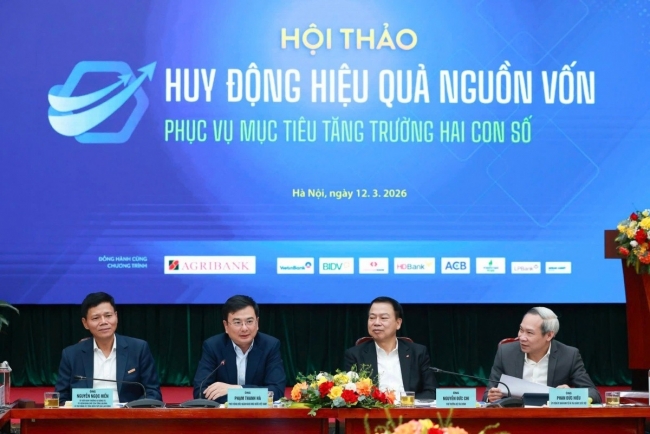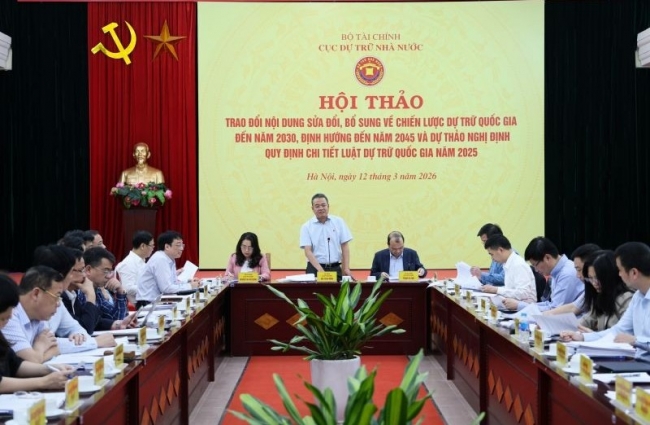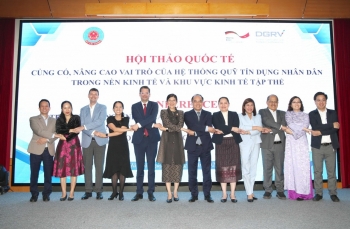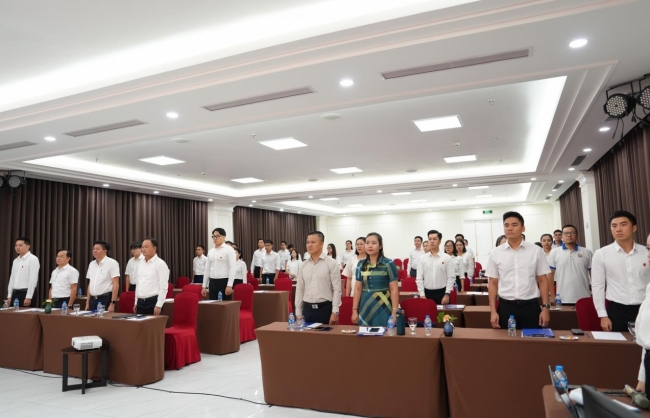



At a December 11 workshop, the Department of Debt Management and External Economic Relations, under the Ministry of Finance (MoF), said the on-lending of government foreign loans – including official development assistance (ODA) and concessional credit – still faces significant obstacles, underscoring the need for clearer regulations and updated policies.
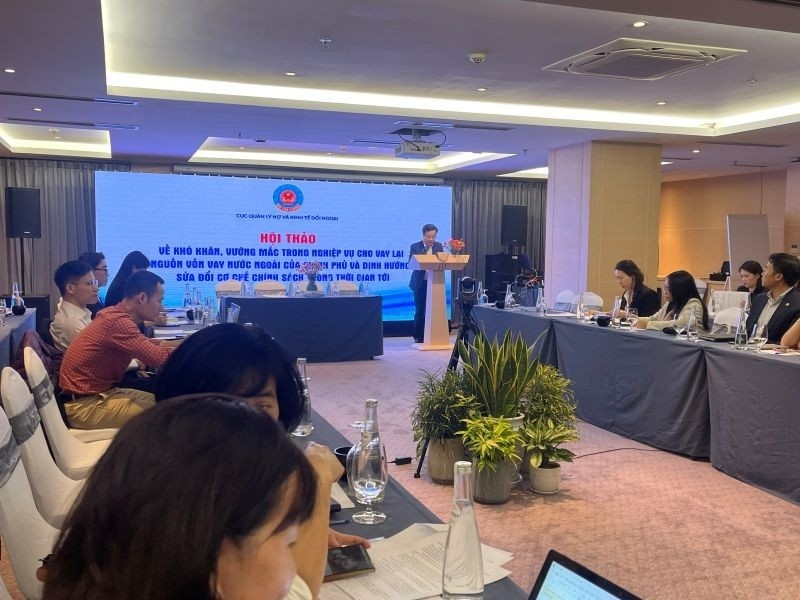 |
Vu Hoang Nam, deputy director general of the department, said the on-lending mechanism remains a key tool to reinforce borrower responsibility, strengthen financial discipline, and safeguard national public debt. However, implementation continues to face major hurdles.
He noted that businesses struggle with on-lending conditions, credit limits at financial institutions, the chosen on-lending method, and the availability of authorised on-lending agencies. Public service units face constraints related to their levels of financial autonomy, collateral requirements, and on-lending ratios that exceed their repayment capacity. Provincial People’s Committees also encounter difficulties in meeting appraisal conditions for on-lending.
“These obstacles have directly affected project progress, the efficient use of foreign loans, and broader economic growth objectives,” Nam said.
Therefore, to address these issues, he outlined several key topics for delegates to discuss, including specific difficulties in implementing current on-lending regulations; provisions needing amendment in legal documents; and proposals to improve coordination mechanisms and clarify responsibilities among the MoF, on-lending agencies, and borrowers to enhance the effectiveness of on-lending in the future.
Le Hong Huong from the National Power Transmission Corporation (NPT) said that under the adjusted Power Development Plan VIII, the corporation needs to mobilise VND30–40 trillion ($1.2–1.6 billion) annually for national grid investment, including VND20–30 trillion ($800 million–1.2 billion) per year in bank loans.
“To meet this demand, NPT is diversifying its funding sources, including domestic and international commercial loans and concessional financing from the Vietnam Development Bank,” he said.
However, Huong noted that the cost of ODA loans has become less competitive than direct commercial borrowing, as NPT must pay an additional 1.75 per cent per year in domestic on-lending fees. To ensure ODA retains its concessional nature, he said NPT proposes that the MoF reduce the on-lending fee or introduce enterprise-classification criteria that allow for more appropriate rates.
Another difficulty concerns collateral. NPT’s transmission assets have a depreciation period of about 10 years, while ODA loans typically have maturities of 20–25 years. After 5–10 years, the book value of the collateral becomes lower than the outstanding loan balance, resulting in requirements to provide additional collateral. "However, NPT’s other assets have already been pledged for previous loans, leaving no assets available to supplement," Huong added.
Given this reality, NPT proposes that the MoF consider a mechanism that does not require additional collateral unless the assets are no longer operational or NPT violates its debt obligations. At the same time, more flexibility should be allowed for enterprises and on-lending banks to negotiate directly.
Nguyen Thuong Huyen, deputy director of the Quang Tri Department of Finance, also outlined challenges her locality faces when accessing ODA on-lending.
Since July, Quang Tri and Quang Binh provinces were merged into the new Quang Tri province. Currently, several ODA projects in the locality are financed through government on-lending. Under the previous mechanism, the central budget provided more than 70 per cent of the capital, and the province borrowed back 30 per cent. However, after the merger, the locality’s on-lending ratio is expected to rise to 50 per cent.
"This is a difficult requirement for provinces with limited revenue and large infrastructure investment needs," Huyen said, and proposed increasing the grant portion so that disadvantaged localities can continue accessing foreign loans to improve infrastructure.
Nam stated that the Department of Debt Management and External Economic Relations will take all comments into account to study and propose policy adjustments, thereby improving the on-lending mechanism for the government’s foreign loans in the coming period.