





Lynas secures Vietnam metal processing deal with LS Eco Energy
Australian rare-earths miner Lynas has signed a framework agreement with LS Eco Energy to produce rare earth metals at a new facility in Vietnam.

The Ministry of Finance has advised the government on developing a new legal framework for financial management of PPP investment activities.
Decree No.312/2025/ND-CP was designed to simplify administrative procedures to facilitate businesses, while at the same time ensuring the effectiveness and efficiency of state management.
A notable innovation of Decree 312, lies in revising financial planning and the principles for managing and disbursing state capital to support PPP projects, making them more consistent with practical implementation as well as with the functions and mandates of relevant agencies.
 |
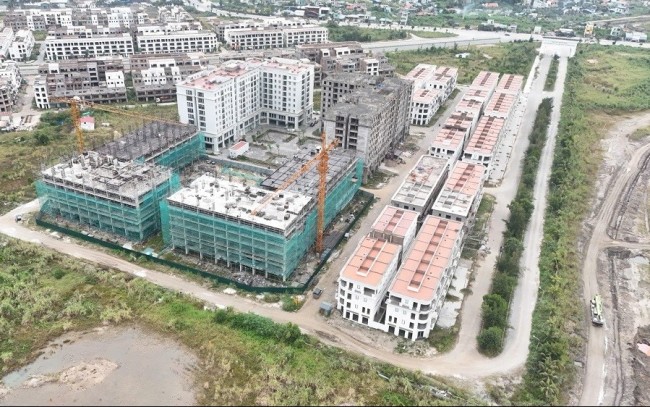
| New regulations help partly meet private investors' expectations when executing PPP infrastructure projects |
Although financial plans for PPP projects had been relatively regulated under Decree No. 28/2021/ND-CP, practical implementation reveals the need for further refinement.
The new regulations provide greater clarity on payment based on the value of completed work. Previously, the PPP contract-signing authority was required to provide information on completed volumes and their value to prepare a consolidated payment request.
This requirement results in payment authorities having to control and verify the actual completed volumes, even though they were not the contracting party and have insufficient legal and practical grounds to assess construction volumes, relying mainly on documentation and paperwork.
To address these concerns, Decree 312 reviews the mechanism so that the state makes payments to investors or PPP project enterprises based on the value of completed work volumes proposed by the agency assigned to manage the state capital in the project.
Under the new regulation, both the state capital management agency and the investor or project enterprise bear full responsibility for the truthfulness and accuracy of the reported work volumes and the value of completed work when requesting payment.
This approach not only better aligns with management practices and the functions and responsibilities of the State Treasury system, but also significantly enhances the accountability of agencies managing the state capital portion in PPP projects, thereby contributing to stronger fiscal discipline and greater efficiency in public spending.
In addition, Decree 312 revises and supplements provisions related to the disbursement of public investment capital for subprojects, with the aim of using state funds more effectively and supporting investors.
Previously, subprojects could be paid a maximum of 50 per cent of the approved estimated value, with the remainder disbursed only after the entire project was completed, and there was no mechanism for advance payment of public investment capital.
In response to recommendations, Decree 312 abolishes the 50 per cent payment cap and allows payments to be made based on the value of completed work volumes, without necessarily waiting for final acceptance of the entire project.
Decree 312 also introduces a mechanism allowing advance payments of public investment capital for PPP subprojects, provided that investors submit a contract guarantee corresponding to the advanced amount.
These adjustments are expected to significantly reduce pressure on borrowing and interest costs for investors, thereby enhancing the financial considerations of PPP projects.
Regarding payment procedures, Decree 312 considerably simplifies and shortens processing times.
The time for handling payment dossiers has been reduced from three days to a maximum of two days, while advance payment processing has been cut to one day, enabling investors and enterprises to access state budget support more quickly.
Overall, Decree 312 is assessed as having streamlined and unified the core aspects of financial management for PPP projects, clearly defining financial plans, accounting methods, and procedures for payment and settlement.
This provides a solid legal basis for all parties to properly fulfill their responsibilities and follow due processes in managing and using state capital.
Bui Viet Hung, deputy director general of the Department of Infrastructure Development under the Ministry of Finance, noted that the new regulations on procedures and documentation for disbursing state capital, particularly the changes related to payment and advance funding for subprojects using public investment capital, together with sharing mechanisms and transitional provisions, have helped to ease concerns and meet the expectations of private investors investing in infrastructure projects under the PPP model.
According to Hung, the new decree marks an initial move towards applying international practices in the financial management of PPP projects, with management based on output results.
Meanwhile, strengthening decentralisation in tandem with enhancing accountability for managing the state capital portion by the agency assigned to oversee PPP projects helps ensure tighter and more realistic capital management, thereby improving the efficiency of public resource utilisation.
“Decree 312 demonstrates the government's commitment to improving financial management policies for PPP projects, ensuring fairness, transparency, and consistency with the principles of risk sharing and harmonised benefits,” he said.