





Heineken to shift production from Singapore to Vietnam and Malaysia
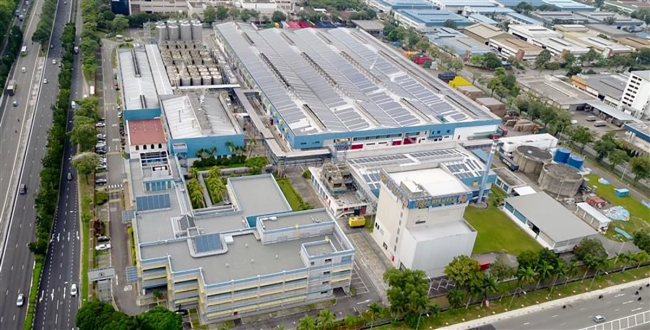
Dutch brewer Heineken will shift its brewing production from Singapore to Vietnam and Malaysia as part of its strategy to build a more agile regional supply approach.


A simple banh mi purchase at Han Market in Danang could become Vietnam’s first real test of stablecoins in daily transactions. Under a proposed pilot announced in June, international visitors would be able to pay in USD Tether (USDT) via a mobile app, with the equivalent amount instantly credited in VND, eliminating foreign-card surcharges, currency exchange queues, and waiting times.
Although not yet operational, the pilot promises tourism benefits, international investor attention, and reinforces Vietnam’s reputation as a fintech and innovation hub. It signals a shift from 'crypto outlaw' to 'controlled sandbox', arriving at a global inflection point where stablecoins are increasingly seen as settlement rails and enablers of programmable value transfer.
It's more evidence that Vietnam is quietly laying the groundwork for a digital-asset economy, with the Danang pilot forming just one part of a broader master plan.
 |
| Ly Nguyen, manager, Asia-Pacific Advisory at the Tony Blair Institute for Global Change |
In June, the National Assembly passed the Law on Digital Technology Industry. The statute stopped short of regulating digital assets, yet it opened up a controlled space for regulatory design and experimentation. This was followed by Resolution 05 issued in September, which provided the legal foundation and piloting mechanisms for crypto-assets, albeit does not include stablecoins. Then, in October, the Ministry of Finance sought to allow five licensed exchanges to operate for five years as part of another pilot. This controlled pilot is expected to contribute to the development of regulations for taxation, compliance, and operational standards.
The 'recognition to regulation' approach creates a playground for fintech pilots but with one goal – you experiment in a supervised sandbox, we learn and measure outcomes, and iteratively refine regulation together.
Vietnam’s digital-finance ambitions also have a physical dimension. In June, the National Assembly passed Resolution 222/2025/QH15, establishing an International Financial Centre (IFC) covering Ho Chi Minh City and Danang. Ho Chi Minh City is planned as the hub for finance and capital markets, while Danang will serve as the innovation frontier for pilots in digital assets, payments, and tokenisation.
The USDT pilot is only one of several potential experiments, which could also include tokenisation of real-world assets, tokenised deposits, synthetic dollar systems, and programmable money models. In this way, Danang is positioning itself as Southeast Asia’s financial testbed, comparable to Dubai’s IFC in the Middle East or the Busan Finance Centre in Northeast Asia.
Today, stablecoin issuers around the world are repositioning themselves. USDT has evolved into a payments-infrastructure entity, investing in blockchain networks, partnerships, and rails beyond mere issuance. USD Circle is aligning itself as a compliant, transparent infrastructure partner, integrating with banks, fintechs, and platforms. Ripple and Stellar are deepening their roles in cross-border, low-friction settlement networks.
Meanwhile, established finance is converging. PayPal launched PYUSD, which is a dollar-backed stablecoin in 2023; Mastercard is testing blockchain-based settlement layers and entering into partnerships with the likes of Circle and J.P. Morgan, and has rolled out its own blockchain-based payment system for institutional transactions. Quietly, stablecoins are becoming the plumbing of global digital finance.
 |
| Ankita Dhawan, head of Middle East and India at The Metis Institute |
Vietnam’s deliberative strategy sits amid a reordering of global stablecoin policy. The USDT pilot for foreign tourists reflects the same narrative gaining momentum globally – it does not render crypto 'money' in the formal sense, but gives stablecoins legitimacy as settlement rails, precisely the use case regulators worldwide are beginning to accept.
Against this backdrop, regulatory frameworks are rapidly converging around a clear set of rules for stablecoins, treating them not as speculative instruments, but as supervised, fiat-backed settlement layers subject to capital, reserve and governance-standards. For example, in the US, proposals like the GENIUS Act and the Clarity for Payment Stablecoins Act aim to bring stablecoins under federal oversight. In the UAE, Abu Dhabi’s ADGM and Dubai’s VARA have launched tiered regulatory frameworks for fiat-backed tokens.
Juxtaposed to this global mosaic, Vietnam’s pilot is more than experimental, it is strategic. For a highly dollarised, tech-savvy country with deep remittance flows, stablecoins can broaden access while safeguarding monetary stability.
In the backdrop of Vietnam’s reform-oriented approach, and the global momentum for stablecoins, Vietnam’s digital assets future is taking shape. Global players are eyeing Vietnam’s youthful demographics, high mobile penetration, and reform-driven policymaking as fertile ground for scalable innovation. For example, Tether has reportedly engaged in preliminary talks with Vietnamese payment gateways and banks. Exchanges like Binance and Bybit are reportedly exploring compliant trading integrations.
However, the road to success is full of obstacles. For instance, while it is believed that several entities have expressed interest, the local ownership requirement of 51 per cent and capital requirement of $400 million have been seen as prohibitive.
In addition to the entry barriers, Vietnam’s legal architecture remains nascent. For example, for the USDT settlement pilot to work, conversion/exchange intermediaries – those turning USDT into VND – must operate with full transparency, robust anti-money laundering, and capital adequacy. In the short term, the success of the USDT settlement pilot will partly hinge on the efficiency of the other pilot, which is happening concurrently, to allow five licensed exchanges to operate in Vietnam.
However, due to the prevailing legal and regulatory environment, these intermediaries may face uncertainty around licensing, permissible activities, cross-border flows, supervisory oversight, and enforcement. In the long term, post-pilot, overdependence on a few intermediaries could create market-concentration risks. If not aptly designed, over-reliance on a few players could create network effects, locking Vietnamese retail users in, and give the early pilot participant firms market power, raising systemic risk.
Adoption is another hurdle. Tourists may welcome convenience, but local merchants will demand ease, reliability, and clear value propositions. Vietnam's IFC must embed strong consumer protection, data governance, and oversight mechanisms.
The challenge for the IFC will be to create an enabling regulatory framework and ecosystem to allow its digital asset products and services to flourish and compete with regional and global peers, while putting in place sufficient guardrails to ensure consumer protection, data security, and trust.
If executed with prudence and public accountability, a humble banh mi transaction could help Vietnam write law through observation, iteration, and calibration, and could even inform global settlements architecture.