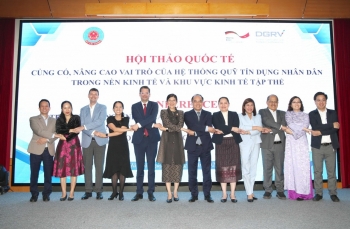



The Ministry of Finance rolled out the “Shifting Investment Flows towards Green Transformation” (SHIFT) project on January 27, with six international organisations taking part and coordination by the German Agency for International Cooperation (GIZ). The initiative is designed as a cooperation platform to promote green finance, support the energy transition, and accelerate low-emission development in Vietnam.
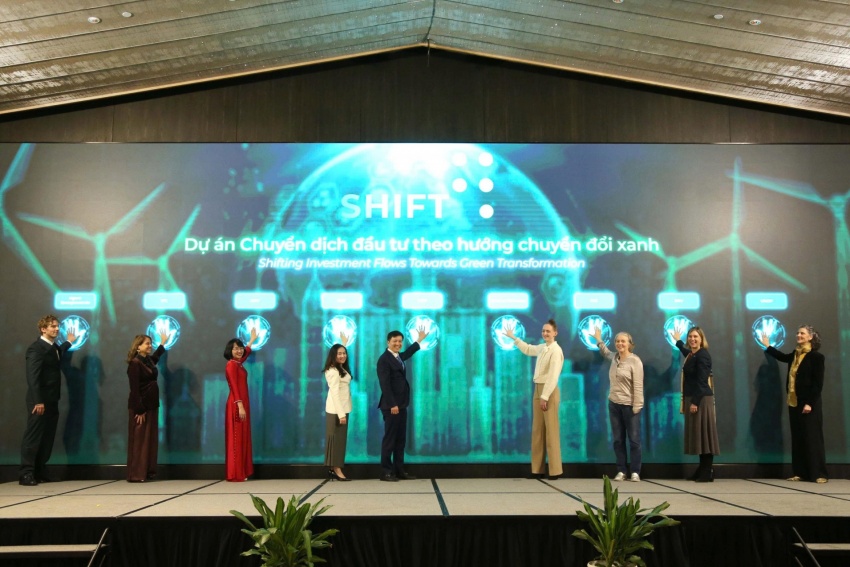 |
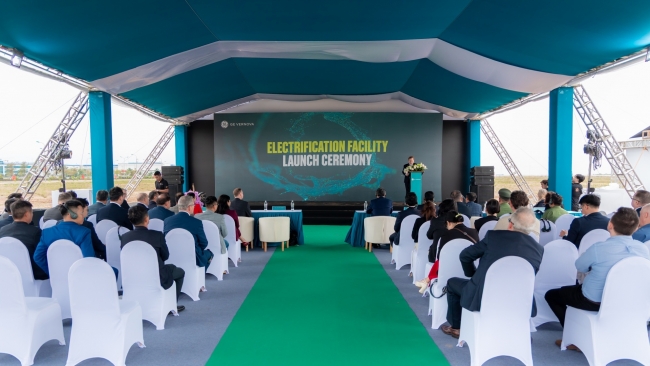
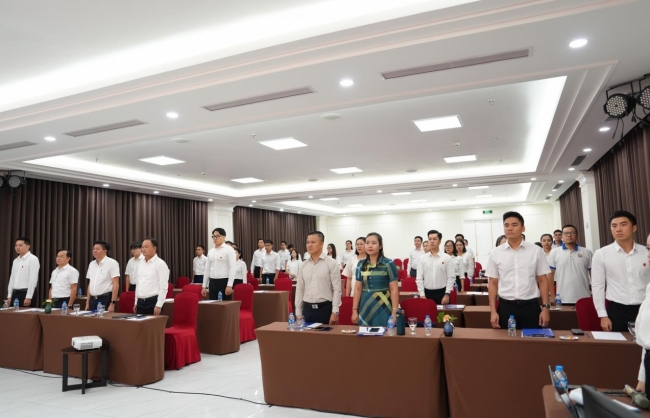
| Representatives attend the launch of the SHIFT project |
SHIFT targets key stakeholders including policymakers, financial institutions, and private enterprises, with a particular focus on small and medium-sized enterprises and women-led businesses. By improving access to green finance, the scheme aims to mobilise investment into climate-friendly solutions, thereby accelerating Vietnam’s transition towards a sustainable, climate-resilient economy.
Vietnam is currently pursuing two long-term strategic objectives: becoming a high-income country by 2045 and achieving net-zero emissions by 2050. The government has clearly recognised that meeting these goals requires a new growth model, one that is more sustainable and low-emission, with green finance as a central driving force. Against this backdrop, SHIFT is expected to help address major obstructions related to capital mobilisation, investment frameworks and implementation capacity.
Implemented under Germany’s International Climate Initiative, SHIFT adopts a comprehensive approach that combines policy support, capacity building for the financial system, and the promotion of green investment models in the private sector. Its core focus is energy transition, alongside strengthening the capacity of key actors across the finance-energy ecosystem.
One of SHIFT’s distinctive features is its effort to bridge the gap between two sectors that are both critical to sustainable development but have often operated with limited coordination: finance and energy. By identifying investment needs, supporting banks in developing appropriate green financial products, and delivering targeted training activities for enterprises and policymakers, the project seeks to increase capital flows into clean energy and promote a just and sustainable transition.
In parallel, SHIFT places strong emphasis on enhancing connectivity and feedback among stakeholders. Within the project framework, enterprises, financial institutions and government agencies will work closely through dialogue platforms that encourage open exchange. These platforms are designed to enable stakeholders to share perspectives, contribute ideas and discuss policy directions, mechanisms and incentives for green investment. This approach is expected to help narrow the gap between policy design and practical implementation.
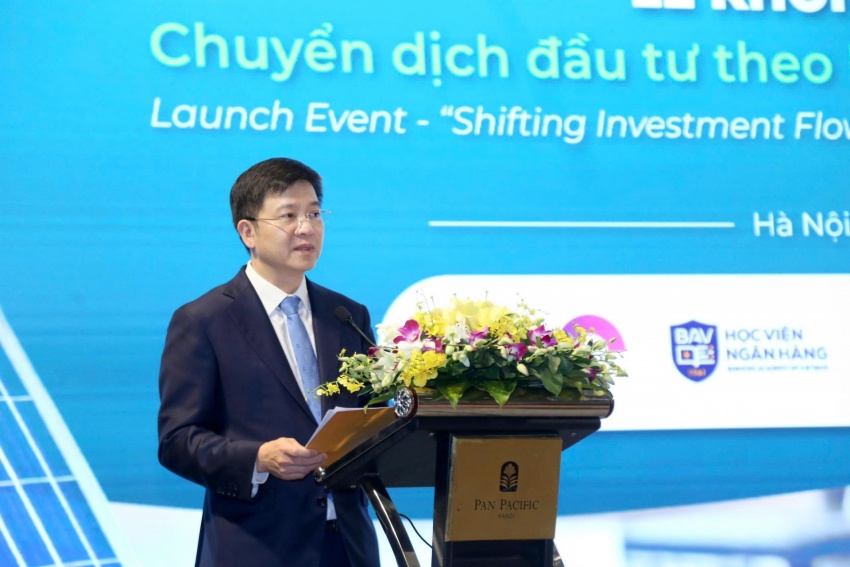 |
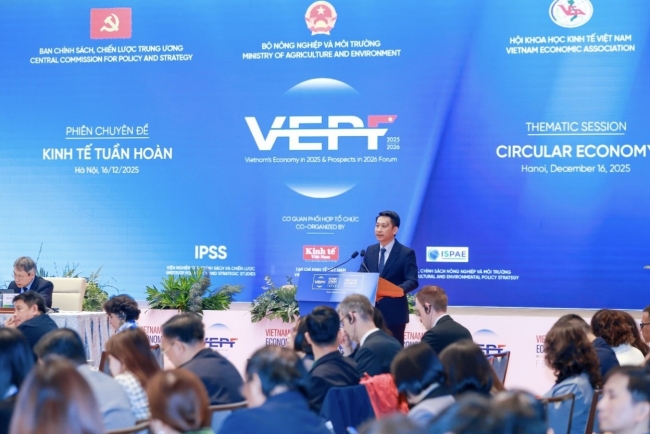
| Chu Duc Lam, director general of the Department of Finance and Economics |
SHIFT also aims to translate green ambitions into tangible investments by supporting enterprises in piloting, deploying, scaling up and replicating clean energy solutions. Priority is given to small and medium-sized enterprises and women-led businesses, which often face greater barriers in accessing long-term finance. Pilot models will help demonstrate the technical and commercial viability of green technologies, while strengthening confidence among financial institutions to accompany corporate clients in adopting more sustainable solutions.
Speaking at the launch, Chu Duc Lam, director general of the Department of Finance and Economics at the Ministry of Finance, stressed that green transition is not merely a slogan but a comprehensive transformation of growth models, technologies, energy structures and resource mobilisation. The energy sector plays a pivotal role, requiring green investment and green finance to be deployed at sufficient scale to guide market development.
Lam noted that over the next five years, Vietnam’s capital demand for energy transition and green transport could reach hundreds of billions of US dollars. Investment needs under Power Development Plan VIII for the 2026-2030 period alone exceed $100 billion, largely to be mobilised from the private sector and foreign sources.
“SHIFT provides a policy and technical cooperation platform that enables Vietnam to access international technologies, green finance standards and carbon market mechanisms, while demonstrating effective cooperation between Vietnam, the German government and development partners,” he said.
From the banking sector’s perspective, Pham Thi Thanh Tung, deputy director general of the Credit Department for Economic Sectors at the State Bank of Vietnam, stated that green transition is an inevitable global trend and that Vietnam has proactively adjusted its development strategy towards sustainability, climate adaptation and its net-zero commitment. "Early results in green credit reflect positive changes in awareness and action across the banking system," she said.
As of December 31, 2025, outstanding green credit in Vietnam reached approximately VND 770 trillion ($30.5 billion), accounting for around 7-8 per cent of total system credit, with an average annual growth rate of over 20 per cent during the 2017-2025 period.
"SHIFT would play an important role in mobilising medium- and long-term capital, while supporting banks in enhancing their capacity to develop green credit products and climate-related financial reporting in line with international standards," she added.
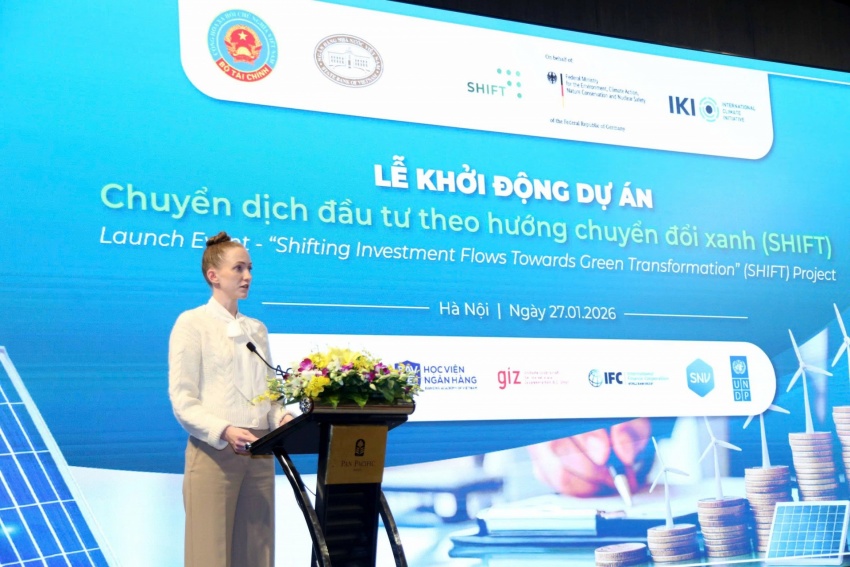 |
| Alexandra Westwood, counsellor for Economic Affairs and Development Cooperation at the German Embassy in Vietnam |
Representing the German side, Alexandra Westwood, counsellor for Economic Affairs and Development Cooperation at the German Embassy in Vietnam, said that SHIFT forms part of Germany’s International Climate Initiative, which has supported more than 1,000 projects across around 150 partner countries, with total funding exceeding €7 billion ($8.3 billion). In Vietnam alone, Germany has supported 25 climate-related projects since 2008, with a combined value of more than €50 million ($59 million).
"SHIFT builds on more than five decades of diplomatic relations and three decades of economic cooperation between Germany and Vietnam, with a current focus on green investment and clean energy technologies," she said. "It will support national authorities through capacity building and reform processes, work with financial institutions to expand green finance, and assist enterprises in deploying innovative energy solutions."
In the broader context, achieving Vietnam’s development goals for 2045 and 2050 will require an estimated $2.4 trillion in investment by 2050. In recent years, the country has strengthened its climate policy framework, expanded investment attraction efforts, accelerated renewable energy development and promoted a greener economy. Key milestones include the National Green Growth Strategy for 2021-2030 and the revised Power Development Plan VIII.
Nevertheless, translating these strategies into concrete outcomes remains challenging, with a persistent gap between policy ambitions and on-the-ground implementation. In this context, SHIFT is expected to serve as a critical bridge, helping to refine green financial instruments, strengthen the capacity of financial institutions and enterprises, and ultimately support Vietnam’s green transition in a more effective, inclusive and sustainable manner.