





Heineken to shift production from Singapore to Vietnam and Malaysia
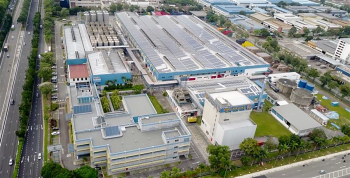
Dutch brewer Heineken will shift its brewing production from Singapore to Vietnam and Malaysia as part of its strategy to build a more agile regional supply approach.


 |
Vietnam ranked 38th globally for AI adoption, reflecting rising uptake but also a clear gap with leading markets, according to the AI Diffusion Report released by Microsoft’s AI Economy Institute on January 8. The report shows AI adoption in Vietnam increased from just over 21 per cent in the first half of the year to 23.5 per cent in the second half of 2025.
Vietnam's AI adoption is around 7 per cent higher than the global average. Specifically, global AI adoption continued to rise in the second half of 2025, with roughly one in six people worldwide now using generative AI tools, remarkable progress for a technology that only recently entered mainstream use.
Countries that have invested early in digital infrastructure, AI training, and government adoption, such as the United Arab Emirates, Singapore, Norway, Ireland, France, and Spain, continue to lead. The UAE extended its lead as the top-ranked country, with 64 per cent of the working age population using AI at the end of 2025, compared to just over 59 per cent earlier in the year. The UAE has opened a lead of more than three percentage points over Singapore, which continues in second place with around 61 per cent adoption.
The second half of the year in the US shows that leadership in innovation and infrastructure, while critical, does not by themselves lead to broad AI adoption. The US leads in both AI infrastructure and frontier model development, but it fell from 23rd to 24th place in AI usage among the working age population, with a 28 per cent usage rate. It lags far behind smaller, more highly digitised and AI-focused economies.
South Korea stands out as the clearest end-of-year success story. It surged seven spots in the global rankings, climbing from 25th to 18th, driven by government policies, improved frontier model capabilities in the Korean language, and consumer-facing features that resonated with the population. GenAI is now used in schools, workplaces, and public services, and South Korea has become one of ChatGPT’s fastest-growing markets, leading OpenAI to open an office in Seoul.
According to digital insights platform DataReportal, there were 85.6 million individuals using the internet in Vietnam at the end of 2025, when online penetration stood at over 84 per cent. This suggests there is ample room for AI to spread more widely across the country.
However, the gap with leading countries underscores that investment in digital infrastructure, AI skills, and policies that encourage adoption across both the public and private sectors will be critical in determining Vietnam’s position on the global AI landscape in the years ahead.