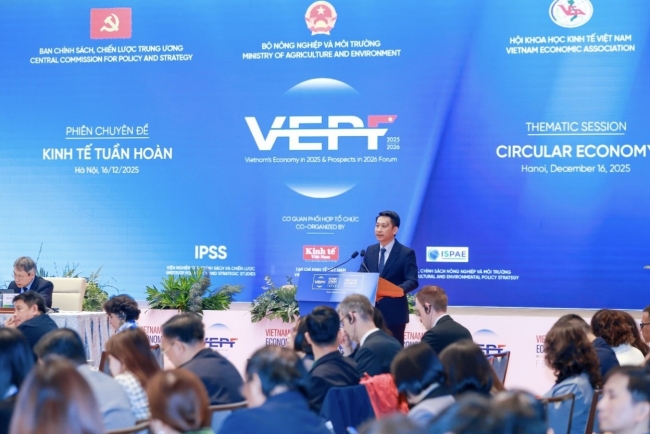



On January 28, Deputy Minister of Finance Tran Quoc Phuong held a working meeting with experts from the World Bank and the International Monetary Fund (IMF) under the Government Debt and Risk Management (GDRM) Programme – a technical assistance initiative implemented by the World Bank with support from the Swiss State Secretariat for Economic Affairs and forms part of Vietnam’s broader public debt management reform framework.
 |
| Deputy Minister of Finance Tran Quoc Phuong |
At the meeting, Deputy Minister Phuong stressed that Vietnam’s five-year objective is to achieve average GDP growth of over 10 per cent per year. This ambition requires the mobilisation of substantial capital to meet socioeconomic development goals, create growth momentum, and stimulate investment across the entire economy, including public investment.
"Given the scale of investment demand, borrowing, public debt management and risk provisioning have become critically important," he said. "Alongside determined implementation of planned tasks, it is necessary to develop response scenarios during execution, particularly to address risks related to public debt, even though Vietnam’s public debt remains under control and at safe levels."
He highly appreciated the recommendations provided by the experts, noting that they help Vietnam jointly develop new and updated scenarios tailored to the country’s specific context. This approach supports a balance between development objectives and technical and economic efficiency requirements, thereby maintaining public debt within safe limits.
Lars Jessen, the World Banks's senior Debt Management specialist, said that Vietnam is expected to undertake major infrastructure investments over the next five years, leading to increased borrowing needs at both central government and local government levels.
He noted, "This would raise borrowing costs while increasing debt levels and associated risks. This creates an urgent need for thorough preparation at all levels to manage rising borrowing effectively within appropriate limits."
As part of this effort, the World Bank delegation has held working sessions with the Ministry of Finance, the State Bank of Vietnam, and all relevant agencies involved in public debt management.
In this context, a debt management strategy plays a central role. Risk benchmarks should be embedded directly in both the five-year plan and annual borrowing plans, including clear identification of interest rate and exchange rate risks.
Experts at the meeting stated that Vietnam’s legal framework for debt management has largely aligned with international practices. Going forward, further refinement is needed, including reviewing the scope of public debt and debt instruments, and considering the codification of debt management objectives into law. At present, these objectives are stipulated in National Assembly resolutions on five-year public borrowing and debt repayment plans, as well as in approved annual plans.
Experts also recommended amending the law to allow for the issuance of treasury bills for cash management purposes.
Regarding the organisational model of the Debt Management Office, experts highlighted that Vietnam’s current debt management structure remains fragmented. As such, continued efforts are needed to move towards a more integrated and unified debt management model.
“Experience shows that countries deeply engaged in international capital markets place great emphasis on providing timely and up-to-date information to investors,” Jessen said. In countries such as Thailand, Indonesia, Turkey, and Brazil, dedicated teams are typically responsible for collecting and disseminating information to the market.
In addition, as local governments are expected to increase borrowing in the coming period, strengthening debt management capacity at the local level has become an urgent requirement, particularly given the limited number of specialised debt management staff at present.
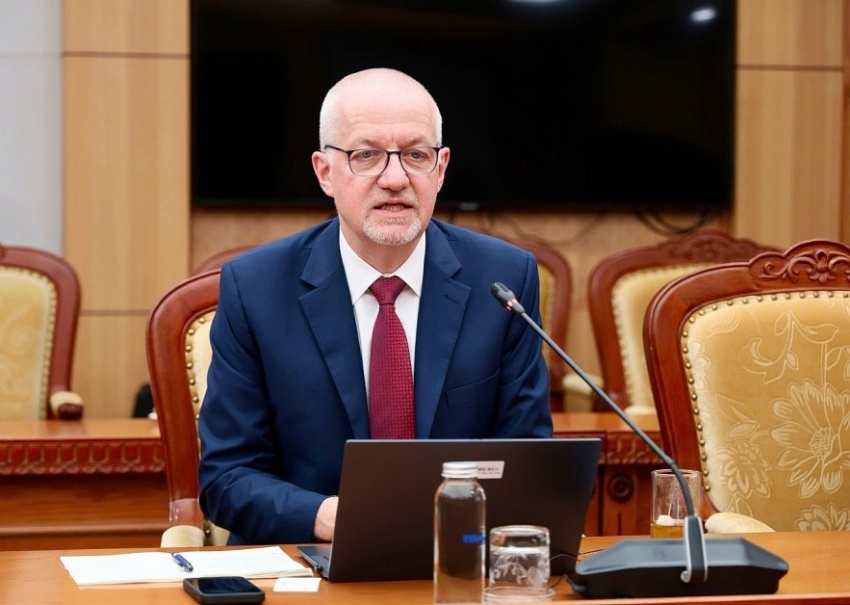 |
| Lars Jessen, the World Bank's senior Debt Management specialist |
Expressing appreciation for the expertise and information shared by the World Bank and IMF specialists, Deputy Minister Phuong outlined several characteristics specific to Vietnam, noting that international experience needs to be adapted to domestic realities.
He pointed out that Vietnam often borrows when financing gaps arise, whereas there are periods that are particularly favourable for borrowing, such as when interest rates are low and large volumes of capital can be mobilised. Compared with some other countries, Vietnam’s borrowing and lending activities operate like a flexible water-pumping system that helps regulate financial flows.
"In the future, Vietnam could move towards a more balanced approach between borrowing and lending, in order to ensure national financial stability and sustainability," Phuong said.
He added that Vietnam still has a number of debt instruments that have yet to be utilised. The introduction of any new debt instrument, particularly at the leadership level, requires careful study and usually a pilot phase before wider implementation.
Regarding the recent amendments to the Law on Public Debt Management, he noted that the current revisions are primarily intended to remove impediments that could hinder economic development in a changing context. A comprehensive revision of the law is planned for a later stage.
In discussing potential directions for legal amendments, Deputy Minister Phuong explained the need to decide whether the objective is stricter control or greater flexibility in public debt management. "If the aim is very tight control, legal provisions would be designed accordingly. Conversely, if the goal is to allow more flexibility so that resources can be deployed quickly and efficiently for the economy, a different legislative approach would be required," he said.
With regard to management models, during the amendment process, the Ministry of Finance will continue to study and consult experts.
Earlier, on January 26-27, in Phu Tho province, the Department of Debt Management and External Economic Relations under the Ministry of Finance, in coordination with the World Bank and IMF, organised a series of discussions on international best practices in public debt management for Vietnam.
Amid increasing global economic uncertainty and new development needs, reviewing, assessing and further refining the legal framework for public debt management is both necessary and timely. The two-day discussions provided an opportunity for in-depth exchanges with World Bank and IMF experts on international best practices, including debt coverage, debt safety indicators, management of local government debt, and the country’s external debt.