





Lynas secures Vietnam metal processing deal with LS Eco Energy
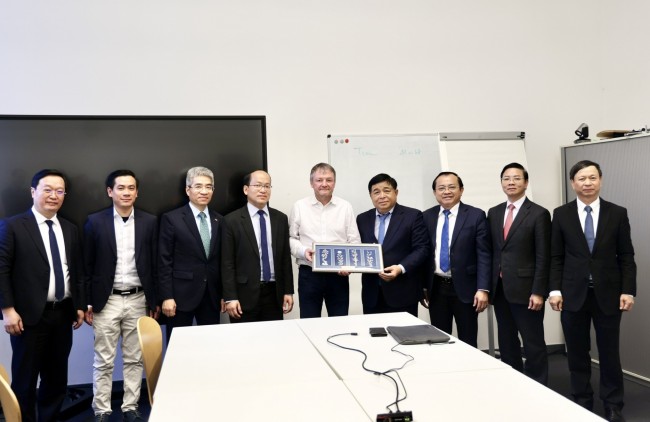
Australian rare-earths miner Lynas has signed a framework agreement with LS Eco Energy to produce rare earth metals at a new facility in Vietnam.

 |
| Minister of Agriculture and Environment Tran Duc Thang clarified the daft Law on Geology and Minerals at a parliamentary session on December 1 |
Minister of Agriculture and Environment Tran Duc Thang confirmed at a parliamentary session on December 1 that Vietnam holds one of the world’s largest rare earth reserves, with deposits distributed across 21 localities.
Under mandates from the government and top leadership, the MAE has already delineated key mining areas and instituted tight management procedures.
“We are currently collaborating with other ministries and sectors to develop a national rare earth strategy, which is expected to be issued by the prime minister in early 2026. After completing zoning of the resource, the next priority is to launch exploitation and deep processing operations to maximise national benefits,” Minister Thang said.
The draft law includes a separate chapter dedicated to rare earths and outlines specific regulations to guide subsequent government directives.
“We believe rare earths will become a vital resource for national development. This will help establish a closed-loop value chain while minimising exports,” Thang added.
At the meeting, lawmakers discussed amendments to the Law on Geology and Minerals. Among the most prominent issues was the strategic management of rare earth resources.
NA deputy Trinh Xuan An (Dong Nai) said, “Given the geopolitical landscape, mastering rare earth management and technology is essential to asserting Vietnam’s autonomy and strength. These materials are frequently used as strategic bargaining tools between global powers, especially in matters of national defence and security. Hence, the draft law clearly reflects the importance of this resource.”
“In the defence and military industries, this material is foundational to many types of weapons systems and core technologies, particularly precision weaponry. We should set aside specific mines or reserves exclusively for defence and security purposes. In addition, the law should have clear regulations on controlling technologies and data related to rare earth mining and processing, especially in areas sensitive to national security,” said An, adding that data and rare earths may need to be classified as state secrets.
Regarding the oversight of rare earths, An proposed clarifying the roles of the Ministry of Defence and the Ministry of Public Security in evaluating extraction and determining national programmes. He suggested that rare earth zones be designated with clearly defined boundaries for defence and security needs, urging that legal provisions not only manage but also contribute to national strength.
“When reviewing mining laws in China, Japan, and the United States, I found all three treat rare earths as highly sensitive to national defence and security. This is our chance to elevate rare earths to a matter of national stature,” he concluded.