



Heineken to shift production from Singapore to Vietnam and Malaysia
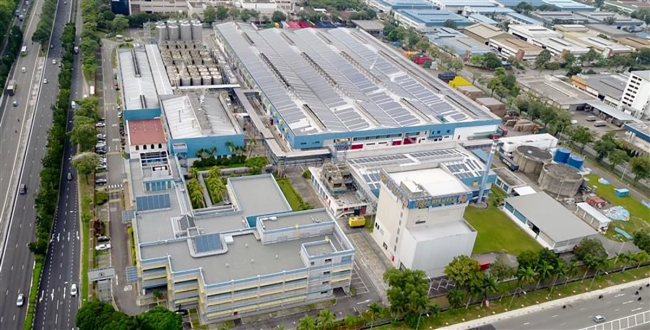
Dutch brewer Heineken will shift its brewing production from Singapore to Vietnam and Malaysia as part of its strategy to build a more agile regional supply approach.


 |
| Binh Le, CEO and head of Advisory, and Duy Vo, associate of ASART Deal Advisory |
By establishing a dedicated legislative framework, the country is lowering long-standing barriers that have constrained cross border capital. For mergers and acquisitions (M&A), this creates a clearer and more predictable environment for foreign buyers and unlocks opportunities for larger and more sophisticated transactions.
Since late last year, Vietnam's international financial centre (IFC) has been developed in Ho Chi Minh City and Danang, operating as a single financial centre across two locations. It will function under a specialised regulatory establishment designed to attract global financial institutions, facilitate cross border capital movement, and promote higher value financial services.
The policy direction is clear: Vietnam aims to position its financial markets on a more internationally competitive footing.
The IFC introduces a more open regulatory environment, particularly for foreign investors, who often face lengthy approval procedures and uncertainty around capital movement. It aims to streamline these processes and provides greater legal clarity, creating more rooms for efficient deal execution.
Foreign investors are permitted to own up to 100 per cent of companies who are members of IFC, removing the foreign ownership cap. They may also set up new enterprises within the IFC without the standard investment policy approval. In addition, capital contributions and share acquisitions involving IFC members are not required to be registered with the regulatory authorities.
Together, these measures sharply reduce administrative steps, enabling M&A activity in the IFC to move with greater speed and certainty.
Smoother capital mobility
The IFC framework is also expected to facilitate capital mobility through simpler cross border fund transfer procedures and dedicated capital accounts for IFC members, allowing faster movement of investment funds, dividends, and proceeds from transactions.
For M&A transactions, this means more flexible deal structuring, particularly for transactions that involve offshore holding companies or financing from multiple jurisdictions. The ability to move capital into and out of Vietnam with fewer restrictions reduces both execution risk and settlement delays, concerns often raised by international investors.
In more recent times, the Law on Specialised Courts at IFC was approved and an international arbitration centre was also established. The law establishes a dedicated judicial framework for the centre and addresses a long-standing concern among foreign investors in Vietnam.
Resolving complex financial disputes remains a persistent challenge in M&A transactions. Foreign parties often prefer foreign governing law and use Singapore arbitration, where common-law standards are familiar and predictable, while Vietnamese counterparts typically favour domestic arbitration and Vietnamese law. This divergence frequently creates early-stage negotiation friction. In addition, international arbitral awards are not directly enforceable in Vietnam and must first be reviewed by local courts, adding uncertainty to dispute outcomes.
The new law aims to mitigate these challenges by reducing reliance on domestic judicial processes that have historically created uncertainty for cross-border investors. Under the framework, when a party to a dispute is an IFC member, the parties may choose foreign governing law, foreign jurisprudence, international commercial practices, or adopt a common-law approach. These provisions are intended to reinforce the finality of arbitration outcomes and reduce court intervention in commercial disputes.
The specialised court is anticipated to also allow foreign judges and adjudicators, recognising that IFC-related disputes are often highly technical and require deep expertise in investment and commercial law. This dedicated judicial mechanism is expected to boost investor confidence and improve competitiveness against regional financial centres.
New investment projects within the IFC that fall under priority sectors are entitled to a 10 per cent corporate income tax (CIT) rate for 30 years, including up to four years of tax exemption and a 50 per cent tax reduction for up to the subsequent nine years.
Priority sectors within the IFC include digital infrastructure, green finance, fintech and innovation, investment funds and asset management, and professional support services such as legal, tax, audit, compliance, arbitration, and financial advisory.
New projects within the IFC that do not fall under priority sectors are subject to a 15 per cent CIT rate for 15 years, with up to two years of tax exemption and a 50 per cent tax reduction for the following four years, compared to Vietnam’s standard 20 per cent CIT rate.
While tax incentives are positive, they are not the sole reason for investment decisions in the IFC. What matters most to private enterprises is capital mobility, followed by a transparent and investor protective legal framework and efficient administrative procedures, particularly for transactions involving counterparties outside the IFC.
Vietnam’s legal system must function effectively both within and beyond the IFC; otherwise, weak external links will limit overall attractiveness. Broader fundamentals such as GDP growth, consumer market attractiveness and human capital development remain equally critical.
Design to execution
In Vietnam, M&A advisory is now formally recognised as a business line and officially defined within Vietnam’s legal framework. This classification is expected to place M&A advisory among the priority service sectors supporting companies and transactions within the IFC.
M&A advisors have long played a pivotal role in turning broad strategy ambitions into actionable outcomes – facilitating cross‑border transactions, aligning local and international standards, and ensuring more efficient and compliant deal flow. This institutional recognition elevates the role of M&A advisors as essential enablers of the IFC, strengthening market integrity, enhancing investor confidence, and supporting seamless cross‑border execution.
The benefits outlined above represent only a small part of the IFC framework that the government aims to build.
The IFC framework continues to take shape following the issuance of eight implementing decrees in December, covering key areas including finance, banking, investment, arbitration, labour, land, and immigration. In parallel, Vietnam is actively working with international partners such as the Permanent Court of Arbitration, and other countries with established financial centres including Singapore, the UK, Dubai, and Kazakhstan to develop a legal and regulatory architecture aligned with global standards.
As this framework takes shape, M&A activity is expected to become more dynamic. Both buyers and sellers will gain access to a wider range of transaction structures, including holding company models and more flexible financial arrangements. Shorter approval timelines and an internationally recognised legal dispute mechanism will also reduce the risk premium typically associated with cross border deals, which can support higher valuations.
With attention now turning to February 9, the official launch date of the IFC, the focus will shift from policy design to execution. If implementation matches intent, greater investor confidence and improved corporate governance are likely to support larger and more sophisticated transactions over time, contributing to a more mature and competitive M&A market in Vietnam.