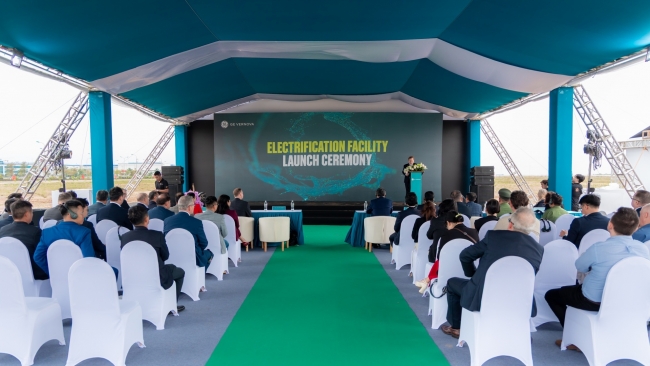



Speaking at the 2026 Vietnam Vanguard Summit in Ho Chi Minh City from January 6 to 9, senior international experts said Vietnam is increasingly viewed not as a conventional early-stage emerging market, but as a country exerting growing influence over regional investment flows, supply chains, trade, and production networks.
 |
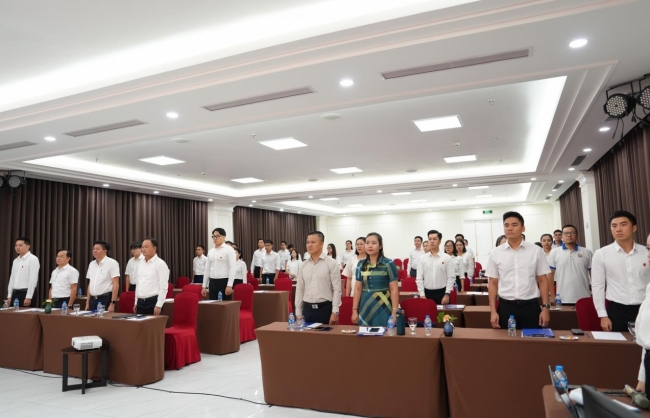
| The 2026 Vietnam Vanguard Summit was held in Ho Chi Minh City from January 6 to 9 |
Looking ahead, experts noted that Vietnam could emerge as a $1 trillion economy by 2030, potentially standing alongside economies such as Singapore, South Korea, and Taiwan, provided that leadership capacity, capital mobilisation, and institutional quality continue to develop in step with economic ambitions.
According to John Low, managing partner for Southeast Asia at Roland Berger, Vietnam’s opportunity is significant but time-bound, requiring swift and coordinated action from both policymakers and businesses.
“Foreign investors and local companies should move quickly and step up investment in key sectors, with a focus on upgrading value chains, building ecosystems, and improving reliability and sustainability,” Low said.
He outlined seven national priorities that Vietnam should address to secure long-term competitiveness. The first is talent development, with greater emphasis on science, technology, engineering, and mathematics, vocational training, English proficiency, and policies to attract global experts while retaining domestic talent.
Strengthening the power system is another priority, including upgrades to the grid, energy storage, and the development of bankable renewable energy projects. Trade and compliance also require attention, particularly through improved origin traceability, digital customs procedures, and trusted cross-border data flows.
Low further highlighted the need to raise productivity through stronger competition, more effective state-owned enterprise reform, and a well-functioning market framework. Infrastructure upgrades remain central, covering ports, railways, and urban transit systems, alongside faster project delivery and better maintenance.
In addition, Vietnam must strengthen its innovation ecosystem through research and development incentives, stronger intellectual property enforcement, greater access to startup capital, and closer links between universities and industry. Climate resilience was identified as the final priority, including flood protection, more resilient supply chains, and sustainable financing mechanisms.
Jesse Choi, director of Sunwha Vietnam, said that while Vietnam has clear advantages in attracting Hong Kong and Chinese enterprises, several challenges are becoming more pronounced.
One key issue is rising costs. “Land prices are increasing rapidly, and labour costs are also climbing as Vietnam continues to entice a large inflow of manufacturing investment,” Choi said.
He noted that this follows a familiar pattern seen in other markets. “When Chinese investment flows into a market, real estate and operating costs tend to rise. We saw this in Hong Kong, Singapore, and Cambodia around 2019, and Vietnam is now experiencing a similar trend. Even if only a small share of Chinese factories relocate, demand for labour – especially factory workers and Chinese-speaking staff – becomes extremely intense, pushing both land and labour costs significantly higher,” he said.
At the same time, the supply of skilled and vocationally trained workers is failing to keep pace with demand. “Education and vocational training take time, while investors need qualified workers immediately. Shortages, particularly in high-quality and skilled roles, remain a major constraint,” Choi said, adding that although some manufacturers may shift to central provinces to reduce costs, demand for skilled labour still exceeds supply. “This is why vocational training has become such an important priority.”
Choi also pointed to regulatory hurdles, noting that procedures related to environmental approvals, fire safety, and other compliance requirements can be complex and time-consuming. “When these processes become too cumbersome or unpredictable, some investors may decide that the costs outweigh the benefits and choose to relocate elsewhere,” he said. As a result, “foreign investors often need strong and reliable local partners who understand the regulatory landscape and can navigate administrative procedures effectively.”
Looking ahead, Choi highlighted opportunities for Vietnamese companies to pursue initial public offerings in Hong Kong, which he described as a gateway to international capital and China. “Hong Kong and Chinese investors are showing strong interest in Vietnamese companies, particularly in e-commerce, technology, and real estate,” he said.
He also underscored the role of large conglomerates in investing in and incubating startups in Vietnam. “These groups are looking to diversify their portfolios and use their ecosystems to support the growth of innovative companies,” Choi added.
Olivier Langlet, group CEO of Central Retail Vietnam, said the company currently operates around 360 stores nationwide, mainly in food retail. “What we see clearly is that the new US tariff policy has created a significant shock. However, Vietnam remains a major production base and has many hypermarkets, including Central Retail’s, which are closely linked to domestic and regional manufacturing. Any disruption to production is therefore immediately felt in modern retail,” he said.
“How Vietnam manages the implementation and impact of this new tariff policy will be critical for the future of modern retail. There can be no truly modern Vietnam without a strong modern retail sector,” Langlet added. “At present, modern retail penetration stands at just around 13 per cent, compared with about 55 per cent in neighbouring Thailand, showing there is still a long way to go.”
Inflation is another key concern, which Langlet said is also being affected by the tariff environment. “Internally, we are seeing cost increases of up to 25 per cent across many inputs. To absorb this, we have had to continuously reinvent how we operate and organise ourselves to avoid passing costs on to consumers,” he said. “While our strong financial position allows us to absorb some pressure in the short term, this is not sustainable indefinitely.”
Langlet also highlighted Vietnam’s recent inflation performance. “Vietnam has done an excellent job of managing inflation over the past four to five years, keeping it at around 3.5–4.1 per cent, which is exceptional for a market of this size. We very much hope this stability can be maintained going forward,” he added.