


Heineken to shift production from Singapore to Vietnam and Malaysia
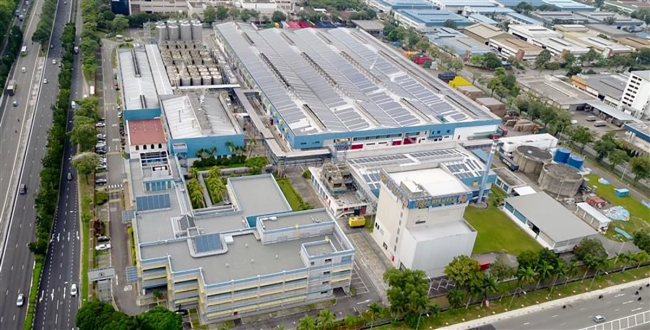
Dutch brewer Heineken will shift its brewing production from Singapore to Vietnam and Malaysia as part of its strategy to build a more agile regional supply approach.


At a ceremony held on January 16 at Hoa Lac High-tech Park, Viettel broke ground on the 27-hectare facility, with Party General Secretary To Lam and Prime Minister Pham Minh Chinh in attendance. Scheduled for completion before 2030, the plant is designed to serve as national infrastructure for semiconductor research, design, testing, and manufacturing, supporting key sectors including aerospace, telecommunications, automotive manufacturing, and medical equipment.
 |
| Photo: Viettel |
This marks a significant milestone in strengthening Vietnam’s chip-making capabilities, laying the groundwork for gradually mastering core technologies and building a homegrown semiconductor ecosystem.
To date, Vietnam has participated in several stages of the semiconductor value chain, but the fabrication phase – the most complex and critical step – has yet to be carried out domestically. The development of a local chip fabrication facility is expected to close this gap, enabling the country to complete the full semiconductor production cycle within its borders.
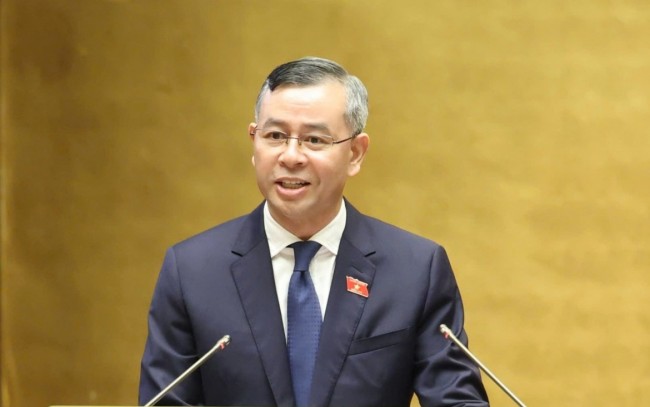
Speaking at the groundbreaking ceremony, PM Chinh said, “The launch of Vietnam’s first high-tech semiconductor chip manufacturing plant is an event of special importance, marking an important step in developing a new strategic industry and laying the foundation for Vietnam to participate more deeply in the global value chain through science, technology, and innovation.”
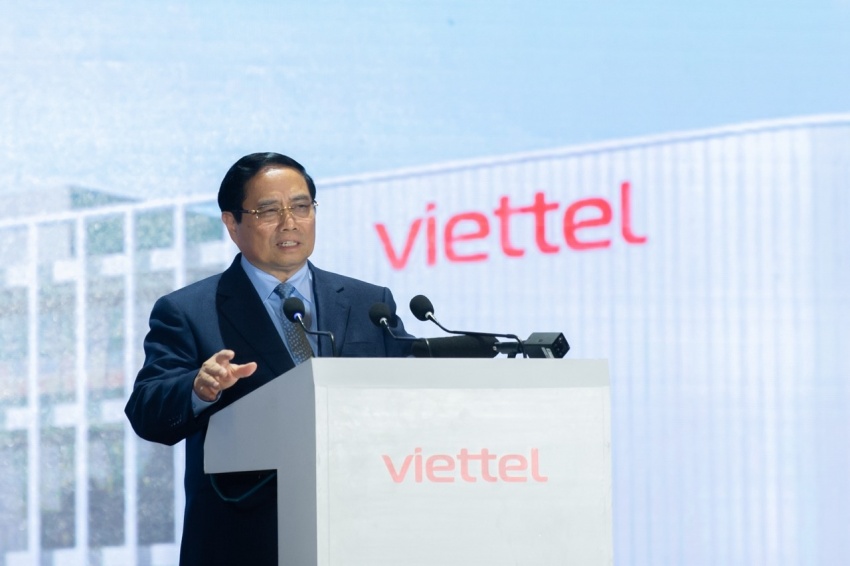 |
| Prime Minister Pham Minh Chinh. Photo: Viettel |
According to the PM, the facility's presence will contribute to completing the domestic semiconductor ecosystem, creating conditions for chip design companies, technology startups, and training and research institutions to shorten testing cycles, quickly finalise products, and bring technology into practical application.
The factory is also expected to serve as a practical training centre for high-tech workers, linking skills development with a real-world production environment. Through this, Vietnam aims to train 50,000 chip design engineers by 2030 and build a workforce of more than 100,000 under the national semiconductor development strategy by 2040.
Lieutenant General Tao Duc Thang, chairman and CEO of Viettel Group, stated, “After today's groundbreaking ceremony, the group will begin implementing the project with the goal of completing investment and construction, receiving technology transfer, and starting trial production by the end of 2027.”
He added, “The period from 2028 to 2030 will focus on perfecting and optimising the process, improving the efficiency of the production line according to industry standards, thereby laying the foundation for researching chip manufacturing technology at a more modern stage.”