





Heineken to shift production from Singapore to Vietnam and Malaysia
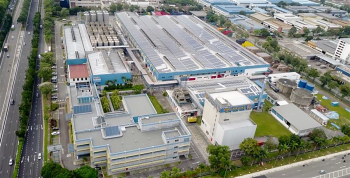
Dutch brewer Heineken will shift its brewing production from Singapore to Vietnam and Malaysia as part of its strategy to build a more agile regional supply approach.



Vietnam’s personal finance market is facing a paradox: the middle class is expanding rapidly, yet wealth management has not developed in proportion, and has even suffered repeated shocks to investor confidence. Financial experts argue that one of the core reasons lies in the shortage of properly licensed professionals and the absence of a clear roadmap for professionalising the financial advisory workforce.
According to The Wealth Report 2025 published by Knight Frank last March, Vietnam is home to 5,459 individuals with a net worth exceeding $10 million, ranking sixth in Southeast Asia and accounting for roughly 0.2 per cent of the global ultra-high-net-worth population.
“The number of ultra-wealthy individuals in Vietnam with assets of $30 million or more rose from 583 to 1,059 between 2017 and 2022, an increase of 82 per cent in just five years. By 2027, this figure will reach 1,300, representing a 22 per cent increase compared to 2022,” the report forecasted.
Nguyen Vu Long, CEO of Vndirect, expects Vietnam’s wealth management market to reach $1 trillion by 2027.
“The next three to five years will be a golden period for the development and professionalisation of personal wealth management in Vietnam, as market conditions, the legal framework, and investor demand are gradually converging,” said Long.
However, Long also candidly acknowledged that Vietnam’s wealth management sector continues to face multiple challenges.
“First is the lack of a comprehensive legal framework and clearly defined standards. Second is limited awareness among both clients and institutions, as many still fail to fully distinguish between simple investing and holistic wealth management,” he said.
“To ensure that this transition unfolds rapidly, deeply, and in line with expectations, strategic and coordinated policy impulses are required, particularly on the legal front, to create sufficiently strong incentives for investors, especially retail investors, to channel capital through professional institutions,” he added.
One of the most critical policy catalysts, according to Long, is the implementation of meaningful and sufficiently attractive tax incentives.
“For example, reducing or exempting personal income tax on securities investment income when individuals invest through professionally managed and transparent open-ended or closed-end funds would create a clear financial advantage, thereby encouraging capital flows into institutional investment channels,” stated Long.
 |
In an interview with VIR, Tran Vinh Quang, CEO of Thien Viet Asset Management, observed that Vietnam’s wealth management sector today bears similarities to China’s market in the early 2000s.
“We are witnessing a rapid accumulation of financial investment assets alongside economic growth. Historical patterns show that once household incomes exceed basic subsistence needs, surplus capital flows strongly into investment. In China between 2000 and 2020, per person personal financial assets grew at an impressive average rate of over 20 per cent per year. I believe Vietnam is entering a similarly accelerated growth cycle,” Quang said.
A key point Quang noted was the state’s role as a market architect, as recent policies have strongly promoted transparency and facilitated financial product diversification, laying a solid foundation for market development.
However, he also highlighted three major advantages that differentiate Vietnam: technological and AI maturity, increasingly sophisticated investor demands, and the benefits of being a latecomer.
“Vietnam’s wealth management industry may have emerged later, but it has done so at exactly the right time. Core technologies and AI today are far more advanced and refined than they were 20 years ago. This allows us to accelerate product development and elevate customer experience from day one, rather than spending years building basic infrastructure as in earlier periods,” said Quang.
“While China’s first wave of wealth management was largely driven by simple money market funds for idle cash, Vietnamese investors today are far more demanding. They are not merely seeking capital preservation; they require exposure to more complex asset classes such as equities, bonds, fund certificates, and soon, structured products,” he added.
Ngo Thanh Huan, chairman and CEO of an investment consulting and wealth management company FIDT, further elaborated that wealth management represents a comprehensive approach to personal and family finance, not limited to investing, but encompassing long-term financial planning, portfolio management, retirement preparation, tax and legal optimisation, and inheritance planning to preserve wealth across generations.
Citing markets such as Australia, Huan noted that financial advisors are required to adhere to fiduciary standards.
“This standard allows advisors to charge fees on an hourly basis but holds them legally accountable if their advice is inconsistent with a client’s risk profile,” he stated. “A historical lesson from the US in 1969 shows that when financial leaders recognised the risks arising from inadequate advisory competence, they established the first College for Financial Planning.”
“By contrast, most existing certification programmes in Vietnam focus heavily on product features, with little emphasis on client understanding and professional ethics, leading to sales-driven behaviour at all costs. Even as technology advances rapidly, the human role in personalising experiences and understanding each client’s unique context remains irreplaceable,” added Huan.