




 |
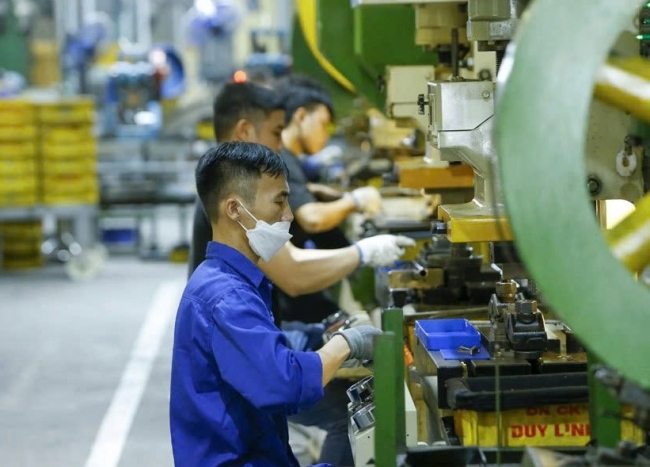
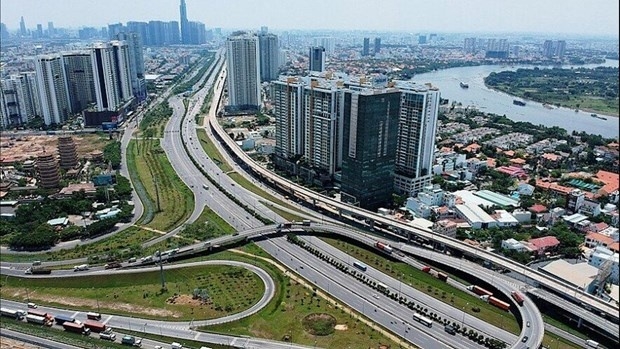
| Ho Chi Minh City targets to engage four semiconductor projects this year. Photo: Le Toan |
This is part of the semiconductor industry development strategy and the human resource development programme for the Vietnamese semiconductor industry in Ho Chi Minh City, issued in early March by Ho Chi Minh City People's Committee.
It aims to effectively implement the semiconductor industry development strategy and the human resource development programme for the semiconductor industry and core digital technologies such as AI, cloud computing, the Internet of Things, Big Data, and Blockchain, making the city a leading centre in this industry.
According to the plan, Ho Chi Minh City will focus on attracting at least four high-added-value foreign ventures in the semiconductor industry, with a focus on implementing cooperation with major technology corporations such as AMD, NVIDIA, and Qualcomm.
Regarding human resources, the city aims to train and enrol a minimum of 3,000 undergraduates, 300 master's students, and 40 doctoral students, and to graduate a minimum of 1,400 undergraduates, 110 master's students, and six doctoral students.
In addition, at least 300 workers will receive advanced skills training courses to meet the demand of semiconductor businesses.
In the area of attracting experts and fostering research collaboration, the city aims to invite at least 10 experts and scientists from both within and outside the country to participate in teaching and research at R&D centres, universities, and research institutes in the city.
The city also aims to support at least 10 startups in the semiconductor and digital technology sectors; sign at least two international cooperation memoranda of understanding; and implement at least two R&D projects with foreign partners.
In 2026, it plans to organise four major events, including the Vietnam Semiconductor Industry Exhibition, the Autumn Economic Forum 2026, and international conferences at the Ho Chi Minh City High-Tech Park and the Vietnam National University.
To achieve these goals, Ho Chi Minh City will implement a comprehensive set of solutions, including the development of policies to support semiconductor businesses, investment incentives, equipment cost support, human resource development, and the promotion of innovative startups.
Regarding infrastructure, it will build an internationally standardised research centre for digital transformation and green transformation in the high-tech park; invest in a microchip laboratory at Saigon University; and simultaneously build a national-level shared semiconductor laboratory at the Vietnam National University Ho Chi Minh City.
In addition, the city will develop a high-performance computing centre at Quang Trung Software Park to serve chip design and AI applications.
Simultaneously, the city aims to expand the high-tech park, forming a semiconductor technology complex, and implement the "Science and Technology City - North Ho Chi Minh City" project, covering approximately 1,000 ha in Binh Duong ward, creating an innovation hub for the key economic region.
In human resource training and development, the city will study the establishment of a Microchip Design Human Resource Development Fund (worth $5 million) to provide scholarships and research support for postgraduate students. It will also operate a digital profile platform to connect online labour supply and demand between universities and businesses, helping to forecast future human resource needs in the city's semiconductor market.