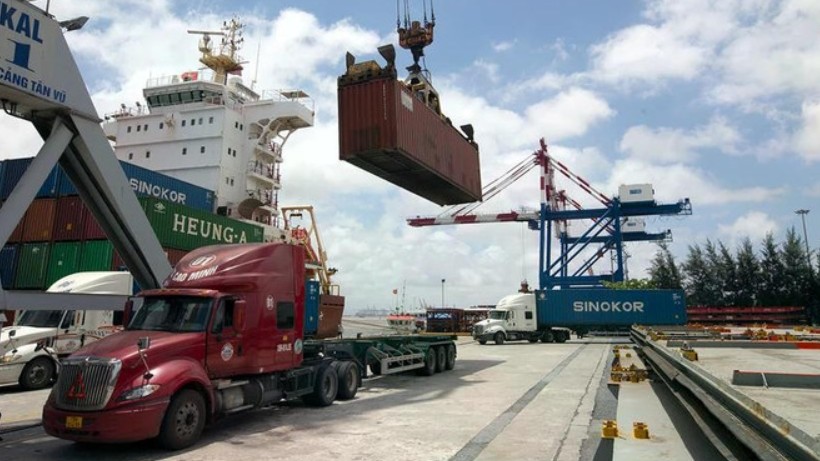


Heineken to shift production from Singapore to Vietnam and Malaysia
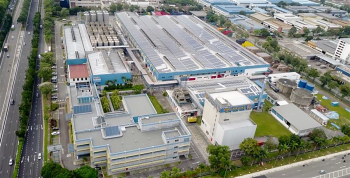
Dutch brewer Heineken will shift its brewing production from Singapore to Vietnam and Malaysia as part of its strategy to build a more agile regional supply approach.

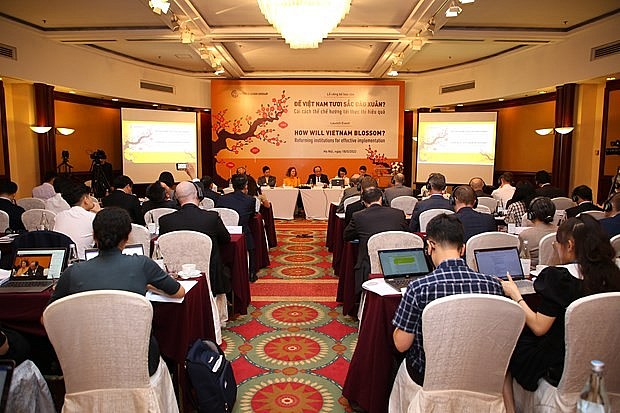 |
| An overview of the event to launch the report. |
The World Bank Group’s Systematic Country Diagnostic Update, entitled "How Will Vietnam Blossom? Reforming Institutions for Effective Implementation”, emphasises that Vietnam's traditional growth model faces major challenges from the COVID-19 pandemic, slowing globalisation, and the country’s increasing vulnerability to external shocks, especially climate risks.
After identifying a series of policy responses and reform priorities, many of which are not new, the report argues that adapting institutions will be the key to success.
Vietnam’s GDP per capita has increased five fold over the past three decades, while its institutions have not adapted at the same speed since the Doi Moi (Renewal) of the late 1980s,” said World Bank Country Director for Vietnam Carolyn Turk.
“A series of institutional reforms can help the country avoid the middle-income trap by increasing its efficiency to respond to new and complex global and domestic challenges,” stated Turk.
Vietnam has implemented its development priorities unevenly over the past 35 years. It has exceeded expectations in trade openness and social inclusion but lagged considerably in promoting green growth and upgrading national core infrastructure. Such variability is explained by its institutions that have not been always well prepared to address increasingly complex, often cross-cutting development priorities, or to facilitate the transition to a higher-income society. Adapting and modernising existing institutions is a key priority of the socio-economic development strategy adopted by the Party Congress in February 2021.
Improving Vietnam’s implementation performance will require five institutional reforms, the report says. Vietnam will need to create a solid institutional anchor that will transform development priorities into concrete actions; streamline administrative processes to increase the effectiveness of government at all levels; use market-based instruments to motivate public and private stakeholders; enforce rules and regulations to enhance motivation, trust, and fairness; and engage in participatory processes to secure greater transparency and accountability.
Vietnam has already transformed itself from one of the most closed economies in the world to one of the most open economies during the 1990s and 2000s. But the road from lower middle income to high income will be far more challenging. By adopting these institutional reforms more systematically, Vietnam will underpin its vision for economic development, strengthen its capacity to implement national strategies, and boost its motivation to produce results in several key areas – green growth, digital transformation, financial inclusion, social protection and infrastructure upgrading – that will help it achieve its development goals./.