



Heineken to shift production from Singapore to Vietnam and Malaysia
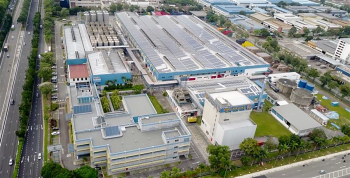
Dutch brewer Heineken will shift its brewing production from Singapore to Vietnam and Malaysia as part of its strategy to build a more agile regional supply approach.


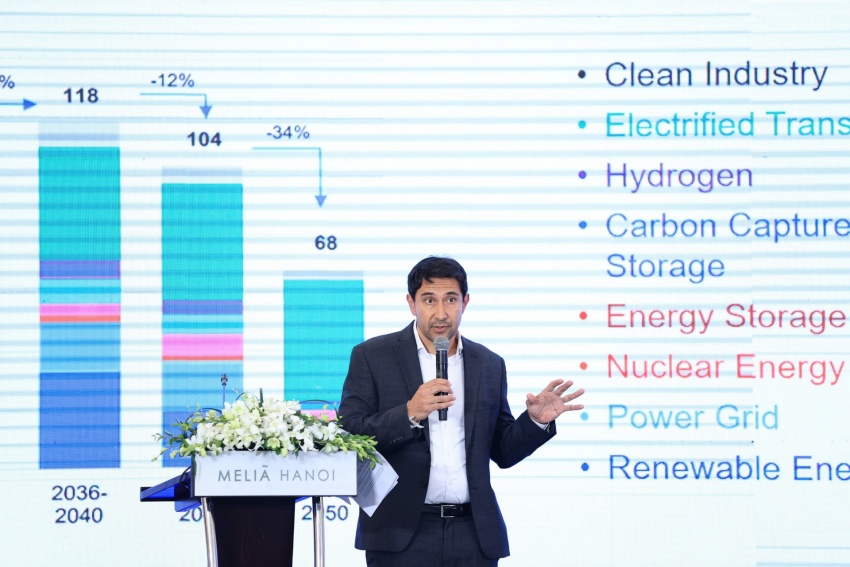 |
| David Ambadar, project lead of GIZ |
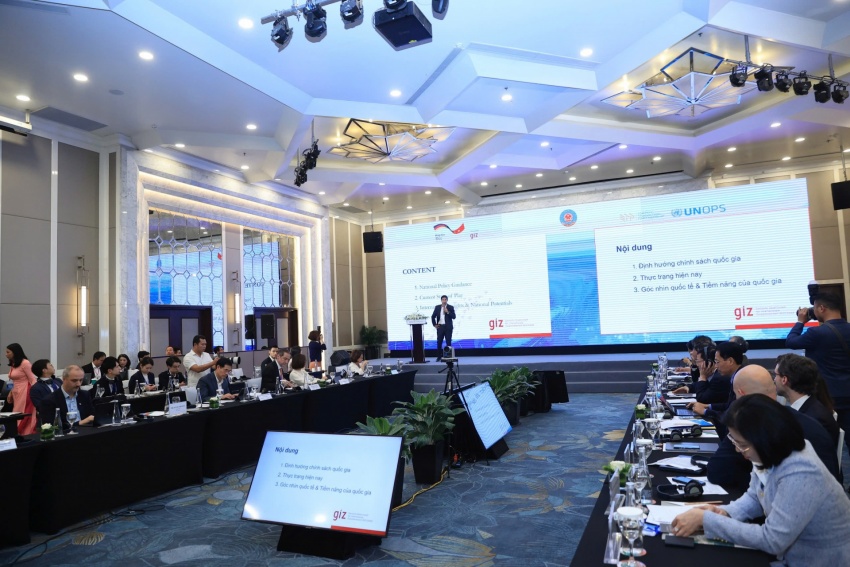
At the Vietnam Economic and Financial Forum 2025 on December 5 in Hanoi, David Ambadar, project lead of the German Development Agency (GIZ)'s “Shifting Investment Flows Towards Green Transformation”, offered in-depth analysis of Vietnam's evolving regulatory landscape. He described the overall direction as encouraging, highlighting that, “Looking at the details, it is quite promising.”
He stressed that Vietnam has taken a series of notable steps to support private-sector-led growth, including the Green Taxonomy and Corporate Income Tax Law, which accounts for green credits. At the same time, draft policies from the Ministry of Finance and the State Bank of Vietnam aim to stimulate green investment through subsidies and preferential interest rates.
“Momentum is also building in carbon market regulations,” he said.
New draft decrees on the Emissions Trading System (ETS) and carbon markets, alongside updates to the Law on Environmental Protection, represent a coordinated shift towards pricing emissions and aligning with global green standards. On the digital side, he highlighted the forward-looking orientation of the Digital Technology Industry Law, which “addresses and regulates digital assets”, ensuring that Vietnam's digital transformation complements its green transition.
On energy policy, Ambadar pointed to Resolution No.70-NQ/TW, along with revisions to the Power Development Plan VIII (PDP8) and the Electricity Law, as foundational to achieve more ambitious renewable energy targets. “These high-level resolutions are underpinned by a smart regulatory framework,” he said.
Another emerging pillar is Vietnam's plan to establish an International Financial Centre. Danang, expected to serve as the country's digital and green finance hub, will help shape Vietnam's narrative in the eyes of global investors. This, he argued, will be crucial to attracting long-term international capital.
While admitting that some regulatory details are still being finalised, Ambadar concluded, “Vietnam has a solid strategy, strong fundamentals, and a high level of commitment to move forward and address upcoming challenges heading into 2026.”
The scale of Vietnam's green transformation requires unprecedented levels of investment. Citing the World Bank, Ambadar emphasised that Vietnam needs $368 billion in green and energy-transition finance by 2040, half of which will need to come from the private sector.
Bloomberg's more recent estimates, taking Vietnam's net-zero commitment into account, suggest that investment needs will accelerate rapidly, driven mainly by clean power and green transport. Ambadar noted that annual investment demand could double over the next five years, from $20 billion to roughly $46 billion, equivalent to 6-7 per cent of national GDP.
For the implementation of PDP8 alone, Vietnam will need around $136 billion within the next five years. Of this, 87 per cent is earmarked for power generation, and the remainder for grid development. “The private sector share here is around 70 per cent,” he emphasised.
Vietnam's green financial system has expanded in recent years, with outstanding green credit reaching $28 billion. Green bonds, environmental taxes, the Environmental Protection Fund, and carbon credits also contribute to the growing pool of sustainable finance.
 |
However, structural challenges remain. Credit volume, one of the main financing channels, has declined 50 per cent from its 2019-2020 peak. The green bond market, although being active, still lags global peers. “While GIZ supports Vietnam Electricity's green bond launch, international comparisons show room for growth,” Ambadar noted.
Opportunities lie ahead as Vietnam prepares to implement its Green Taxonomy and explore improvements in green bond taxation.
To strengthen investor confidence, Ambadar recommended the adoption of a robust green corporate bond framework supported by high-quality verification aligned with international standards.
In the global context, the green transition requires an estimated $200 trillion by 2050. Green and sustainability-linked bonds dominate the landscape, already generating $6.5 trillion.
Among the most important tools, Ambadar highlighted the ETS: “For Vietnam, we recommend moving forward with a short-term pilot and upgrading legislation to establish a strong ETS with a deep secondary market.”
A functioning ETS will give the private sector reliable carbon-price signals and help investors hedge long-term risks.
Global investment in the energy transition has more than doubled in the past five years to $2.4 trillion, led by renewables, electric vehicles, and power grids. In these markets, the private sector provides around 60 per cent of capital, a trend Vietnam aims to replicate.
Ambadar said, “Vietnam has some of the strongest renewable energy fundamentals in the world, and we should capitalise on that.”
Germany, through GIZ and German Development Corporation, has reaffirmed its commitment to supporting Vietnam's transition. During recent bilateral negotiations, Germany committed over $100 million in new official development assistance funding. A large portion will focus on the energy transition and strengthening private sector development.
“We will help Vietnam capitalise on its strong renewable energy fundamentals,” Ambadar said, underscoring Germany's long-term partnership.