


Heineken to shift production from Singapore to Vietnam and Malaysia
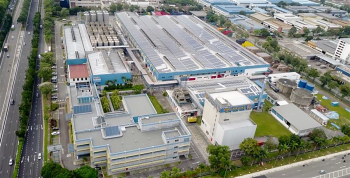
Dutch brewer Heineken will shift its brewing production from Singapore to Vietnam and Malaysia as part of its strategy to build a more agile regional supply approach.


Leading 2025’s deal flow was Livzon Group’s $221 million acquisition of a 64.8 per cent stake in Imexpharm from SK Investment. Through this deal, Livzon Group secured immediate access to Imexpharm’s four EU-GMP certified plants and its dominant 10 per cent share of the domestic antibiotics market.
 |
| By Huong Trinh, partner and Yen Pham, vice president BDA Partners |
This acquisition underscores a critical market reality: given strict restrictions on foreign pharmaceutical distribution, buying established manufacturers remains the most efficient path to market access.
The strategic rationale extends beyond domestic access. Vietnamese manufacturers with international certifications serve as contract manufacturing platforms for ASEAN exports, offering regional strategic cost-effective production bases with preferential trade access through Vietnam’s free trade network.
Healthcare services dominated deal activity, attracting institutional investors and specialised healthcare funds. Two major platform investments captured attention.
Firstly, Ares’s Medlatec investment marked the global investment manager’s first healthcare bet in Vietnam. Ares manages over $595 billion in assets and their entry signals Vietnam’s healthcare market has reached scale, commanding attention from top-tier institutional capital.
Secondly, Quadria Capital’s Tam Tri Medical acquisition brought Quadria Capital back into Vietnam’s hospital sector after exiting FV Hospital in 2023. The seven-hospital platform across Ho Chi Minh City, Danang, and Khanh Hoa demonstrates specialised healthcare investors remain committed, redeploying capital into platforms meeting evolved investment criteria.
Both transactions targeted multi-location platforms with demonstrated operational track records. These attributes enable institutional investors to deploy meaningful capital while achieving acceptable risk-adjusted returns.
The year demonstrated dynamic M&A activity across both new transactions and platform expansion. Marquee deals like Livzon-Imexpharm, Ares-Medlatec, and Quadria-Tam Tri commanded headlines, while existing PE-backed platforms actively pursued value creation through strategic add-ons.
For example, following its 2022 acquisition, CVC launched Phuong Nam Hospital in District 7, Ho Chi Minh City, diversifying from the Mekong Delta base; Warburg Pincus upgraded Xuyen A, focusing on upgrading facilities and strengthening speciality capabilities, including an oncology centre expansion; and over six years, VinaCapital has supported three hospital acquisitions and greenfield development in Tam Tri Medical, growing the platform to seven hospitals before the 2025 exit to Quadria Capital, demonstrating successful PE value creation through platform expansion.
This dual-track activity proves Vietnam’s healthcare M&A market operates on multiple growth vectors simultaneously. Both new transactions and platform expansion drive market development.
There are persistent structural trends, such as geographic focus with selective expansion. Hanoi and Ho Chi Minh City remain priority markets given their concentration of purchasing power, talent availability, and patient bases. However, investors increasingly evaluate opportunities in secondary cities where strong local operators have built defensible positions.
Meanwhile, speciality healthcare is gaining traction. Oncology, ophthalmology, cardiology, and diagnostics platforms attracted attention for their healthy margins, stronger patient loyalty, and defensible positions through specialised talent and equipment.
Multi-location platforms are valued over single assets. Both the Ares-Medlatec and Quadria Capital-Tam Tri transactions involved multi-location platforms, reflecting investor preference for diversified footprints that reduce concentration risk and provide expansion pathways.
Next year, PE-backed platforms such as Xuyen A (Warburg Pincus), Phuong Chau (CVC), and Mat Sai Gon (KKR) will pursue bolt-on acquisitions for geographic expansion or speciality capabilities.
Exit opportunities will also emerge, as PE investments from 2020-2022 are approaching their natural hold periods. Successful exits would establish new valuation benchmarks for Vietnamese healthcare platforms. More importantly, exits demonstrating good returns would validate the investment thesis and trigger increased capital allocation from funds currently underweight Vietnam healthcare.
Success in 2026 will come to different players in the market: new investors looking to make their first acquisition, existing healthcare operators expanding through add-on deals, and healthcare companies preparing themselves for M&A opportunities. Vietnam’s healthcare sector remains one of Southeast Asia’s most active M&A markets.