


Heineken to shift production from Singapore to Vietnam and Malaysia
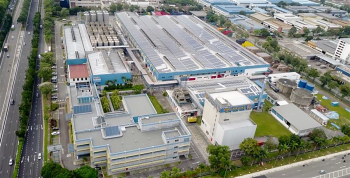
Dutch brewer Heineken will shift its brewing production from Singapore to Vietnam and Malaysia as part of its strategy to build a more agile regional supply approach.

 |
| The production of electronic products at Samsung Electronics Vietnam in Thai Nguyen. (Photo: Viet Chung) |
In 2023, Vietnam attracted 36.6 billion USD of FDI, an increase of more than 32% over 2022. Of which, newly registered capital reached more than 20 billion USD, up 62.2%, supplemented capital reached nearly 7.9 billion USD, down 22.1%, and the total value of capital contribution by foreign investors was over 8.5 billion USD, up 65.7% over 2022.
Boosting investor confidence
Director of the Department of Industry and Construction Statistics under the General Statistics Office Phi Thi Huong Nga said that newly registered capital and capital contribution to purchase shares saw high rises, contributing to the impressive surge in the total registered FDI in 2023.
“This result is thanks to Vietnam’s attractive and improved investment environment, with many outstanding advantages. In 2023, the economic diplomacy activities of the Party and Government were enhanced. The upgrade of Vietnam’s comprehensive strategic partnership with Japan and the US expects to create new and quality investment waves. Therefore, we can be optimistic and confident that FDI capital flows into Vietnam will continue to expand well in 2024 and the following years,” Phi Thi Huong Nga said.
Vice Chairman of the Vietnam’s Association of Foreign Invested Enterprises (VAFIE) Nguyen Van Toan said this is a turning point in the 35-year history of attracting FDI in Vietnam. Especially with its rare earth potential, Vietnam has a huge advantage in attracting high-quality capital from the US. Vietnam welcomed many large US corporations who came to explore the market and seek cooperation opportunities over the past year.
According to Nguyen Van Toan, the promotion of investment activities by US investors in Vietnam will help increase investment activities of EU countries in Vietnam, especially countries with source technology such as Germany, the UK and Sweden.
The sharp surge in FDI capital into Vietnam in 2023 was thanks to the support of economic diplomacy activities of the Party and Government, creating a favourable premise for cooperation activities in early 2024. Based on this new development, it can be seen that Vietnam is facing great opportunities in attracting investment, such as the period of the country’s joining the World Trade Organization (WTO). But the difference is that at this time, Vietnam has many opportunities to attract high-quality capital into new industries.
Completing policy and legal system
In the context of the global FDI slowdown, Vietnam is trying to implement effective solutions to attract high-quality FDI flows, including preparing conditions to be ready to receive investment projects in the semiconductor industry supply chain.
According to Minister of Planning and Investment Nguyen Chi Dung, to implement the Vietnam-US Joint Statement on upgrading bilateral relations to a Comprehensive Strategic Partnership regarding cooperation in the semiconductor industry, Vietnam has actively perfected its one-stop-shop mechanism and built a project to develop human resources in the semiconductor industry to train 50,000 engineers by 2030.
The Ministry of Planning and Investment has established the National Innovation Centre to receive investment projects in the semiconductor industry with the highest preferential policies. The National Assembly also assigned the Government to conduct a comprehensive review to synchronously complete the system of policies and laws on investment promotion.
The Ministry of Planning and Investment said that after 35 years of attracting foreign investment, Vietnam has continuously improved its institutions and investment incentive policies to attract and better manage domestic and foreign investment resources.
Vietnam’s main investment incentives focus on three categories, including corporate income tax incentives, import and export taxes, and land financial incentives.
The investment attraction policy has paid off as the FDI sector has made significant contributions to the country’s socio-economic development. In particular, several large FDI projects are granted with high incentives regarding taxes, such as Samsung projects in Bac Ninh and Thai Nguyen, contributed significantly to Vietnam’s exports over recent years.
Specifically, total export turnover from Samsung projects in Vietnam reached more than 30 billion USD in 2015, accounting for 20% of Vietnam’s total export turnover. In 2022, Samsung’s export turnover hit 65 billion USD, accounting for 8.9% of Vietnam’s export turnover, making a considerable contribution to the economic recovery and development process.
According to the World Bank, Vietnam can pursue policies to attract large-scale multinational corporations with high production capacity and close links with the global value chain, thanks to its strengths in political stability, favourable geographical location and great economic openness with Vietnam’s participation in 15 new-generation free trade agreements.
However, the Ministry of Planning and Investment also pointed out the limitations of current investment policies, such as undiversified investment incentives, only focusing on income-based incentives but not cost-based incentives, which do not encourage substantive investment activities.
Vietnam’s investment incentive policies have not kept pace with advanced policies and international practices. In addition, several investment preferential policies have been stipulated in the law, but there are no specific instructions for implementation, leading to no effect in practice. Tax incentives are also regulated by many different tax laws, causing difficulties during implementation and increasing costs for business compliance.