


Heineken to shift production from Singapore to Vietnam and Malaysia
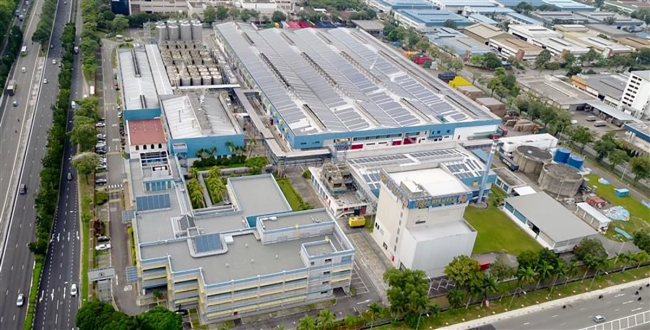
Dutch brewer Heineken will shift its brewing production from Singapore to Vietnam and Malaysia as part of its strategy to build a more agile regional supply approach.


International economic cooperation remains a decisive driver of Vietnam’s development, particularly for its ambition to become an industrialised nation by 2045. Mergers and acquisitions (M&As) are an essential component of this integration into global value chains, and Vietnam is now entering a new M&A cycle as reforms begin to take effect.
 |
| Prof. Dr. Andreas Stoffers of the FOM University and Quynh Nguyen, an M&A, IPO, and fundraising consultant from the Hoa Sen University |
Over the past 12 months, Vietnam has introduced a series of reforms that together provide strong foundations for a more dynamic M&A environment. Rather than looking at each policy in isolation, the real significance lies in their combined impact. The four pillars identified by the Politburo on digital transformation, the private sector, international integration, and the legislative process reflect a coherent effort to escape the middle-income trap and create a more competitive, innovation-driven economy.
By October of this year, the Politburo had actually adopted seven strategic resolutions. According to official reports, the National Assembly has passed 38 laws and around 20 resolutions, and the government has issued around 288 decrees and 433 resolutions to tackle structural bottlenecks.
In parallel, plans are in place to cut or simplify roughly 2,000 administrative procedures and about 2,300 business conditions. The implementation of new reciprocal tax policies and double taxation agreements is helping to reduce friction in cross-border M&A transactions.
Foreign investors increasingly recognise these improvements. Vietnam’s “bamboo diplomacy” maintains macroeconomic stability and predictability, making the country an appealing destination during a time of geopolitical uncertainty. This stability continues to underpin confidence among institutional, strategic, and private investors assessing Vietnam’s M&A prospects.
To underline the extremely important macro dynamics which all show that Vietnam is facing a strategic structural shift from a country that attracts foreign investment thanks to its low-cost advantage, to an attractive destination because of its leading dynamic market, and is the top sustainable growth story in Asia.
Significant structural changes
The next M&A cycle will no longer be a story of transaction volume or scale, but rather the depth of the industry structure and the impact on the country’s long-term competitiveness.
A deeper shift is also taking place at the micro level in the mindset of the new generation of entrepreneurs in Vietnam, those who have been educated abroad, have received a modern education, and see M&A as a strategic tool for growth, succession, and asset diversification.
Experiences in M&A consulting shows that about 60 per cent of small and medium-sized enterprise owners are actively seeking strategic partners. This shift is driven by the recognition of the importance of scale and professional management as prerequisites in the era of globalisation.
Although these changes in thinking have contributed to the growth of the M&A market, there are still many behavioural biases in the M&A sector that foreign investors need to dispel. For example, founders often set high valuation expectations due to anchoring information about mega-deals from the media. Closing this valuation gap requires not only financial modelling but also cultural intelligence and superior operational and strategic management capabilities.
Given the positive policy momentum, several sectors stand out for international M&A. Strengthening the corporate bond and stock markets will stimulate demand for acquisition-financing instruments such as private credit, leveraged loans, mezzanine finance, and venture capital. Regional private credit funds, especially from Singapore, South Korea, and Japan, are likely to enter the Vietnamese market to fill existing financing gaps and facilitate larger transactions.
Healthcare and life sciences remain among the most attractive sectors. Vietnam’s ageing population, expanding middle class, and increasing public-private partnerships create improvements for international investment. Even niche segments, such as long-term care for foreign retirees, could emerge with appropriate regulatory support.
High-tech and digital transformation will also attract substantial interest. Vietnam aims to strengthen its capabilities in semiconductors, AI, cloud computing, and cybersecurity.
Renewable energy continues to offer strong potential. Regulatory adjustments under the Power Development Plan VIII, rising investor interest in solar and wind projects, and emerging opportunities in energy storage and transmission will support future transactions once the regulatory framework stabilises.
Education and edtech remain compelling. Vietnam’s middle class is demanding higher-quality education, international programmes, and more practical vocational training. Several German institutions are exploring opportunities, and meaningful M&A activity is expected in this field.
The high-tech and healthcare industries are and will be two very promising industries for the upcoming M&A cycle. Even within these two sectors, there are very profound shifting trends that are reflected in the execution of deals. That is the trend of “acqui-hiring”, or M&As as a human resource strategy, when large companies acquire smaller technology companies not for revenue but for their engineering teams and niche technologies. This trend will be further accelerated as the war for talent in the technology and healthcare sectors becomes more intense.
In contrast, the platform consolidation M&A trend will reshape sectors such as retail, logistics, and private healthcare. These are quite fragmented sectors, consisting of many small-scale companies. Here, M&A is driven by the need to build platforms, streamline operations, and assert market leadership. This is where private equity funds will play a decisive role, providing both capital and operational expertise to execute complex mergers. The recent wave of hospital chain acquisitions is a clear early sign of this trend.
To advance its industrialisation agenda, Vietnam will increasingly rely on indirect investment flows, particularly M&A, alongside traditional foreign direct investment.
Boosting institutional quality
Meanwhile, strengthening institutional quality, especially transparency and capital-market governance, will further enhance Vietnam’s M&A climate.
Policies on IFRS standards adoption, better disclosure standards, and the development of rating systems reduce the risk premium for foreign investors. Debt-market reforms will facilitate acquisition financing and attract private credit funds.
The planned financial hubs in Ho Chi Minh City and Danang will help expand the ecosystem of legal, advisory, auditing, and valuation services required for complex cross-border deals. These improvements will enhance regulatory predictability, strengthen exit opportunities, and ultimately increase Vietnam’s attractiveness for international M&A.
Vietnam is in a phase of change, with institutional strengthening, behavioural changes among domestic companies and global capital trends converging. The next wave of M&A will be more strategic, professional and international, provided that regulatory transparency keeps pace with market dynamics.
For Vietnam to truly activate capital flows from foreign investors through the M&A channel, in addition to drastic moves from the central government through new policy statements, the government needs to focus on building a solid ecosystem with three main pillars.
First is a deeper pool of intermediaries: to develop the M&A value chain, more specialised sales advisors to help Vietnamese companies prepare for sale is in need, more M&A law firms with extensive transaction experience, and more independent valuation experts to help narrow the valuation gap with reliable data-driven analysis.
Secondly, developing the domestic corporate bond market and private credit funds will enable more leveraged buyouts, allowing financial sponsors to generate returns through financial engineering in addition to improving operations, and providing alternative financing structures beyond pure equity.
The third aspect involves post-merger integration. Success in M&A transactions is not about the value at the time of closing the transaction, but the ability to create synergy value over the next 3-5 years. Building such expertise to create value is a service that is sorely lacking in the Vietnamese market.
There is a significant positive development that is contributing to the transparency of the Vietnamese M&A market: the government’s push for digitalisation. The Vietnamese government’s recent aggressive implementation of mandatory electronic invoices, centralised with the tax authority’s database, is a turning point for M&A financial due diligence. While this does not completely eliminate the risk of the due diligence process, it does provide a reliable verification platform, which was previously absent.
This is also the beginning of a long-term roadmap for IFRS adoption, the Vietnamese government’s commitment to enhancing financial transparency, which will certainly strengthen investor confidence.
In short, although the government has laid the strategic foundation and is making significant progress on financial transparency, the next wave of M&A will require a dual focus: respecting the overall strategic vision and implementing it systematically and effectively.
(*)Prof. Dr. Andreas Stoffers of the FOM University and Quynh Nguyen, an M&A, IPO, and fundraising consultant from the Hoa Sen University