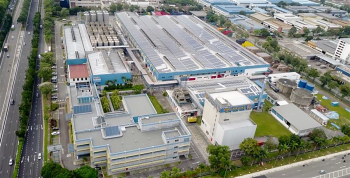


Heineken to shift production from Singapore to Vietnam and Malaysia
Dutch brewer Heineken will shift its brewing production from Singapore to Vietnam and Malaysia as part of its strategy to build a more agile regional supply approach.

 |
| A car showroom in Hanoi. (Photo: VNA) |
Vietnam’s plan to reduce import tariffs on fully built-up (CBU) vehicles from the US to zero percent has attracted attention, with many seeing it as a strategic move to boost trade and expand consumer choices. However, its immediate effect on car prices may be limited.
Automotive experts warn that a zero percent tariff does not guarantee a major price drop.
Khuat The Dat, a market analyst, explained that while the policy reflects Vietnam’s intent to strengthen trade relations with the US, the real impact on car prices will be modest. This is because import tariffs are just one part of the vehicle's cost. Other factors, such as the Special Consumption Tax (50-60% for larger engines), VAT, logistics and dealer margins, keep prices high.
The 2018 tariff elimination on vehicles from ASEAN countries is a good example. Although many expected sharp price reductions, the actual drop was only slight due to similar cost structures. According to Dat, even with a zero percent tariff, the price of US cars may only fall marginally.
Nguyen Vinh Nam, another expert, pointed out that the limited presence of American car brands in Vietnam also reduces the short-term impact of the tariff change. Brands like Chevrolet have exited, while Ford mainly imports from Thailand, which already enjoy tariff-free access.
Premium models like the Jeep Wrangler and RAM 1500, which are among the few US cars sold in Vietnam, are expensive and beyond the reach of most consumers. Even with no tariffs, prices for these models may only drop by 15-20%, according to market insiders.
Although the tariff reduction may not drastically lower prices in the short term, it holds potential to reshape the market. If American brands like Tesla enter the market, consumers could enjoy more options, particularly in the high-end segment. The presence of competitively priced US cars could also push existing players – both ASEAN imports and locally assembled models – to improve their offers.
However, domestic manufacturers face challenges. With low localisation rates (under 40%) and smaller production scales, their costs are 20% higher than those of vehicles imported from Thailand and Indonesia. If American cars benefit further from the new tax policy, local automakers could struggle, especially in the higher price segments.
Domestic models, particularly in the affordable segment, still have advantages. They benefit from policies such as lower taxes for small engines and incentives on registration fees. Frequent promotions also help lower costs for consumers, keeping locally assembled vehicles attractive despite the influx of imports.
According to experts, increased competition can drive positive changes. As consumers gain more choices, businesses will be pressured to improve product quality, customer service and pricing. Over time, this could lead to a healthier, more balanced market, where consumers enjoy better value.
Despite this, Vietnam’s automobile market is seeing strong growth.
According to data from the National Statistics Office, 56,563 new vehicles entered the market in April, a 4.8% increase compared to March. Local production reached 39,500 units, the highest monthly output of 2025 so far. Compared to April 2024, domestic production rose by 60%.
On the import side, Vietnam brought in 17,063 vehicles worth 423 million USD in April, a 7.6% rise in volume and a 28.2% increase in value compared to March. Imports were up 47.7% in volume and 65.4% in value compared to April last year.
In total, the first four months of 2025 saw Vietnam import 63,520 vehicles worth 1.4 billion USD, marking a 45.2% increase in volume and 50.7% rise in value year-on-year.
This surge in both production and imports comes despite large inventories at many dealerships, some of which are already offering discounts on older models. Experts believe this oversupply, coupled with moderate demand, could push car prices even lower in the coming months./.